
Electricity theft in Palma: Copper robbery leaves streets in the dark
Streetlights suddenly went dark in several Palma neighborhoods. The national police arrested an alleged couple. How could the theft go unnoticed for months and what must happen now?
Nights without light: why Palma's streetlights became prey
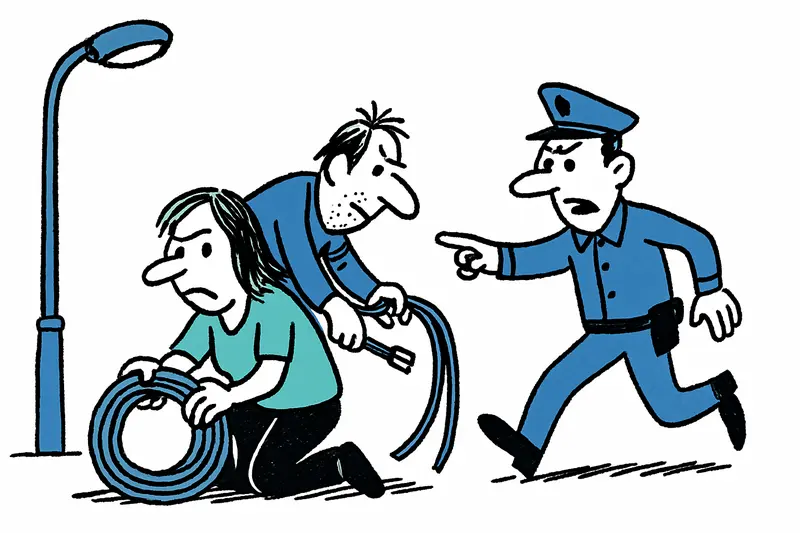
When night fell over Son Ferriol, it wasn't the quiet that caught attention, but the silence created by the absence of the familiar yellow lamp. No hum, no cone of light — only the distant drone of air conditioners and the rustle of palm leaves. In recent months several neighborhoods were affected: Son Ferriol, Secar de la Real, Son Espanyol, Poble Espanyol and the Polígono de Levante. Not due to technical faults, but out of pure greed, cables and components were systematically removed.
How far the operation went
Investigators speak of more than 1,000 meters of stolen cables and around one tonne of material. The material damage — estimated at about €40,000 — is only the tip of the iceberg. Added to that are emergency night repairs, increased inspections and the intangible but palpable security gap: people no longer going to the supermarket alone in the evening, children not allowed to go to the playground by themselves, and cars sliding around corners in semi-darkness. The National Police have arrested an alleged couple; the man already known to police, and the woman is said to have assisted in selling the material (Almost a Ton of Copper: Arrest in Palma Raises Questions About Security and Disposal).
Central question: How could so much material disappear unnoticed over months? The answer goes deeper than the tools used — it touches on organization, economic incentives and gaps in municipal infrastructure.
Organized audacity and structural gaps
At first glance it seems banal: cut cables, remove material, transport and sell it. But behind it there appears to be a division of labor — surveillance, targeted cutting at poorly secured manholes, transport in several stages and sale in small portions. That thins the trail and makes investigations harder.
Less discussed is how lucrative the scrap market for copper still is. Small scrap dealers, improvised purchases and patchy verification obligations create demand (When Bollards Disappear: What the Theft at the Municipal Utilities Reveals About Palma's Controls). Added to this are open manholes, easily accessible overhead lines and perhaps an understaffed maintenance service that cannot be everywhere at once. In short: the combination of market incentives, opportunity and staffing gaps made the series of thefts possible.
What the darkness does to the neighborhoods
Apart from material follow-up costs, the impact on everyday life is not to be underestimated. Residents report stumbling down Calle San Sebastián with flashlights, and how a pole temporarily marked with a board creates irritation rather than confidence. Technicians dispatched at night hear the rustle of plastic tarps and the clack of toolboxes on gravel paths — images that are all the more striking against the surrounding silence.
The police warn: the proceeds from the sold material are in no relation to the damage caused. For the city, however, this is a matter of public safety, not just vandalism (Watch theft in Palma's Old Town: Escape ends in Barcelona – How safe are our streets?).
What is often missing — and what could help now
Public debate often lacks the big picture. It's not just about perpetrators, but also about prevention: better securing of manholes, welded covers, electronic sensors that trigger an alarm if tampered with, and closer control of scrap dealers with obligations to check identities and document purchases.
Concrete proposals:
- Wiring protection: fit frequently targeted manholes with improved covers and theft protection.
- Digital reporting channels: an easy-to-use app or hotline through which citizens can report lamp outages and suspicious activity with photos.
- Control of recycling markets: stricter requirements and electronic registration of copper purchases, combined with spot checks.
- Relocation of critical lines: where possible, place lines underground instead of overhead to make access more difficult.
- Preventive night patrols: small, coordinated checks in especially affected streets instead of sporadic operations (Eight Break-ins in One Week: Arrest in Palma — and What's Still Missing).
What residents can do now
If you discover a dark spot: note the street and time, photograph the location from a safe distance and report the outage to the responsible maintenance company or the police. Observations such as suspicious vehicles with open loading beds or people with tools are often decisive.
A practical tip: A short video or a clear photo with a timestamp can say more than long descriptions over the phone. Share such evidence directly with the authorities rather than in public groups — so that traces are not blurred.
Looking ahead
The arrest is a first step. But the lesson should be bigger than prosecuting individual offenders. It requires a bundle of technical measures, better networking between authorities and civil society and a determined look at the scrap trade. Otherwise, one merely lights temporary lamps instead of building lasting trust.
In Palma the night now sounds a little safer again — the streetlights are being refitted, technicians are out in the streets, and the police continue to ask for tips. Those walking through Son Ferriol or Secar de la Real these days are more likely to hear the clatter of tools than the distant hammering of big decisions. Perhaps this is exactly the right moment to take the small steps that will bring lasting light.
Frequently asked questions
Why were some streets in Palma left without streetlights?
How much damage can copper cable theft cause in Palma?
Is it safe to walk in dark streets in Palma at night?
What should I do if I see a streetlight outage in Mallorca?
Which neighbourhoods in Palma were affected by the cable thefts?
Why is copper theft such a problem for city services in Mallorca?
What can Palma do to prevent streetlight cable theft?
Why do people notice streetlight thefts so quickly in Palma?
Similar News
The End of the Cheap Ride? Why Mallorca Is Hit Harder by the Fuel-Price Shock
Gasoline and diesel average close to two euros per liter. What this means for commuters, supply chains and renters in Ma...
Relaxed liquid rules in Munich: What Mallorca travelers will notice
At Munich Airport the 100-milliliter rule will be lifted at all checkpoint lanes — thanks to new CT scanners passengers ...

For 45 Years on Mallorca — and Then This: How a Market Visit in Santa Ponsa Became a Lesson
A woman who has lived on the island for decades lost money and important documents at the Mercat Setmanal in Santa Ponsa...
10 percent surcharge on the beach: How legal and transparent is the extra charge at Playa de Muro?
A German part-time resident noticed days after a restaurant visit in Playa de Muro that the bill included a flat ten per...

Body near the Llevant Market: What this death says about our city
A man was found dead on Sunday afternoon near the Llevant Market. Police say the death appears natural. The scene raises...
More to explore
Discover more interesting content

Can Cap de Bou

Townhouse Lleo 72
