
End at Ballermann: What Is Lost with the Dino Mini Golf at Playa de Palma
End at Ballermann: What Is Lost with the Dino Mini Golf at Playa de Palma
On October 25 the dinosaur mini-golf course at Playa de Palma will close after more than 30 years. Why the city is reclaiming the site, what the employees can expect, and which questions are missing from the debate.
End at Ballermann: What Is Lost with the Dino Mini Golf at Playa de Palma
Lead question: Can a city save memory, everyday life and green space at the same time when a piece of leisure culture disappears from the map?
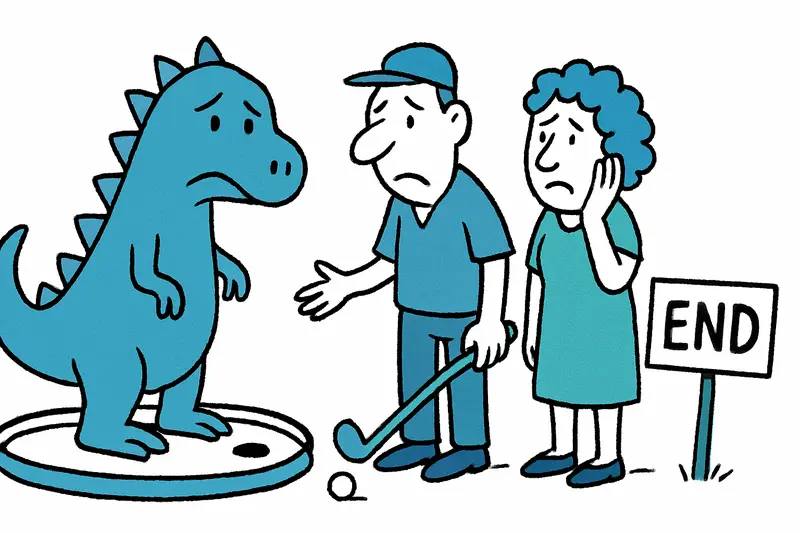
Next Sunday, October 25, 2026, a small but well-known episode of Playa life ends: the open-air mini golf course with its dinosaur figures (family exhibition with moving dinosaur models at Nou Llevant) will cease operations. The municipality is reclaiming the site; the plan is a contiguous green area that connects to the adjacent Parc del Llaüt.
Short analysis: Why the closure is not just a land issue
At first glance it's a property transfer: the concession expired, the city wants a public park. But the dispute goes further: the operator, Amrum Beach Club, has applied for an extension for legal reasons and points to the shutdowns during the Corona restrictions. This legal dispute is a typical administrative matter, but the consequences are social and cultural: a popular meeting place for families and for holidaymakers without much effort disappears.
Economically the site is not a big-investor project; according to the operator up to 200 guests came on good days. For the local gastronomy and supply chains at the edge of the site those were not huge turnovers, but they were regular revenue; similar peak visitor dynamics have been noted in a season finale report on Playa de Palma. For employees the company has announced it will transfer most contracts within the group. Whether that is permanent, how many work hours will be lost and what qualifications the affected people have remains open.
What's missing in the public debate
The discussion so far revolves mainly around ownership: concession yes or no. Three levels are missing: First, the question of replacement offers for families and children. Where should they spend playful time cheaply in the future? Second, information about planning details: When exactly will the new park open, what facilities are planned, who will bear long-term maintenance costs? Third, the cultural-historical level: places like this shape holiday memories — that has value that cannot be measured in square meters.
An everyday scene on the Passeig: Why the end hurts
In the late afternoon, when the sunbathers stroll back from the sea and the seagulls scream over the Passeig, people still sit on the low walls watching a game that doesn't take itself seriously. Children tumble out of the obstacles laughing, an older couple counts their strokes in broken German. This is what vacation sounds like here: not luxury, rather improvised. It is exactly this mix that disappears when only lawn remains.
Concrete solution approaches
The upcoming conversion doesn't have to be thought of as either-or. Suggestions the city and citizens should consider: 1) Reserve parts of the design for small-scale leisure use — a temporary mini-golf ensemble in summer? 2) Integrate some of the dinosaur figures into the new concept or preserve them as commemorative elements. 3) Agree on a binding social plan for employees, including further training and guaranteed minimum hours when transferred to other businesses. 4) Publish concrete maintenance and financing plans for the park: who will look after trees, irrigation, waste? 5) Start a short public hearing so residents, service businesses and associations can raise concrete wishes.
Conclusion — brief and pointed
The city wants more public green space, which is understandable. But green alone does not replace the small places where everyday life and vacation meet. Those who remove the dinosaur mini golf should present a range of replacement offerings, clarify the park's maintenance and financing, and not leave the people who worked here on their own. Otherwise Playa de Palma will get a smooth lawn but fewer stories.
Frequently asked questions
What exactly is happening to the Dino Mini Golf at Playa de Palma and why is it closing?
What will replace the Dino Mini Golf, and how will the new green space look?
How does the closure affect families and visitors who enjoyed the mini golf?
Are there any ideas for keeping small-scale leisure during the transition?
How will workers be affected by the change at Playa de Palma?
What should residents and businesses know about maintenance and funding for the new park?
Why is green space alone not enough to replace a place like the Dino Mini Golf?
How does this plan reflect Mallorca’s balance between memory and development?
Similar News
Expensive Address Calvià: What Does First Place Mean for Mallorca?
The National Institute of Statistics (INE) ranks Calvià as Spain’s most expensive municipality for property purchases. W...
Emergency over Spain: Ryanair Dublin–Tenerife flight diverted to Santiago after medical emergency
A Ryanair flight from Dublin to Tenerife was diverted to Santiago de Compostela due to a passenger's acute health proble...
Ten Years in a Tent: A Couple in Son Verí and the Gaps in the Housing Market
A British couple has lived for around ten years in a makeshift shelter near Son Verí. Their story is not an isolated cas...
After the Storm: Golden October Brings Warm Days and Sea Bathing in Mallorca
After heavy rain the weather on Mallorca is settling. Sun, mild air and 24°C water lure people once more to beaches and ...
Cracks in the La Seu Staircase: Who Really Protects Palma's Heart?
For months a cavity opened beneath the historic staircase to the cathedral; experts have now started probing. Why was ac...
More to explore
Discover more interesting content

Can Cap de Bou

Townhouse Lleo 72
