
Ten Years in a Tent: A Couple in Son Verí and the Gaps in the Housing Market
Ten Years in a Tent: A Couple in Son Verí and the Gaps in the Housing Market
A British couple has lived for around ten years in a makeshift shelter near Son Verí. Their story is not an isolated case — it raises questions about housing provision and local responsibility.
Ten Years in a Tent: A Couple in Son Verí and the Gaps in the Housing Market
Guiding question: Why does a working couple, after years on Mallorca, end up in a makeshift tent dwelling on the coast — and what does that say about our island?
Brief description of the situation
On the pebbly shore of Son Verí, behind low walls made of Marés stone, a small home made of a tent and brought‑along furniture has stood for many years. According to the people involved, they have been living there for about ten years, dividing their time between work and staying awake so that nothing gets stolen. They say they are saving to be able to return to their homeland. The Bay of Palma is within sight: hotel chains, apartment blocks, holiday flats — housing that is out of reach for this couple, a contrast noted in Tents Next to Villas: Nou Llevant Exposes the Gap Between Rich and Poor.
Critical analysis
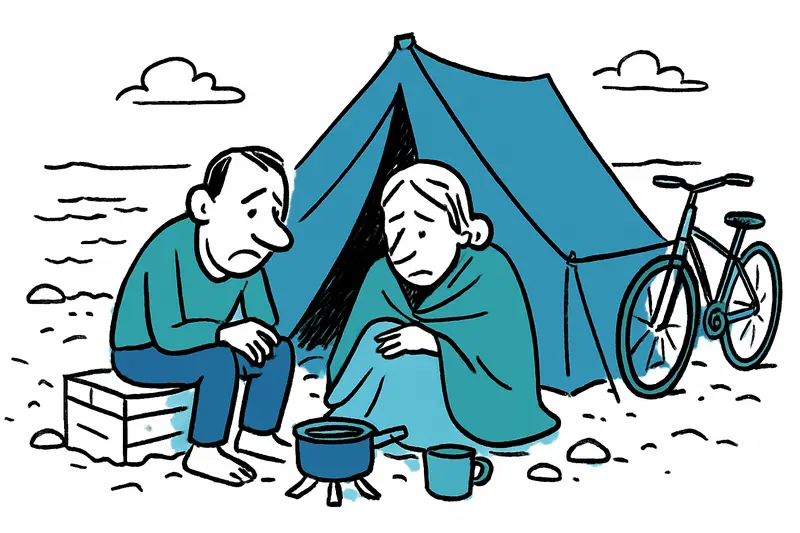
The scene is tangible: two people, a tent, a bicycle, a few kitchen utensils. This is not a romantic picture of life by the sea, but an indicator of structural problems. On Mallorca, booming tourism collides with scarce affordable housing. Short-term tourism ties up flats, rents rise, and wages in the service sector often lag behind living costs. This dynamic is explored in Sky-high prices, tents, empty promises: Why Mallorca's housing crisis is no longer a marginal issue. This creates social pressure that becomes visible in individual cases like this one, as reported in When Caravans Become the Last Address: How the Housing Crisis Is Changing Mallorca.
What's missing from the public discourse
There is too little talk about everyday thresholds: how many people commute, share temporary housing, or live in informal shelters despite working? Debates often revolve around investors, guest numbers, or urban projects — the perspective of those whom the system cannot sustain remains fragmentary. Also rarely on the agenda are practical bridging solutions between short-term help (emergency shelters, storage facilities, safe storage) and longer-term housing strategy (social housing, targeted subsidies for local workers). Second: municipal instruments — short-term rent subsidies for tourism employees, temporary conversion of vacant holiday flats into long-term rentals through tax incentives, strengthened control of illegal vacancies, an issue highlighted in Manacor clears settlement: When rental profits push people into shacks.
An everyday scene from Son Verí
Imagine an early morning: the salty wind, the soft clatter of pots, walkers on the coastal path, dogs on short leads, anglers with buckets at the edge of the bay. A couple sits in front of the tent; one of them pulls the blanket up as the wind has freshened. Neither wants to be reduced to photos or sensational reports; still, they say they remain visible to neighbors and police. This small, quiet presence contradicts the lively promenade a few hundred meters away — and tells of shared spaces on a tiny stretch of island.
Concrete solutions
What could help? First: pragmatic emergency measures on site — secure storage for belongings, supervised sleeping places in colder months, mobile social workers offering low-threshold assistance. Second: municipal instruments — short-term rent subsidies for tourism employees, temporary conversion of vacant holiday flats into long-term rentals through tax incentives, strengthened control of illegal vacancies. Third: in the medium term, more affordable municipal or cooperative housing combined with transparent allocation policies for people in precarious situations. And fourth: prevention through information — realistic orientation aids for newcomers, advice on rights and options so that the economic risk of moving does not end in homelessness.
What local governments and neighborhoods can do
Municipalities like Llucmajor could create interfaces: day centers that bring together job seekers, homeless people, and employers. Neighborhoods can help with low-threshold support — secure drop-off points, shared laundry facilities, local initiatives for repairs. Such measures require not only money but political backbone and the will to connect short-term solutions with long-term planning.
Pointed conclusion
The tent at Son Verí is more than a fate; it is a mirror. We must decide whether to simply take note of the image or tackle the causes. No one on the island benefits in the long run from people being pushed to the social margins — neither neighbors, nor the economy, nor Mallorca's image. Concrete, locally anchored measures could prevent such shelters from becoming the norm.
The bay does not remain silent; it shows. Now it is up to politicians, administrators, and the community to do something about it.
Frequently asked questions
When is the best time to visit Mallorca for sunny beach weather?
What should I pack for a Mallorca trip in spring and autumn?
Are Mallorca's beaches safe for beginner swimmers?
What are the best family-friendly activities in Mallorca?
Is Mallorca good for hiking and nature lovers?
How can I get around Mallorca without a car?
What should I eat in Mallorca to get a true taste of the island?
Where’s a good base to stay in Mallorca for easy access to beaches and towns?
Similar News

Expensive Address Calvià: What Does First Place Mean for Mallorca?
The National Institute of Statistics (INE) ranks Calvià as Spain’s most expensive municipality for property purchases. W...

Emergency over Spain: Ryanair Dublin–Tenerife flight diverted to Santiago after medical emergency
A Ryanair flight from Dublin to Tenerife was diverted to Santiago de Compostela due to a passenger's acute health proble...

After the Storm: Golden October Brings Warm Days and Sea Bathing in Mallorca
After heavy rain the weather on Mallorca is settling. Sun, mild air and 24°C water lure people once more to beaches and ...
Cracks in the La Seu Staircase: Who Really Protects Palma's Heart?
For months a cavity opened beneath the historic staircase to the cathedral; experts have now started probing. Why was ac...
Housing shortage in Palma: Protest camp between endurance and exhaustion
For weeks, 40–50 tents have stood on the Plaça d'Espanya. The protesters are debating how long to hold out — and demand ...
More to explore
Discover more interesting content

Can Cap de Bou

Townhouse Lleo 72
