
Cracks in the La Seu Staircase: Who Really Protects Palma's Heart?
Cracks in the La Seu Staircase: Who Really Protects Palma's Heart?
For months a cavity opened beneath the historic staircase to the cathedral; experts have now started probing. Why was action taken so late — and who will pay for the restoration?
Cracks in the La Seu Staircase: Who Really Protects Palma's Heart?
Technicians have begun probing — but the public debate remains incomplete
Main question: How could a cavity of several cubic meters beneath a heavily used approach to the cathedral exist for so long without protective measures beyond patchwork being taken?
On Wednesday specialists began probing the historic stair complex between La Seu Cathedral and the Almudaina Palace. On site, when walking from Passeig des Born toward Parc de la Mar, whose neglect has been reported in Parc de la Mar neglected: Who will save Palma's living room at the foot of the cathedral?, you can now hear the clack of measuring devices, the crunching sound of gravel and the distant tolling of church bells. Tourists take photos, residents stop and watch, some shake their heads.
Facts: Cracks were already discovered during an inspection in February. The most likely cause is a leaking pipe; the escaping water has washed out a cavity of around five cubic meters beneath the structure. When previously closed voids were opened, parts collapsed within minutes; corroded support beams had to be temporarily shored up. Similar incidents are described in Partial Collapse at the Baluard de Sant Pere in Palma – What Now?. As a provisional measure the cavity was filled with gravel — a solution that experts now criticize as insufficient.
Critical analysis: There is a chain of poor decisions and information gaps. First: the time span between discovery of the damage and active investigation is notable — eight months, opposition representatives complain. Second: the interim solution with gravel does not address structural damage to beams and foundations and only conceals the problem temporarily. Third: responsibilities are diffuse. In the ensemble of cathedral, Almudaina and city wall, ecclesiastical, municipal and island-wide jurisdictions intersect. Who should have acted when? This question remains too vague in the public discourse, as other local incidents underscore in Collapse at Palma's City Wall: What Needs to Happen Now.
What is missing from the public conversation: concrete information on costs and financing, a realistic timetable for securing and restoring the site, and clear data on whether further cavities exist. Also hardly discussed is the regular inspection of utility lines beneath historic sites — pipes that can age unnoticed for decades. A wake-up example in the region is described in Hole in the Roof of Valldemossa Charterhouse: Wake-up Call for a Historic Quarter. Transparency in expert reports and independent monitoring are lacking so far.
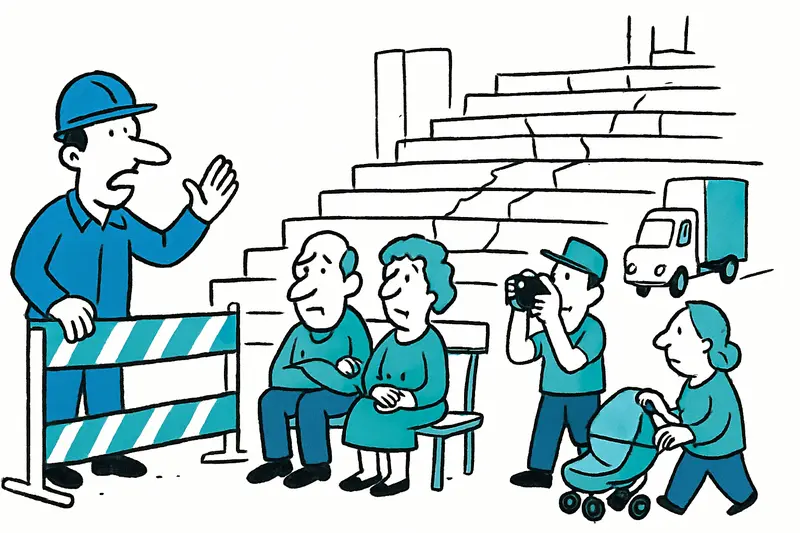
Everyday scene: On a rain-wet afternoon the smell of wet stone recalls recent storms. On the right side, at the so-called viewpoint, temporary struts stand; a construction worker waves tourists aside while an elderly couple on a bench debates whether the cathedral should remain accessible. A stroller carefully passes the barrier, a delivery driver nervously parks on Carrer del Mirador — culture, daily life and risk are that close.
Concrete solutions: In the short term the high-risk section must be closed permanently and a safe detour established. Temporary structural shoring may only be a stopgap and must be properly documented. At the same time targeted investigations are needed: ground-penetrating radar (GPR) along the entire complex, sampling of beams and masonry, an inspection of the sewage systems and a check of adjacent foundations.
In the medium term a phased approach based on a technical report is recommended: controlled partial demolition of irreparably damaged sections, careful documentation and reconstruction following historical models. This includes securing the foundations and installing a modern drainage system to prevent future washouts. Historical elements should be catalogued and, where possible, reused.
Financing and governance must not be left to political contingencies. A joint fund from the city, island council, church and regional or European heritage programmes is conceivable. A simple but binding catalogue of responsibilities and an independent expert panel with transparent reports should accompany the construction work. A publicly accessible dashboard could document the schedule, costs and expert reports.
One final point: safety is not just barricades and gravel. It means regular inspections, prompt repairs of utility lines and clear responsibilities for municipal monuments. For 1.5 million visitors last year this is not a luxury question but the basis for keeping Palma's historic centre alive and safe.
Punchy conclusion: Treating the La Seu staircase as a mere tourist photo motif ignores that institutions, engineering and money flows must work under the stones. The current probes are necessary — overdue, however, are a clear responsibility model, open information and a plan that not only patches but protects permanently.
Frequently asked questions
What’s happening with the cracks under Palma’s La Seu staircase?
Is the La Seu staircase safe for visitors right now?
Who should be responsible for fixing the La Seu staircase in Palma?
What investigations and tech tools are planned for the La Seu staircase in Palma?
How could a large cavity form beneath a historic staircase in Palma?
Will the restoration follow historical models in Palma’s La Seu staircase project?
How is transparency being handled for the La Seu staircase work?
How does this affect visitors to Palma's historic center and what should travelers do?
Similar News
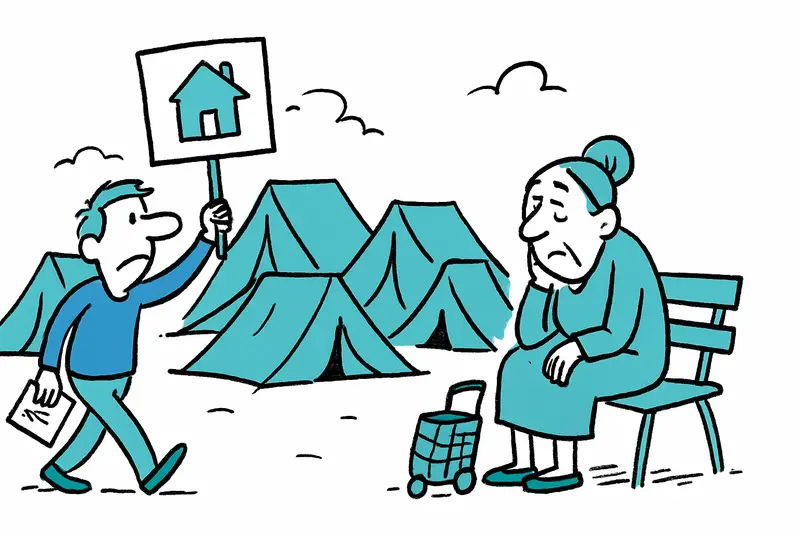
Housing shortage in Palma: Protest camp between endurance and exhaustion
For weeks, 40–50 tents have stood on the Plaça d'Espanya. The protesters are debating how long to hold out — and demand ...
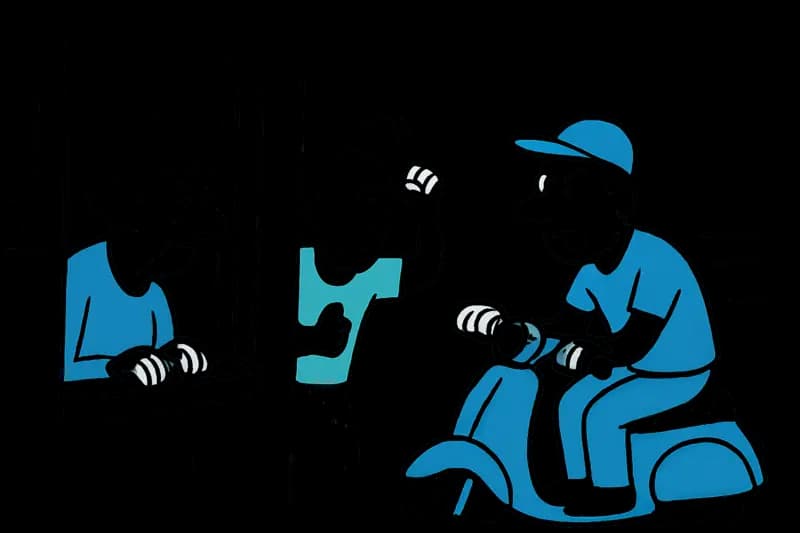
Unrest in Es Pillari: Neighbors Push Back Against Fear of Squatting
In Es Pillari, a small village near Palma, concerns are growing after reports of attempted intruders. Why the fear is so...
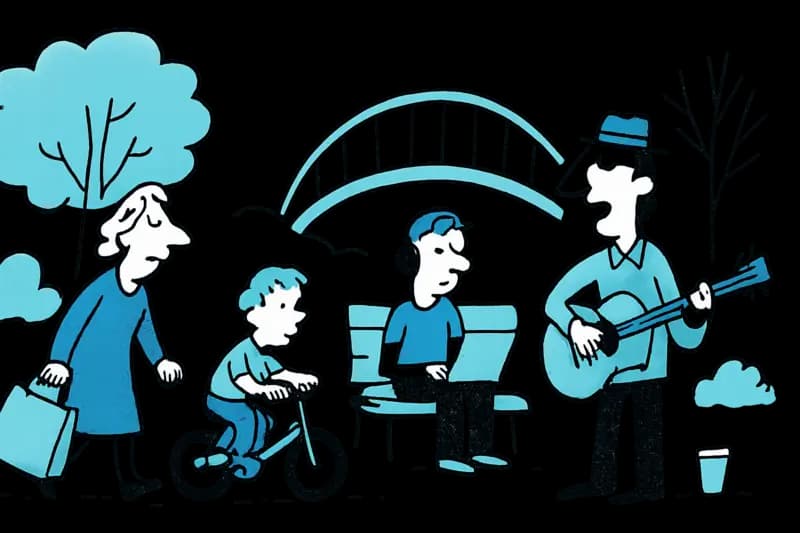
There is room for everyone — and yet not for everything: Parc de Ses Estacions, 20 years on
The Parc de Ses Estacions marks two decades above Palma's underground station. A walk reveals green spaces, everyday lif...

Death rides along – when speed becomes an everyday concern
A well-known motorsport competitor dies during a rally in Mallorca. Why do we accept residual risk on our roads in every...
People and the Island: Why We Know So Much and Change So Little
A critical inquiry from the Llucmajor hinterland: we know the problems — plastic, illegal dumping, animal suffering. Why...
More to explore
Discover more interesting content

Can Cap de Bou

Townhouse Lleo 72
