
There is room for everyone — and yet not for everything: Parc de Ses Estacions, 20 years on
There is room for everyone — and yet not for everything: Parc de Ses Estacions, 20 years on
The Parc de Ses Estacions marks two decades above Palma's underground station. A walk reveals green spaces, everyday life and contradictions side by side. What is missing from the public debate?
There is room for everyone — and yet not for everything: Parc de Ses Estacions, 20 years on
Between boulevards, bus heat and a partially rebuilt bridge: who was the park actually designed for?
Key question: Who really benefits from the Parc de Ses Estacions, which opened twenty years ago above Palma's underground station — residents, commuters, tourists or the politicians who promoted the project at the time?
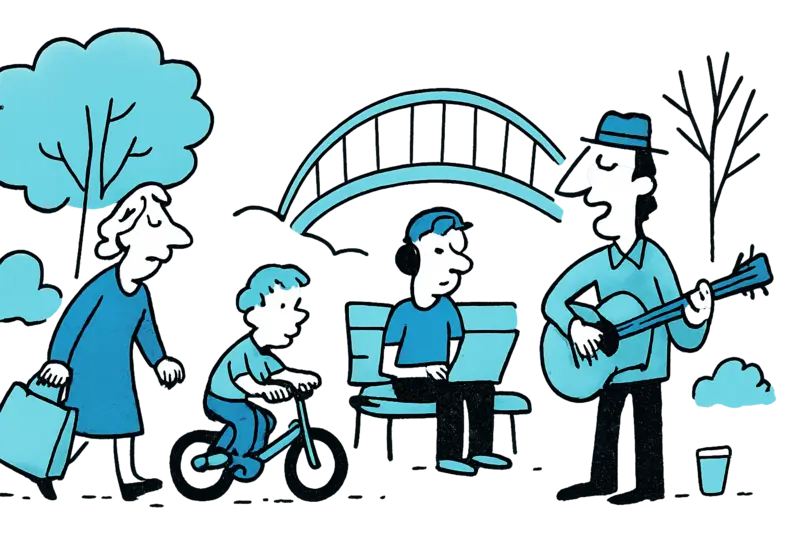
You only have to walk down the Carrer Balmes on a cool morning to see how much space the park offers for very different uses: grandmothers with shopping bags, a child on a small bicycle, a student with headphones, a street musician trying to make the most of the foot traffic. Coffee cups sit on benches; behind a tree you can hear the distant whistle of the Sóller train — it still crosses the old tracks fifteen times a day and sometimes halts traffic at the corner of Eusebi Estada.
The site reached its current form in three stages: an initial park on the railway area was created in the late 1990s, featuring a distinctive curved pedestrian bridge and a dune-like landscape. Later, politics and administration decided to tunnel much of the line; the new underground main station opened in 2007, and the greenery above was laid out again. Today, those who walk the avenues find shady areas, lawns and play zones — but also scars from that reorganization: gaps in the tree population, repaired paving, and the memory of a historic bridge that was removed in a night operation and only partly rebuilt.
Critical analysis: the park is a success as an urban connector — the track bed is no longer a deep trench and the Jacint Verdaguer has become a boulevard. Similar debates accompanied the redesign of the waterfront in Paseo Marítimo: More boulevard, more questions — will Palma make the new waterfront part of everyday life?.
The construction phase was hectic: after the first heavy rains the tunnels filled with water and service was suspended for months. In the early days air quality in the underground station was problematic because ventilation could not keep up with emissions from diesel locomotives. Electrification later fixed this, but memories of poorly planned technical solutions persist.
Three elements are usually missing from the public discourse: first, an honest accounting of costs and the follow-up maintenance expenses; second, a systematic look at the park's climate-resilient adaptation (heat islands, heavy rainfall); third, the voice of immediate neighbors in the care and programming of the spaces. There is plenty of talk about new projects, but less about what green spaces need: regular tree and shrub maintenance, sufficient budget for water supply during dry summers, and continuous accessibility for older people with walking aids. A recent feature on Paseo Marítimo: Palma's new green oasis — but who will maintain it? discusses similar maintenance concerns.
An everyday scene: it is noon on the Passeig Mallorca; the sun is low, parents sit in the plane tree shade, a little one chases pigeons while the air conditioning units at the bus station roar in an effort to beat the heat. Travelers pile up at the stops because in summer the waiting areas barely cool down. The contrast between the green park and the hot asphalt of the bus stations is palpable — and for many users a real annoyance.
Also missing from the public debate is the question of memory: the demolition of the Bennàssar Bridge, which was then under heritage protection, cost public trust. Today fragments of the bridge stand again, but only partly in their original form. The debate about monument preservation, transparent decision-making and citizen participation is often absent when it comes to new infrastructure projects; comparable tensions surfaced during the Parc de la Mar: 20 months of construction – curse or opportunity for Palma? works.
Concrete, feasible solutions include: first, a maintenance plan with clear responsibilities and an annual budget anchored in the city's budget. Second, a climate action package for the park: more robust native tree species for lasting shade, permeable surfaces, infiltration areas and small retention basins to channel heavy rains. Third, sensor-based measurements of temperature and air quality at several points in the park and at the bus station, with data made publicly accessible. Fourth, a participatory maintenance program — sponsorships for flower beds, planting actions with neighborhood associations and school classes — that creates both labor and local identification.
For the culture of remembrance the city could take a simple, honest step: an explanatory trail of information panels that tells the site's history — railway since 1875, the era of level crossings, the debates about tunneling, the night operation with the Bennàssar Bridge — without assigning blame but with transparency. That would build trust and guard against forgetting.
Conclusion: Parc de Ses Estacions is today much more than a park over a station; it is an urban meeting place with functional and emotional meanings. Nevertheless, the past twenty years show that good planning goes beyond the construction phase. Maintenance, climate resilience, transparent heritage questions and genuine neighborhood participation are the areas where Palma's green lung still needs to mature. If the city works honestly on these issues, the park will remain a place for everyone — not just a backdrop for photos and campaign buttons.
Frequently asked questions
When is Mallorca's warmest weather and best for swimming?
What should I pack for a Mallorca trip in spring or summer?
What are good family-friendly beaches in Mallorca?
What outdoor activities are popular in Mallorca?
How do I get around Mallorca without a car?
Is Mallorca suitable for a winter sun escape?
What should I know about beach safety and sea conditions in Mallorca?
Which time of day is best for exploring Mallorca’s towns?
Similar News
Unrest in Es Pillari: Neighbors Push Back Against Fear of Squatting
In Es Pillari, a small village near Palma, concerns are growing after reports of attempted intruders. Why the fear is so...

Death rides along – when speed becomes an everyday concern
A well-known motorsport competitor dies during a rally in Mallorca. Why do we accept residual risk on our roads in every...
People and the Island: Why We Know So Much and Change So Little
A critical inquiry from the Llucmajor hinterland: we know the problems — plastic, illegal dumping, animal suffering. Why...
Fear of Squatting in Es Pil·larí: Why the Mood Is Shifting
In Es Pil·larí, a district of Palma, a wave of warnings is circulating in neighborhood groups. Residents report attempte...
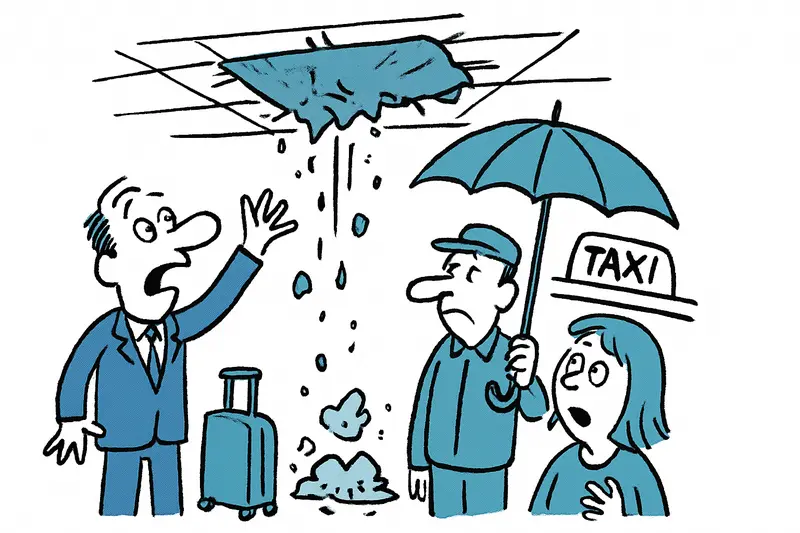
Partial collapse at Palma airport – who is liable for dilapidated infrastructure?
Heavy rain caused part of a plasterboard ceiling and the roof of a former cinema to partially collapse in Son Sant Joan....
More to explore
Discover more interesting content

Can Cap de Bou

Townhouse Lleo 72
