
Epiphany in Palma: Why a Meal Became a Tragedy — and What We Can Change
Epiphany in Palma: Why a Meal Became a Tragedy — and What We Can Change
At a family meal in Palma, a 71-year-old woman choked. Why do such incidents keep happening, who can help, and what can the island do to save lives?
Epiphany in Palma: Why a Meal Became a Tragedy — and What We Can Change
A 71-year-old woman choked during the holiday meal. Family members, police and emergency services were unable to save her.
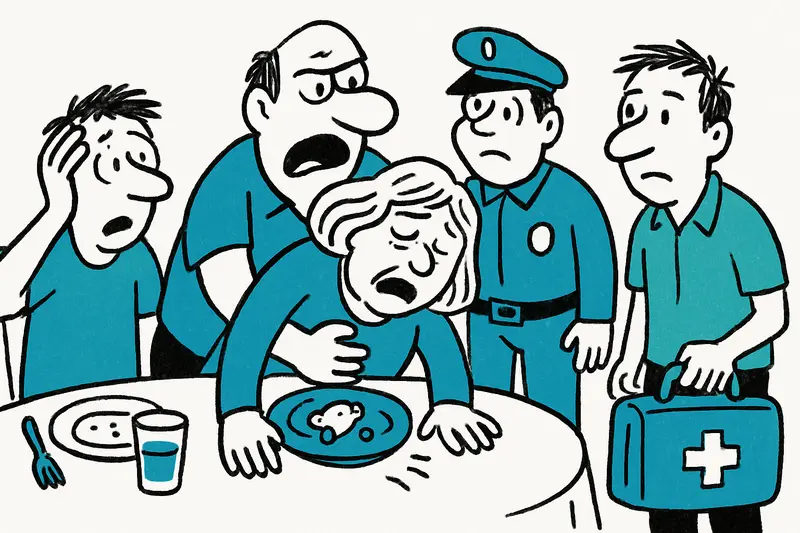
On the afternoon of Epiphany many neighborhoods in Palma still had the relaxed bustle of a holiday: children laughing on the pavement, the cathedral bells in the distance and the smell of freshly prepared food from open windows. In one apartment building that afternoon ended abruptly and tragically. A 71-year-old woman who was dining with relatives choked on food particles and lost consciousness. Despite immediate resuscitation attempts by the family and the quick arrival of police and an ambulance, her life could not be saved.
Key question: Why do banal situations like swallowing or gagging still so often lead to fatal incidents, and what is missing in our island society so that such cases do not end the same way again?
First: these events are not one-off accidents; they happen more often than people think. The risk of choking increases especially in older people — medication, swallowing disorders (dysphagia) or simply the nature of firm, dried foods like air-dried ham play a role. When the end of life happens in the home kitchen or at the family table, it hits relatives particularly hard. The statement "we immediately tried to help" may sound comforting, but it is often not enough technically when life-saving maneuvers have not been practiced.
Critical analysis: Mallorca has good emergency services, but everything depends on life-saving help in the first minutes. In an airway obstruction minutes count. Laypeople often act in panic: they pat the back, grab at hands, or place the affected person incorrectly — measures that at worst do little good or create additional risks. Hardly discussed in public is the gap between knowing about "first aid" and actually being able to do it. In a city like Palma, where family meals in apartments and restaurants are everyday life — and where When Dinner Becomes a Luxury: How Mallorca's Pricing Estranges Its Restaurant Scene shows how the sector is changing — basic knowledge about recognizing a complete airway obstruction and the correct use of anti-choking maneuvers (the Heimlich maneuver or adapted techniques for older, frail people) should be much more widespread.
What is missing in the public discourse: concrete numbers and target-group orientation. How many Mallorcans have taken a first aid course in recent years? Which age groups are particularly at risk? The debate usually remains abstract instead of anchoring prevention offers visibly in neighborhoods. The issue of swallowing disorders in old age — a consequence of strokes, neurological diseases or dental problems — is rarely addressed broadly, although there are practical aids available.
An ordinary moment in Palma's everyday life makes the gap visible: on Plaça de Cort an elderly woman sits with her granddaughter; she cuts bread into small pieces, seeks eye contact, smiles. No sign points to a nearby first aid course, the pharmacy sells medicine but not information leaflets about swallowing disorders, and When the Cold Case Steals the Menu: How Supermarkets Are Changing Mallorca's Lunch documents shifting lunchtime patterns that also affect where families eat and learn about care. Neighborhood support mostly works informally. But if nobody within reach knows the right maneuvers, the minutes until professional help arrives are over.
Concrete proposals that could have an immediate effect: First, municipalities and health centers should offer low-threshold courses tailored specifically to families with older relatives. Such courses could be regularly held in community centers, libraries and municipal halls. Second: general practitioners and care staff should systematically screen older patients for swallowing disorders during annual check-ups and provide simple preventive advice — for example, adjusting portion sizes, encouraging slow chewing, and referring to speech therapy when needed. Third: information materials in pharmacies, supermarkets and municipal offices — clear instructions on what to do in acute respiratory distress and that the emergency number 112 must be called immediately. Fourth: spread practical workshops for family celebrations, caregivers and restaurant staff; a 60–90-minute training can significantly increase success rates in real emergencies, which is particularly relevant in light of coverage such as Empty Tables, Growing Worries: Why Mallorca's Gastronomy Is on Low Flame.
Some of these steps cost little, others require coordination between the town hall, health services and civil society organizations. But this is not about bureaucracy; it is about saving lives. If a simple measure like regularly practicing the correct maneuvers or informing people about choking risks protects one more person, it is an investment with direct benefits.
Pointed conclusion: Grief and helplessness at a family table are hard to bear. But helplessness must not become routine. In Mallorca you can talk at the plaza cafe about how lovely the celebration was — and at the same time call the local community center and sign up for a first aid course. It doesn't need great pathos, just some time and the will to remain capable of acting in everyday life. That way we prevent a harmless bite from becoming a deadly routine.
Frequently asked questions
What should you do if someone starts choking during a meal in Mallorca?
Why are older people at higher risk of choking in Mallorca?
How can you tell if someone has a completely blocked airway?
Are first-aid courses for choking recommended for families in Mallorca?
Can swallowing problems in older adults be checked during routine medical visits in Mallorca?
What foods are more likely to cause choking for elderly people in Mallorca?
Where can people in Palma learn basic emergency response for choking?
What simple steps can reduce choking risk during family meals in Mallorca?
Similar News
High heel slips, car accelerates: accident on Camí de Son Hugo
A woman lost a high-heeled shoe on the forecourt of the sports facility at Camí de Son Hugo. The car accelerated, mounte...
Phone Scam: How Two Hotel Employees at Playa de Palma Lost Thousands of Euros
One morning in September, two reception employees at Playa de Palma were pressured by alleged alarm-company staff — in t...
When the Wallet Becomes a Danger: Attack in Peguera and Lessons for Mallorca
In Peguera, two women are said to have stolen the wallet from a 75-year-old German couple. When the victim intervened, t...
Plata stays Plata: Young people take over, Llonguets remain
A small bar on Carrer de l'Argenteria will continue: Tolo Serra hands the place over to young Mallorcans at the end of t...
Unnoticed in the Luggage Compartment: How a Boy Traveled More Than 100 Kilometers in a Team Bus
A minor traveled in the undercarriage of a team bus for more than 100 kilometers until his cries for help were heard. A ...
More to explore
Discover more interesting content

Can Cap de Bou

Townhouse Lleo 72
