
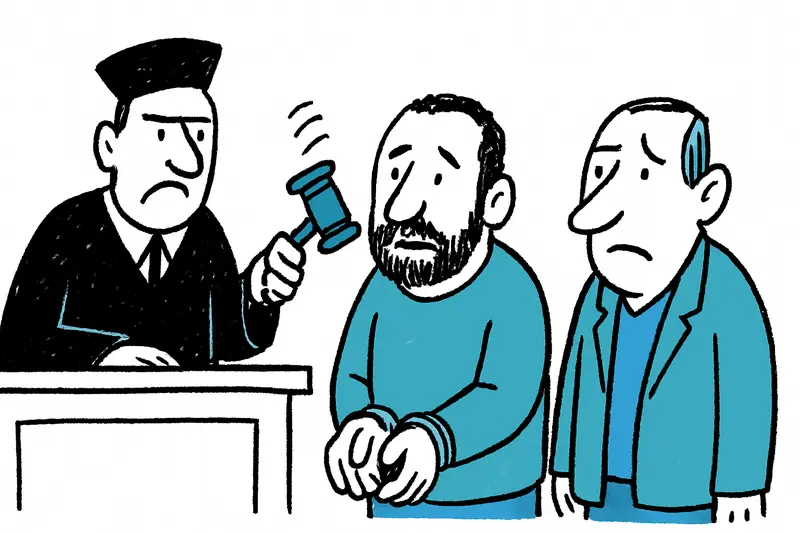
Masks scandal in Mallorca: Detention for Ábalos and García — what is missing
The judge ordered pretrial detention without bail for José Luis Ábalos and Koldo García. The case raises questions about procurement practices, oversight and political accountability. A reality check from Palma.
Masks scandal in Mallorca: Detention for Ábalos and García — what is missing
Pretrial detention, million-euro orders and a cellar full of questions
The Supreme Court made an unusual decision: pretrial detention without bail for former Transport Minister José Luis Ábalos and his ex-advisor Koldo García, as reported in Escándalo de mascarillas en Mallorca: prisión para Ábalos y García — qué falta ahora. They are accused of being involved in illegal structures when awarding mask contracts during the pandemic. In the Balearic Islands, million-euro orders and defective goods are at the center of the investigations.
Main question: How could public funds in a health emergency flow to little-known intermediaries and possibly defective products without transparent controls taking effect in time?
The legal allegations are serious: forming a criminal organization, bribery, breach of trust, exerting influence and misuse of insider information. The public prosecutor is seeking long prison sentences; the judge justified the pretrial detention with an "extreme" risk of flight and evidence tampering. Ábalos stated at the hearing that he neither has the means nor a place to flee — his defense sees early detention as an infringement on the right to political representation.
What we know for sure: the Balearic government signed contracts with the company "Soluciones de Gestión" for millions of protective masks. Some of the delivered masks are said to have been defective; reportedly, stockpiles are still stored in the basements of health authorities. Investigators are focusing on a network of intermediaries and middlemen, in which commissions and inflated prices apparently played a role.
The critical analysis: Pandemic times are high-risk periods for rapid procurement. That is no license for opacity. Two things stand out: first, parts of the procurement chain are difficult to trace — several levels of intermediation allow markups without revealing value creation publicly. Second, quality controls seem to take place afterwards rather than beforehand: if products are only checked in warehouses, taxpayer money has already been spent.
What is missing from the public debate: The discussion often revolves around people and dramatic arrest warrants. Less discussed are concrete weaknesses in the region's procurement system, the role of external advisors in emergency orders, and to what extent parliamentary oversight works retrospectively. There is also insufficient debate on how stockpiles, quality certificates and supply chains can be permanently documented and made accessible.
Everyday scene from Palma: On Passeig del Born in the early morning you can hear delivery vans and the whirr of air conditioners, and in the town square passers-by discuss the news with the smell of coffee in the air. A municipal employee I met shook her head: "We all worked under time pressure in 2020, but the fact that questions remain today is infuriating." Such encounters show: the affair is not an abstract capital story, but a topic in bakeries, offices and at the market.
Concrete solutions: First, the immediate publication of a traceable procurement chain for the contracts in question — who received money in what amount, and what checks were in place before delivery? Second, the establishment of independent random sample tests by accredited laboratories, with results made public. Third, clear rules for intermediary commissions in emergency procurements and a register of consultancy contracts so that middlemen cannot operate in the shadows. Fourth, strengthen internal control mechanisms in health authorities: record warehouse movements, quality certificates and receipt protocols digitally and openly.
Legally, it remains to be seen how strong the evidence will be. Practically, however, authorities and politicians must not wait for criminal prosecution to correct processes. Otherwise the pattern repeats: emergency procurement, opaque intermediations, public outrage, legal follow-up — and in the end the question remains whether money and trust can be recovered.
Punchy conclusion: The pretrial detention of Ábalos and García is a dramatic signal, a development discussed in Escándalo de las mascarillas: por qué la prisión preventiva de un diputado en Mallorca plantea más preguntas que respuestas. Yet the real problem is not only the allegedly corrupt actors, but the system that allows such events to happen. Those who now focus only on individuals overlook the construction sites in procedures, documentation and control. Our island deserves answers, not theater.
Frequently asked questions
What is the Mallorca masks scandal about?
Why were José Luis Ábalos and Koldo García placed in pretrial detention?
How did mask contracts in Mallorca become a corruption investigation?
What problems have been reported with the masks delivered to Mallorca?
Why is public procurement in Mallorca being criticized in this case?
What is missing from the public debate about the Mallorca mask case?
What should Mallorca authorities change after the mask scandal?
Why is the Mallorca mask scandal still important for residents?
Similar News
When Paradise Becomes Unaffordable
Hotel rooms, paella and the weekly grocery shop: Mallorca is becoming more expensive for many. Who pays the bill — guest...
End at Ballermann: What Is Lost with the Dino Mini Golf at Playa de Palma
On October 25 the dinosaur mini-golf course at Playa de Palma will close after more than 30 years. Why the city is recla...

Expensive Address Calvià: What Does First Place Mean for Mallorca?
The National Institute of Statistics (INE) ranks Calvià as Spain’s most expensive municipality for property purchases. W...

Emergency over Spain: Ryanair Dublin–Tenerife flight diverted to Santiago after medical emergency
A Ryanair flight from Dublin to Tenerife was diverted to Santiago de Compostela due to a passenger's acute health proble...
Ten Years in a Tent: A Couple in Son Verí and the Gaps in the Housing Market
A British couple has lived for around ten years in a makeshift shelter near Son Verí. Their story is not an isolated cas...
More to explore
Discover more interesting content

Can Cap de Bou

Townhouse Lleo 72
