
Decay on the Promenade: The Espigol Apartments in Can Picafort and the Question of Responsibility
Between tourist flows and empty balconies: the Espigol complex on Calle Joan Gomila es Maonès is in legal limbo — with consequences for neighbors, residents and the townscape.
Between the seaside promenade and vacancy: a warning sign on Calle Joan Gomila
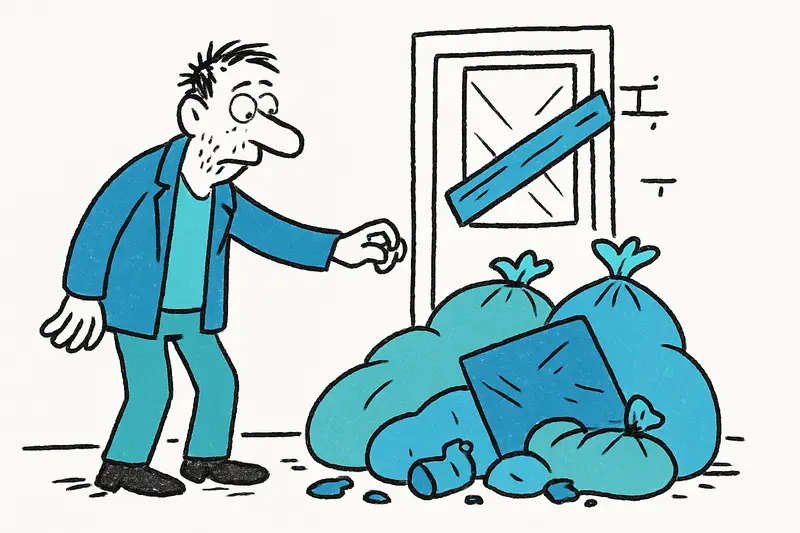
It is shortly after half past eleven, the sun blazes over Can Picafort, the seagulls cry, an ice cream truck jingles somewhere — and suddenly you stand before rows of houses that do not fit this scene. The Espigol apartments look abandoned: entrances blocked, windows taped with cardboard, shards of glass, the smell of damp blankets mixing with the salty wind. Some people step cautiously to the gate: They say they live here, some for months, some for years, often without clear papers or secure supplies. This has been documented in reports such as Enough is enough: Can Picafort's neglected squatted Espigol Beach complex and the failure of those responsible.
Who bears the responsibility?
This is the central question: Are the buyers at fault, who apparently purchased flats that were never approved for permanent residence? Are banks and construction companies entangled through contracts and payment flows? Or does the duty lie with the council of Santa Margalida, which navigates between legal reefs and limited resources? The answers are complicated — and that paralysis stalls action on the ground.
One complex, many problems
Originally planned as holiday apartments, the Espigol complex today counts 28 units that, according to documents, were never formally approved for permanent residential use. Buyers report payments in the six-figure range; one case with over €170,000 is documented. Listings still appear on sales portals: 58 to 60 square meters for around €67,000 — with a warning that parts are occupied or lack regular electricity connections. It reads like a market for risk investors.
The legal disputes between owners, banks and developers have frozen the situation. Courts decide, but in the meantime stairwells, roof terraces and personal prospects rot away. This is not only an aesthetic problem: broken windows mean hazards, missing electricity connections lead to illegal hookups, and the health of residents is at risk.
Everyday life in Block Number 9
Residents call the worst section Block Number 9. Broken furniture and plastic litter the roof terrace. A man from West Africa sometimes sleeps at the entrance; his dog crouches among the shards. Children from Son Bauló avoid this corner, and parents shake their heads at the lost image of the street. At the same time, those affected fear that cleaning actions without clear responsibility will quickly fizzle out and that no one will bear the costs, as similar accounts show in Between Concrete and Surf: Squatters at Espigol Beach — Where Should the People Go?.
Aspects rarely discussed
Three points are often missing from public debate: first, the role of information at the time of purchase — many buyers apparently felt insufficiently informed about the approval status. Second, the effects on municipal infrastructure: waste disposal, water and sewage systems, and emergency services are additionally burdened by unresolved ownership situations. Third, the social dimension: families, single people and often vulnerable individuals live in the affected apartments and get stuck between bureaucratic fronts.
Concrete steps that are possible now
The situation requires pragmatic solutions, not only legal battles. Some low-threshold measures would be:
1. Immediate hygiene measures: Dangerous glass fragments and rubbish can be removed through coordinated local cleaning actions. This creates short-term safety and is cheaper than later emergency interventions.
2. Temporary supply arrangements: A transitional connection for electricity and water, accompanied by social casework, would restore dignity and prevent illegal connections.
3. Transparency and buyer checks: A publicly accessible register of sales conditions and approval status could prevent future mispurchases.
4. Financial guarantees for construction projects: Deposits or bonds that developers must hold would reduce the risk of phantom sales.
5. Mediation between parties: Court proceedings are expensive and lengthy. Mediation could provide quick, practical solutions for residents and neighbors.
What Santa Margalida can do — and what it cannot
The council has limited options while court cases are pending. Nevertheless, the municipality could coordinate: provide spaces for cleaning actions, involve social services and set up a contact point for those affected. Some issues require higher levels — for example, legal clarifications on the status of holiday buildings or regional regulations for such special cases, a problem that has parallels elsewhere in the region as described in Decay by the Sea: Who Will Solve the Mystery of the Hostal in Alcúdia?.
Looking ahead
The Espigol complex is more than an eyesore on the promenade. It is a place where speculative sales practices, legal gaps and social distress intersect. If Can Picafort wants to continue being perceived as a lively coastal town — with the clinking of glasses on terraces rather than the cracking of broken glass — pragmatic, fair steps are needed now.
The central question remains: Who takes responsibility — and who will start the first practical measure that genuinely improves lives and the neighborhood?
Quick facts: Can Picafort, Calle Joan Gomila es Maonès; 28 apartments; partly inhabited; listings from around €67,000; legal blockage; neighbor protests from Son Bauló; calls for immediate measures to the council of Santa Margalida.
Frequently asked questions
Why is the Espigol complex in Can Picafort causing concern?
Can you legally live in the Espigol apartments in Mallorca?
Who is responsible for fixing neglected apartment blocks in Can Picafort?
Is it safe to walk near the Espigol apartments in Can Picafort?
What problems do neglected buildings like Espigol create for Mallorca towns?
What should buyers check before purchasing an apartment in Mallorca?
What can the council of Santa Margalida do about the Espigol apartments?
Why are people still living in the Espigol complex in Can Picafort?
Similar News

Caro Robens: 15 kilograms lighter — and again in the crossfire of online comments
Bodybuilder Caro Robens, who lives in Mallorca, has lost 15 kilograms. Her success on Instagram was met with applause — ...

Meager Industry in Mallorca: How the Island Can Be More Than Just Tourism
The industrial sector in Mallorca is shrinking, productivity is falling and firms remain tiny. The key question: can the...
Pre-Nit de l'Art: Galerie Mensing invites to a special evening with Tom Boston
Before the big art night, Galerie Mensing opens its doors: pop art, champagne, a DJ and a hand-signed print by Tom Bosto...

Sea view and more seats: Cappuccino Grand Café reopens in Port d'Andratx
After a long renovation, the Cappuccino Grand Café on the Port d'Andratx harbor promenade has quietly reopened. Larger t...

Enric Mas wins the Vuelta – a triumph that resonates in Mallorca
Mallorcan Enric Mas has won the 82nd Vuelta — the first Spanish overall victory since 2014. Cyclists and neighbors on Ma...
More to explore
Discover more interesting content

Can Cap de Bou

Townhouse Lleo 72
