
Between Concrete and Surf: Squatters at Espigol Beach — Where Should the People Go?
In the half-ruined Espigol Beach near Can Picafort, families and individuals have moved in. Raids solve nothing — pragmatic interim solutions, health protection, and incentives for owners are needed.
When the tourists are gone, the question remains: what to do with vacant tourist buildings?
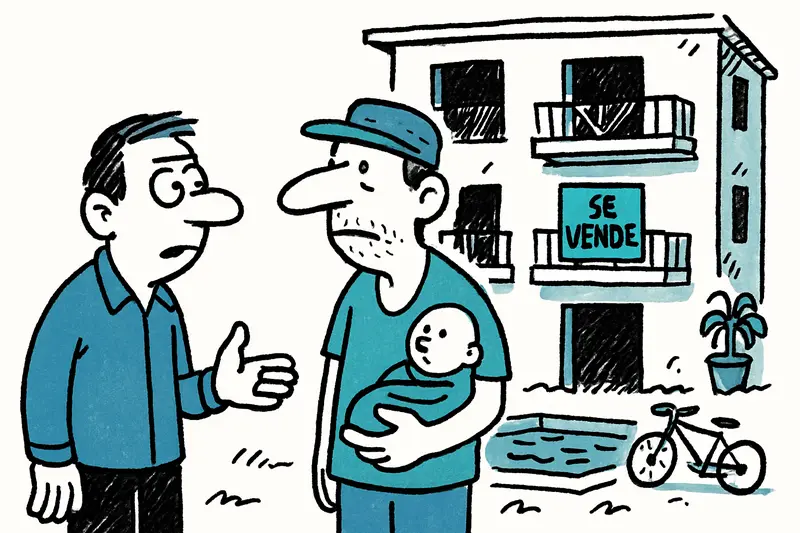
Driving along the coastal road toward Son Bauló, the cries of seagulls mix with the distant clatter of bicycle chains and the church bell of Can Picafort. Where holidaymakers were once expected to arrive stands a weathered building with faded "Se vende" signs: Ya basta: la instalación okupada en ruinas de Can Picafort y el fracaso de los responsables. Windows without panes, dried geraniums in cracked balcony boxes, and in the middle of it people who say: "We don't know where to go."
The central question
How do you deal with vacant tourist buildings when people have no alternatives? This is not an abstract debate but a concrete question here on the coast between salt water and concrete. Raids, legal proceedings and excavators only shift the problem — they do not solve it.
Everyday life instead of a postcard
At Espigol Beach a makeshift community has formed: families with babies, people living alone, EU citizens, people from Africa, some with papers, some without. They sweep the stairwell in the evenings, collect rubbish, coordinate around the water meter. These are not romantic adventures but survival routines: at night the lights are dimmed so the children can sleep, in the morning neighbors cook together in improvised kitchens. This pragmatic order deserves more attention than the quick judgment of "illegal."
The pool as a small disaster
One aspect that is often overlooked is not ideological but hygienic: the pool. Instead of sparkling water it is green, full of algae and mosquito larvae — a health risk. Residents ask the municipality to cut off the water, cover the basin or organise disinfection measures. Ironically: the very people who legally stand on thin ice offer to help and make small contributions toward measures if the authorities act pragmatically.
A tricky legal situation
Behind the image of Decline on the promenade: the Espigol apartments in Can Picafort and the question of responsibility lies a network of unclear permits, unkept sales promises and hard-to-reach owners. Who is allowed to decide — the town hall, the island council, private owners or the courts? This uncertainty creates a space in which problems smoulder until neighbours sue or the police intervene. But law alone neither catches children nor provides mosquito protection at the pool.
What is often missing from the public debate
The discussion tends to narrow into categories like "legal" and "illegal." In doing so the people disappear. Behind every occupation is a systemic failure: privatized coastal areas, buildings left empty for years, a real estate market that places returns above social needs, and slow municipal procedures. At the same time, social media is dominated by postcard images of beaches while housing shortages grow in side streets. This double perception often prevents sober solutions.
Pragmatic proposals — local and immediately effective
Instead of moralising, concrete steps are needed that can have a quick local impact:
Temporary use agreements: The town hall and owners could allow temporary usage rights — for example for social organisations — in exchange for maintenance and minor repairs. This creates legal clarity and reduces dereliction.
Health and safety first: Measures such as draining and covering the pool, WHO fact sheet on vector-borne diseases and regular rubbish collection cost comparatively little but reduce the risk of infections and bring calm to the neighbourhood.
Modular interim housing: Short-term usable container flats or modular units could bridge families while longer-term solutions are examined. This buys time and prevents forced evictions at night.
Incentives for owners: Tax relief or grants for converting vacant tourist apartments into social housing could motivate owners to act.
All of this requires cooperation: from the town hall, island administration, social services and neighbourhoods. Above all, it requires listening: the people at Espigol Beach know where the problems are — they clean, repair and organise themselves in many cases. This energy would be better used as a resource than criminalised.
Neighbourhood as a test
In small places like Can Picafort people know one another. Reactions range from understanding to fear — both are human. The island must not stand by while vacant concrete blocks become long-term problems. Those who continue to rely only on legal proceedings instead of allowing pragmatic interim solutions risk similar cases appearing in Portocolom, Palma or elsewhere.
Entre hormigón y rompiente: ocupas en Espigol Beach en Can Picafort — ¿a dónde irán las personas? is not an isolated case but a symptom of a market-oriented housing system without quick compensation. The task is political, legal and moral: where should people go who cannot find homes? Short-term, pragmatic measures combined with a long-term strategy for social housing are necessary — otherwise all that will remain are the clatter of empty shutters and voices asking for prospects.
Frequently asked questions
What is happening at Espigol Beach in Can Picafort?
Why do vacant tourist buildings become a problem in Mallorca?
Is the pool at Espigol Beach in Can Picafort a health risk?
Who is responsible for empty or occupied tourist properties in Mallorca?
What kind of people are living at Espigol Beach in Can Picafort?
What can Mallorca do about empty tourist apartments that are no longer in use?
Is Can Picafort affected by the housing shortage in Mallorca?
What does Espigol Beach tell us about housing in Mallorca?
Similar News

Caro Robens: 15 kilograms lighter — and again in the crossfire of online comments
Bodybuilder Caro Robens, who lives in Mallorca, has lost 15 kilograms. Her success on Instagram was met with applause — ...

Meager Industry in Mallorca: How the Island Can Be More Than Just Tourism
The industrial sector in Mallorca is shrinking, productivity is falling and firms remain tiny. The key question: can the...
Pre-Nit de l'Art: Galerie Mensing invites to a special evening with Tom Boston
Before the big art night, Galerie Mensing opens its doors: pop art, champagne, a DJ and a hand-signed print by Tom Bosto...

Sea view and more seats: Cappuccino Grand Café reopens in Port d'Andratx
After a long renovation, the Cappuccino Grand Café on the Port d'Andratx harbor promenade has quietly reopened. Larger t...

Enric Mas wins the Vuelta – a triumph that resonates in Mallorca
Mallorcan Enric Mas has won the 82nd Vuelta — the first Spanish overall victory since 2014. Cyclists and neighbors on Ma...
More to explore
Discover more interesting content

Can Cap de Bou

Townhouse Lleo 72
