
Evaneos and Mexico: A Reality Check for Sustainable Travel
Evaneos and Mexico: A Reality Check for Sustainable Travel
Travel advertising often reads like a promise: local, sustainable, unique. But how deep do these promises really go? A critical look at intermediary models that promise local experts — with concrete suggestions for how Mallorca and other places can gain real benefits from individualized tourism.
Evaneos and Mexico: A Reality Check for Sustainable Travel
Key question: How credible are the sustainability and locality promises of intermediaries that sell trips like those to Mexico as „authentic“ and „responsible“?
At first glance the offer sounds tempting: a local agency puts together personal itineraries, avoids mass flows and relies on small providers. But advertising remains advertising. This debate echoes concerns raised in Reality Check: Why Mallorca Can Hardly Escape Massification. When you stand in the morning on the Passeig Mallorca at the corner to the Plaça, where the bakery pulls its first loaves from the oven, watch the delivery van and breathe in the smell of strong coffee, you wonder: who really benefits when a European portal promises "local experts"?
Critical analysis
The concept of connecting travelers directly with people on site is fundamentally sensible. Local insiders know the seasons, small festivals and routes away from the busloads. But three points often remain unclear and deserve scrutiny: transparency, distribution of proceeds and the overall ecological balance. Transparency means: do intermediaries openly name which local agencies they work with (as called for in Illegal Holiday Listings in Mallorca: Why Enforcement Fails and How It Could Work Better)? Are these partners on a publicly viewable list, or do they remain anonymous building blocks in a booking system? If partners are not named visibly, it is hard to check whether they are small family businesses or regional branches of large corporations.
On the distribution of proceeds: a blanket note that "people and communities are supported" is not enough. How much of the travel price stays in the region? What are the commissions for the intermediary? Without numbers the claim remains a pleasing promise. This mirrors debates on Vacation Rentals on the Rise: How Mallorca Can Balance Daily Life and Guests. And the ecological balance: a two-week Mexico round trip means long flights. Local train journeys and bike tours within the country are positive if they extend the stay and increase added value — but they do not automatically compensate for the CO2 footprint of the long-distance travel.
What is missing in the public discourse
In the debate about "responsible travel" local expertise is often glorified, while structural questions are left out. For example: are visitor numbers limited in sensitive villages when a route suddenly becomes popular? Are there feedback mechanisms for communities affected by tourism? And: are local custodians of culture adequately compensated when their knowledge becomes part of a sold experience? These discussions are too often missing — they are uncomfortable, take time and require evidence instead of slogans such as those discussed in Regenerative Tourism in Brussels: Vision or Wishful Thinking?.
An everyday scene from Palma
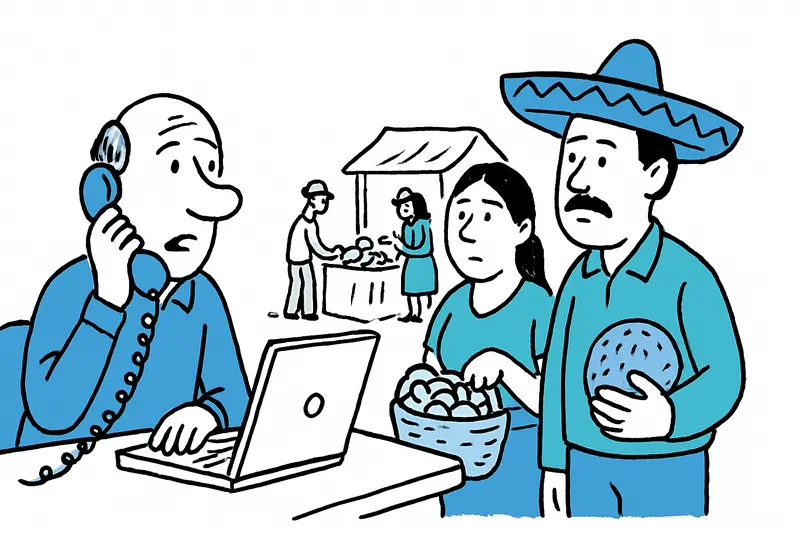
I imagine a Mexican expert family choosing fresh ingredients at the market in Santa Catalina while tourists pass by with a prepackaged program. In Palma, a travel advisor sits in a small office at Passeig Mallorca 9A, on the phone with a partner agency in Oaxaca and types a proposed route into her system. Both sides live from the exchange. But whether the farmer in Oaxaca benefits as much as the intermediary office in Europe remains open.
Concrete solution approaches
- Transparency requirement: intermediaries should name their local partners and disclose what share of the travel price these receive. - Verified sustainability claims: not just "we prefer eco-friendly transport", but concrete metrics: estimated CO2 emissions per trip and meaningful options to reduce or offset them. - Community feedback: before adopting new routes, affected places and local stakeholders should be heard; annual reports should document whether communities experience benefits or burdens. - Protection of sensitive destinations: capacity limits for small villages and archaeological sites, clear rules for guided visits and revenue distribution. - Promoting longer stays: tax or pricing incentives for trips that last longer than the standardized 7–10 days reduce the fast-tourism mentality.
Concise conclusion
The model of connecting travelers with locals has real potential — but it needs more than pretty pictures and promises. Without evidence, disclosure and dialog-oriented involvement of visited communities, marketing-dreamt authenticity quickly becomes a business model that mainly benefits intermediaries. For Mallorca and other destinations this means: we should welcome such offers, but not uncritically. Instead we demand numbers, names and genuine feedback loops — so that in the end there are not only well-told stories, but also fair incomes and intact places.
Frequently asked questions
When is the best time to visit Mallorca for warm, sunny weather?
Are Mallorca beaches suitable for swimming in spring or autumn?
What should I pack for a trip to Mallorca?
What outdoor activities are popular in Mallorca?
Is Mallorca a good destination for families?
How can I get around Mallorca without a car?
How should I plan a balanced Mallorca itinerary?
Is Mallorca suitable for a winter sun getaway?
Similar News

Urgent Clearing of Palma's Torrents: Flood Prevention or Symptom of Short-Sighted Planning?
The city of Palma is responding to storm forecasts and has cleared several torrents. We ask: Is the short-term clearing ...

From Megapark to the Altar: Party Singer Now Offers Weddings in Mallorca
A well-known party artist combines partying and marriage: instead of a traditional church there are ceremonies at the Me...

The Maricarmen Case: Why an Eviction Is Forcing Spain's Housing Debate
Images of an 87-year-old woman on a stretcher have sparked a debate in Spain that also runs deep in Mallorca. Who protec...

Parking dispute in Els Hostalets: When a gap leads to violence
A parking dispute on Calle Aragón escalated into a mass brawl at night. Why do trivial conflicts here turn bloody so qui...

Bodycams in Palma: More clarity needed so surveillance doesn't become the norm
Palma's local police equip UII officers with Axon Body 4 cameras. Useful for evidence collection — but specific rules on...
More to explore
Discover more interesting content

Can Cap de Bou

Townhouse Lleo 72
