
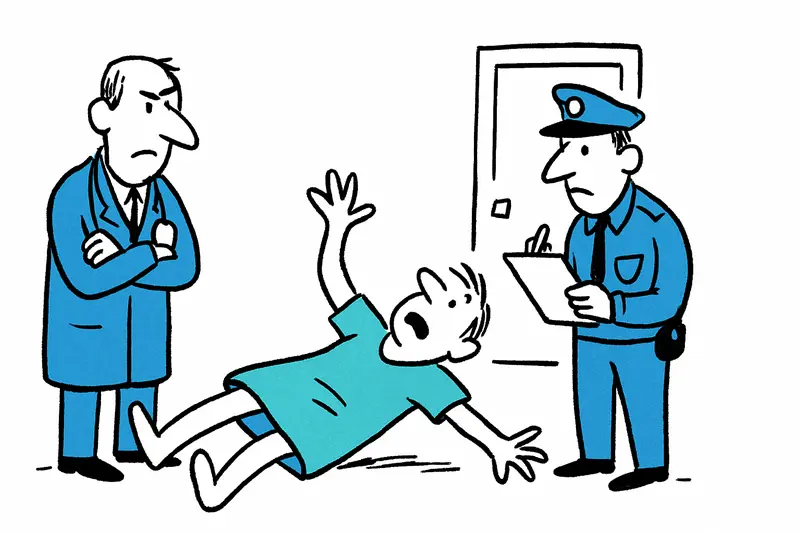
Fall at Son Espases: Accident, Suicide or Unresolved Questions?
On Friday morning a 72-year-old cancer patient fell from the second floor of Son Espases hospital and died. The homicide unit is investigating. What is missing from the public debate — and what must the hospital do now?
Fall at Son Espases: Accident, Suicide or Unresolved Questions?
On Friday morning around 9:30 a.m. a fatal incident occurred at Son Espases hospital in Palma: a 72-year-old patient with cancer fell from the second floor and died at the scene despite immediate resuscitation efforts. Units of the national police, including the homicide division, were dispatched to investigate the circumstances. These are the hard facts. The guiding question is: Is the current investigation sufficient for relatives and the public to trust its outcome?
What it's specifically about
We know little more than that: age, illness, place of fall, time, and that doctors could not save him. Nothing else. From this narrow set of facts speculation quickly arises in Palma — in the hospital cafeteria, on the promenade, on buses and in supermarkets. That is understandable, but dangerous: without clear answers the rumors remain, and that does neither the bereaved nor the reputation of an important clinic any good. Similar incidents in the city, such as Fall in Palma: An elderly man, a balcony and many unanswered questions, feed those conversations.
Critical analysis
Four points are important from a journalistic perspective and so far poorly answered: First, the exact situation in the room: was a window or balcony involved, was the door open, what was the level of supervision? Second, the patient's health condition: suffering from a serious illness like cancer can favor suicidal behaviour, but that must not be assumed automatically. Third, the physical protective measures: are there grab bars, window locks, protective grilles or fall-prevention measures on the relevant wards? Fourth, documentation and communication: were relatives informed, are there witnesses among the staff or patients? These questions concern both the police investigation and the hospital's internal safety processes. Past cases like Fatal Discovery in Son Macià: A Case Raising Questions about Protecting Older People show how wider protection debates can follow.
What is missing from the public discourse
The debate remains superficial. Compassion often mixes with quick blame directed at staff or the system. What is missing is a sober look at prevention: How are patients at high risk of falling identified? What protocols exist for palliative patients under psychological strain? And: what role do staffing levels and structural conditions play? These answers should be made transparent — not to create scapegoats, but to enable concrete improvements. Local incidents including Fall at Son Moix: How could a fan fall seven meters? Initial relief — many questions remain and Fall in Can Pastilla: More Than an Accident? illustrate the range of falls across settings.
An everyday scene from Palma
The morning after the incident a small group of people stands in front of Son Espases' main entrance. A nurse lights a cigarette, bus 5 picks up commuters, somewhere a kettle clatters in the canteen. These are the images you see when an event interrupts routine: voices grow quieter, conversations falter. People here know the hospital as a place where life and farewell lie close together — which makes the incident particularly hard to digest.
Concrete solutions
1) Independent case review: in addition to the police investigation, a medical-forensic assessment independent of the clinic should take place to build trust. 2) Short-term audit of safety measures: review of window and balcony locks, fall-prevention protocols and shift plans on the affected wards. 3) Improved risk-assessment tools: systematic assessment of fall and suicide risks in seriously ill patients, with clear action instructions for staff. 4) Training and supervision: regular training on de-escalation, psychological crisis and fall prevention for nurses and doctors. 5) Communication: transparent information for relatives about the status of investigations, protective measures and, if necessary, additional support offers. 6) Evaluation of structural standards: in the long term it should be examined whether patient rooms can be designed so that falls are technically less likely without violating patients' dignity.
Why this matters for Mallorca
Son Espases is the largest hospital on the island. A serious incident there affects not only the relatives but the whole community. If safety questions remain open, concern grows among patients and staff alike. To continue to be regarded as a trusted medical institution, the hospital now needs both clear answers and visible measures.
Pointed conclusion
The death of the 72-year-old is a tragedy. Investigations are necessary, but they must go beyond police clarification: transparent reviews, quickly visible safety improvements and better communication are now required. Son Espases has a responsibility to close the gap between facts and trust — for the bereaved, for staff and for everyone who relies on its care.
Frequently asked questions
What happened at Son Espases hospital in Palma?
Why are police investigating the death at Son Espases in Mallorca?
Can a cancer patient’s mental state affect the risk of suicide?
What safety measures should hospitals in Mallorca have to prevent falls?
How should hospitals communicate with relatives after a death like the one at Son Espases?
Why does an incident at Son Espases matter for people in Mallorca?
What kind of review is useful after a fall in a hospital room?
What can Mallorca hospitals do to prevent similar tragedies in the future?
Similar News
Why the End of "Los Últimos Mohicanos" Is More Than the Closing of a Bar
With squealing tires and one last glass, an icon on the Palma–Manacor expressway closes. Why the demise of this German b...
Protest camp on Plaza España: Who asks for solutions to the right to housing?
Around 30 activists set up a tent camp on Palma's Plaza España to push for stronger tenant rights. Our analysis asks: Ar...
In the Name of a Gang: Alleged Extortion in El Molinar and What It Reveals About the Protection of Sex Workers
A man is accused of posing as a member of the Hells Angels and extorting two women at accommodation in El Molinar. The s...
When Chile Meets the Mediterranean: A New Flavor at Can Bordoy
At Can Bordoy in Palma's old town, Chilean chef Jhonatan Maldonado combines Patagonian seafood with Mediterranean island...
End of an Era on the Ma-15: Why the Biker Hangout at Son Gual Is More Than Just a Restaurant
"Los Últimos Mohicanos" closes unexpectedly. A meeting place for motorcyclists on the Palma–Algaida border is disappeari...
More to explore
Discover more interesting content

Can Cap de Bou

Townhouse Lleo 72
