
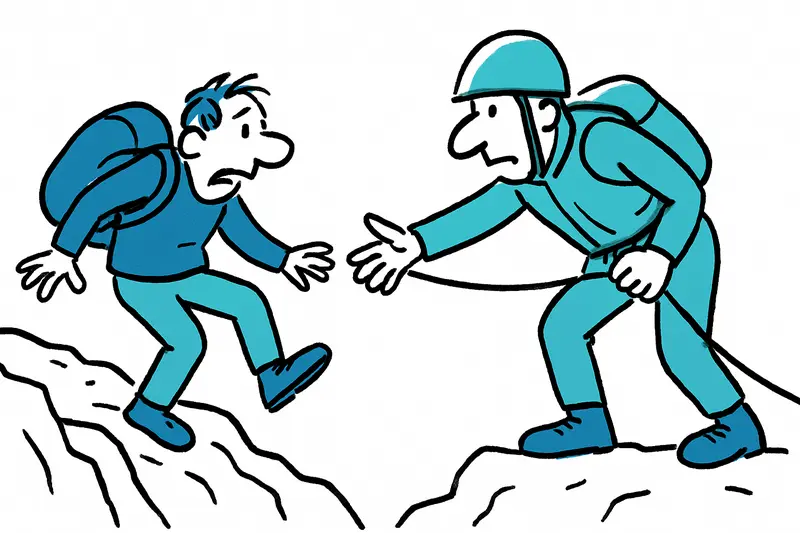
Why Falls in the Torrent de Pareis Are Not Inevitable: A Reality Check After a Rescue Operation
Why Falls in the Torrent de Pareis Are Not Inevitable: A Reality Check After a Rescue Operation
A hiker fell about three meters in the Torrent de Pareis and was airlifted to hospital with severe spinal injuries. Why do such accidents happen — and what would need to change?
Why Falls in the Torrent de Pareis Are Not Inevitable: A Reality Check After a Rescue Operation
Late on Tuesday morning, around 12:40, emergency number 112 lit up the control rooms: a man in his mid-fifties had fallen about three meters in the Torrent de Pareis and sustained serious spinal injuries. Rescue teams, including units from the fire brigade (Bombers de Mallorca) and the "Sa Milana" team, reached the narrow gorge and airlifted the injured man to Son Espases Hospital. Just over an hour later the same helicopter flew again: in Valldemossa another hiker had to be urgently evacuated with a leg injury, as reported in From Mountain to Hospital: What the Rescues at Puig de Galatzó and Torrent de Pareis Reveal About Mallorca's Hiking Tourism.
Key question: Why do trips along such well-known routes repeatedly end in dramatic emergencies — and what measures are missing so that something as simple as a wrong step does not lead to a helicopter deployment?
The facts are quickly told: challenging route, difficult terrain, fall of several meters, helicopter transfer. What the bare facts do not show is the human context on site. Anyone who knows the Torrent de Pareis knows: the trail begins near Sa Calobra, voices and the creak of cart wheels echo in the air, sometimes an old goatherd sits on the rocks and watches people like a local guardian. On fine days day-trippers and experienced trekkers jostle on the narrow sections; on windy autumn days cold air settles in the gorge and the stones become slippery.
Critical analysis: the rescue worked — that matters and deserves respect. But a successful operation must not be the only criterion. In public debate three things are currently missing in particular: honest information about the route's hazard potential, binding guidance on equipment, and a strategy for reducing risks on site. Information alone, on a website or a sign, only helps if it reaches people and is understood, as incidents reported in Heatstroke in the Torrent de Pareis: Rescue Raises Questions About the Safety of Hiking Groups show.
What is often not discussed enough: many hikers underestimate short, technically demanding sections. A three-meter free fall sounds harmless to laypeople, but on bare rock a fall can mean spinal injuries, as tragic incidents such as Fatal Fall in the Picos de Europa: A Reminder for All Hikers show. In addition, mobile-phone dead zones are no longer the exception; when a number is dialed it is sometimes pure luck whether the connection holds.
A typical everyday scene: in the morning cars park along the narrow access road to Sa Calobra, the scent of Campari and coffee cups drifts from the nearby café, tourists re-tie their trekking shoes while locals appraise the route with practiced eyes. This is precisely where leverage lies: before entering the gorge minutes decide — information, equipment, group size.
Concrete solutions that work without massive interventions in the landscape: first: clear, multilingual information boards at key points — not just "difficult", but with concrete danger spots, estimated duration and required equipment. Second: QR codes in parking areas and at trailheads that provide short checklists, GPS maps and current mobile-coverage information. Third: a simple registration model for day hikers — digital or at the parking area — so that rescue services know more quickly how many people were out and which route they took when an alarm is raised. Fourth: rental of emergency beacons or PLBs at tourist centers, similar to mountain regions on the mainland. Fifth: more local awareness-raising — Mallorca's municipalities could work with volunteer "trail scouts" who give advice especially in season and help assess risks.
Technical improvements are also conceivable without over-developing the gorge: markings at particularly dangerous steps, selective protection at exposed spots and regular condition reports on trail sections by forestry and civil protection authorities. It is important that measures are not only formally decided but experienced — manuals alone do not reach every hiker.
The conclusion is clear: the rescue chain on Mallorca works — but prevention lags behind. Anyone going into the Torrent de Pareis should be aware that stunning nature and real hazards sit close together. Instead of marveling after the next helicopter mission, it is worth demanding concrete improvements from every emergency: better information, simple technology for emergency location and more presence at critical points. Then the gorge remains a place to marvel without falling.
Frequently asked questions
How risky is hiking the Torrent de Pareis in Mallorca, and what should I check before going?
What weather conditions affect gorge hikes in Mallorca, like the Torrent de Pareis, and when is it best to go?
What essential gear should I carry for a day hike in Torrent de Pareis?
How can hikers stay connected or locate themselves if they’re in a dead zone near Torrent de Pareis?
What role do information boards and signs near Sa Calobra play in reducing gorge risks?
Are there community safety measures for Mallorca’s trails, like trail scouts around Torrent de Pareis?
If someone is injured on Torrent de Pareis, how do rescue teams respond in Mallorca?
Should I go with a guide or group when exploring Torrent de Pareis to improve safety?
Similar News
Car drifts into oncoming lane: Passenger seriously injured in collision on MA-1 near Andratx
At midday a car moved into the oncoming lane of the MA-1 at Camí de Son Vich and collided with a motorcycle. The 45-year...
Collision of two high-speed trains near Toledo: How could this happen — and what needs to change?
At least 64 people died when an AVE collided with an Iryo train near Urda. A passenger describes the force of the impact...
How safe are Spain's high-speed lines? After the Toledo accident
Two high-speed trains collided near Urda in the province of Toledo. At least 46 people died. A reality check: technology...
When Water Became a Fountain in Sant Elm: An Accident, a Fleeing Driver and the Question of Driving Fitness in Old Age
In Sant Elm an over-80-year-old driver in a convertible struck a water meter, sending a meter-high fountain into the air...
Celebrities, Padel and Pressure: What Lies Behind the Glitz in Mallorca
Between film premieres, padel coaches and runway demands: why Mallorca's glittering celebrity world exposes problems tha...
More to explore
Discover more interesting content

Can Cap de Bou

Townhouse Lleo 72
