
Final Ruling in the Llucmajor Highway Case: What the Verdict Really Means
Final Ruling in the Llucmajor Highway Case: What the Verdict Really Means
The Supreme Court confirms prison sentences for the two convicted men in the case of the German tourist killed on the MA-19 in October 2022. A look at the legal situation, the investigations, and what is often overlooked in everyday life on Mallorca.
Final Ruling in the Llucmajor Highway Case: What the Verdict Really Means
Key question: Does a final ruling resolve the societal questions surrounding Tim V.'s death — or do gaps remain?
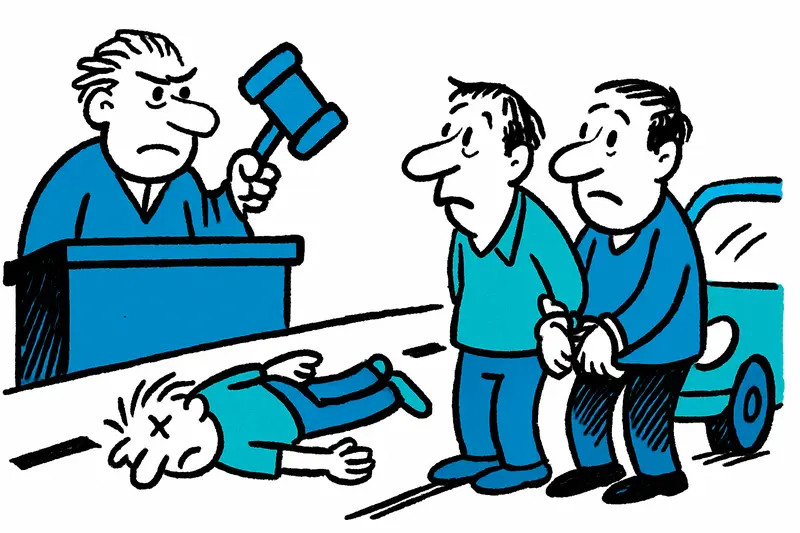
The Supreme Court of Spain has upheld the verdict in the case of the 20-year-old German tourist who died on the night of 8 October 2022 on the MA-19. Two men had already been convicted in lower courts; the sentences of twelve and fifteen years in prison are now final. The judges confirmed that the convicted men are responsible for the events; no further legal remedies are possible. The convicts were also ordered to pay six-figure compensation to the victim's relatives.
In short: According to initial findings, a heavily intoxicated young man was placed into a small van in the area of Playa de Palma. On the highway near Llucmajor he is said to have been thrown from the vehicle onto the carriageway a few minutes after being taken in, remained motionless there and was run over by a following vehicle. The accused who was driving was seen as jointly responsible; the higher courts base this assessment on the fact that he knew of the risk and did not intervene or stop.
Critical analysis: procedural law, evidence assessment, clarification of roles
The court rejected the defense's points: allegations of violation of the right to effective legal protection, the presumption of innocence and bias of the presiding judge were not considered sufficient. The defense had argued that the act was suddenly and unexpectedly committed by the co-defendant and that their client was at most a witness, possibly criminally liable due to omission. The courts see it differently: knowledge of the dangerous situation and continuing to drive are sufficient to establish joint perpetration. This legal distinction between active wrongdoing and omission is important — yet it often remains unclear in public debate.
What is missing in public discourse
We talk a lot about the severity of the sentence — as in the debate following the Six Months in Prison After Death at Construction Site in Son Vida — and the question of guilt, but less about five other aspects: First, why are so many people taken into vehicles on access roads at night even when they are heavily intoxicated? Second, how thorough are investigations in cases with few eyewitnesses and lots of alcohol? Third, what prevention measures were in place at Playa de Palma that night? Fourth, how is support and follow-up handled for grieving families here on the island? And fifth: are there clear procedural rules for drivers who do not stop after an offense — and are these rules communicated sufficiently?
Everyday scene on Mallorca
Early in the morning on the Paseo Marítimo you hear buses on lines 1 and 21 heading to the airport, delivery vans are parked, bar owners sweep up table scraps. Traffic on the MA-19 is often denser than expected at that hour; trucks and rental cars change lanes, police vehicle lights flash, a situation examined in Why Are So Many Motorcyclists Dying on Mallorca? A Reality Check after the Llucmajor Accident. People who celebrate at Playa de Palma are part of island life the next day: taxi drivers, hoteliers, police officers — everyone knows the situation, yet the line between care and negligence is not always clear.
Concrete solutions
1) On-site prevention: More visible services for heavily intoxicated revelers at hotspots like Playa de Palma — safe zones, information teams, coordinated taxi points. 2) Police standardization: Uniform protocols for securing traces on highways and for witness interviews in alcohol-related deaths. 3) Legal clarity: Training for defense attorneys, prosecutors and judges in the Balearics on the distinction between omission and joint perpetration so legal arguments are not misunderstood in public. 4) Support structures: A central service for victim families on Mallorca that bundles legal, psychological and practical assistance (repatriation, burial). 5) Public outreach: Awareness campaigns for tourists (in German, English, Spanish) about the dangers of putting heavily intoxicated people into vehicles and the responsibilities drivers carry.
Pointed conclusion
The ruling provides legal certainty; it closes the judicial process in this case, yet similar questions arose after the Palmanova verdict: Two years in prison, where many asked if sentences alone were enough. But it does not automatically answer the questions that trouble many island residents and visitors: How can we prevent this from happening again? What responsibility does the nightlife economy bear — and how can the island community better help before a situation escalates? Mallorca now needs practical steps for prevention, better investigations and honest support for those affected, not just legal debates. If we fail to act, a final verdict risks remaining merely a full stop on paper while the underlying causes persist.
Frequently asked questions
What does the final ruling in the Llucmajor highway case mean?
Why was the driver in the Llucmajor case considered responsible?
How long were the prison sentences in the Llucmajor case?
What compensation was ordered for the victim’s family in the Llucmajor case?
What happened on the MA-19 near Llucmajor?
What does the Llucmajor case say about nightlife safety in Mallorca?
What support do victim families need after a fatal case in Mallorca?
Why is Playa de Palma often mentioned in Mallorca crime and safety cases?
Similar News

Fewer Airlines, Fewer Destinations: What Palma's Winter Flight Schedule Means for Mallorca
Analysis shows: Winter at Son Sant Joan Airport will be quieter, with significantly fewer airlines and destinations. Who...
German tourist dies in Sa Calobra – a reality check for emergencies on Mallorca's beaches
A 40-year-old tourist died at the Torrent de Pareis. The emergency call, a doctor who happened to be present, a defibril...
Deadly Tractor Accident in Bunyola: What Needs to Be Done Now
In a work accident on an estate near Bunyola, a roughly 40-year-old man lost his life. His wife and a small child were o...
Head-first dive into the shallow part of Cala Fonoll: An accident and the unresolved question of responsibility
A young tourist dove into Cala Fonoll and was seriously injured. Key question: Why are clear warning signs missing at da...
Mistaken identity with fatal consequences: Brutal assault in S'Aranjassa — what's missing in the follow-up?
At S'Aranjassa a visitor to a finca was tied up, beaten and thrown out of a van. Three men have been arrested, including...
More to explore
Discover more interesting content

Can Cap de Bou

Townhouse Lleo 72
