
Fines for Caravan Renters: Symbolic Gesture or Effective Regulation?
Fines for Caravan Renters: Symbolic Gesture or Effective Regulation?
The Balearic administration has fined three caravan providers for illegal rentals along Palma's coast. What do the penalties say about enforcement of new rules — and what is missing to keep the beaches from becoming sleeping areas?
Fines for Caravan Renters: Symbolic Gesture or Effective Regulation?
Key question
Are fines in the range of €4,000 to €40,000 enough to permanently stop the illegal offering of caravans as holiday accommodation on Palma's coast — or is the story merely a token response to a bigger problem?
Critical analysis
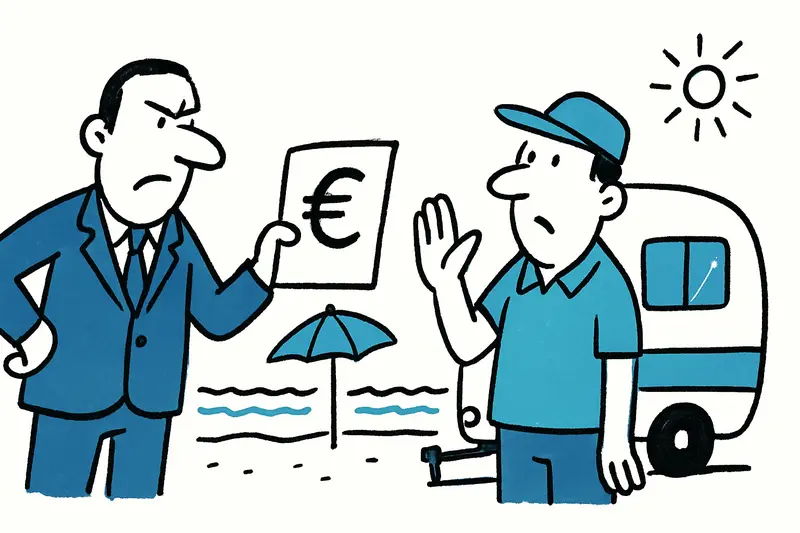
A few days ago, the Balearic tourism authority imposed sanctions on three caravan providers, a development reported in Palma takes action: Over €300,000 in fines for illegal holiday rentals in Llevant. The vehicles were reportedly listed as holiday accommodations on a private rental platform and were located in the coastal area of Palma. This is no small matter: under the new tourism law the government has the means to punish such violations. The stated fine ranges are between roughly €4,000 and €40,000. On paper that looks intimidating. In practice, the question is how often such sanctions are actually issued, how quickly they are enforced, and whether they deter operators from simply repeating the business model or moving it to other locations.
What's missing in the public debate
Reporting often focuses on the individual case: three sanctions, end of story. Rarely is it asked how these providers were discovered, how much personnel authorities need for inspections, and how platforms like Airbnb or similar marketplaces respond to takedown requests. Also seldom discussed is the grey area between permitted camping on official sites and the permanent parking of caravans in sensitive coastal zones. Without transparent figures on proceedings, appeal rates and convictions, the debate remains superficial. Related local coverage can be found in Palma Follows Through: Fines Over €300,000 Hit Building in Levante.
A daily scene from Palma
On a cool morning at the Paseo Marítimo you hear the sound of the sea, delivery vans dropping off croissants, and at the corner an older resident rolling a trash bin. There, not far from the beach, stands a caravan with closed windows; the awning is retracted, the tires haven't moved for days. A municipal patrol vehicle drives slowly by, officers look, note something on a clipboard. Such scenes are no longer exceptional — they are the picture of regulation being fought out in the streets.
Concrete solutions
1) Open registers and digital checks: Authorities should maintain an easily accessible, regularly updated list of accommodations — including mobile ones — that are permitted for tourism. Platforms should be required to check listings against such a registry before publication.
2) Increase platform responsibility: Those who mediate commercially must respond quickly and bindingly to notices. Sanctions should target not only providers but also intermediaries that systematically list illegal offers.
3) Clear distinction between camping and holiday rentals: Municipalities should designate areas for short-term camping with clear rules on duration, waste disposal and noise protection. Anyone permanently parked on the coast should be registered as a commercial operation and meet the same requirements as a hotel business.
4) Expand local controls: Inspection teams know the neighborhoods and seasonal rhythms. Regular checks at known hotspots would be more efficient than sporadic isolated cases. Digital reporting systems could channel residents' complaints without stigmatizing parking spots.
5) Prevention instead of just fines: Multilingual information campaigns for hosts and guests should explain which rules apply and why coastal protection and neighborhood protection are important.
Concise conclusion
The fines imposed send a clear signal, as reported in Palma targets holiday rentals: fines, Llevant and the big question about housing: Palma's coastal area is not a fallback market for unchecked tourism offers. Whether the penalties are more than symbolic politics depends on sustained implementation — on transparent registers, enforcement capacity and the responsibility of intermediaries. As long as platforms continue to list without timely checks and municipalities act reactively rather than proactively, the coast will remain an irritating testing ground for business models that were never meant for the beach.
Frequently asked questions
What is the weather usually like in Mallorca in spring?
Can you swim in Mallorca in spring?
What should I pack for Mallorca in spring?
Is spring a good time to visit Mallorca?
What is the weather like in S’Arenal in spring?
Is spring a good time to visit Port de Pollença?
What can you do in Palma de Mallorca in spring?
Are Mallorca’s beaches crowded in spring?
Similar News

Rental Car Theft in El Arenal: What This Incident Reveals About Our Gaps
A teenager steals a running rental car in El Arenal, flees on foot, climbs over walls and is caught by the Guardia Civil...

Red Rope in Palma's Library: What Helps Against Selfie Tourism — and What's Missing
Palma's city library cordoned off an area with a red rope to keep selfie tourism away from reading and working activitie...

Fort San Carlos: Museum, Harbor Dispute — and a Conflict That Demands Answers
The military museum at Fort San Carlos sits right on Palma's harbor, with unexpectedly quiet rooms filled with cannons a...
Old Town Under Pressure: When a Doorway Becomes a Sleeping and Shower Place
For months a woman has been living with a parasol, a clothes rack and personal belongings next to the social welfare off...

When Shopping Weighs Heavier: Mallorca Demands a Tax Pause on Food and Fuel
Rising prices are putting pressure on households and agriculture. The Balearic Islands are calling for temporary tax rel...
More to explore
Discover more interesting content

Can Cap de Bou

Townhouse Lleo 72
