
Fire in Binissalem: Several Halls Destroyed – What’s Missing Now and What Should Be Done
Fire in Binissalem: Several Halls Destroyed – What’s Missing Now and What Should Be Done
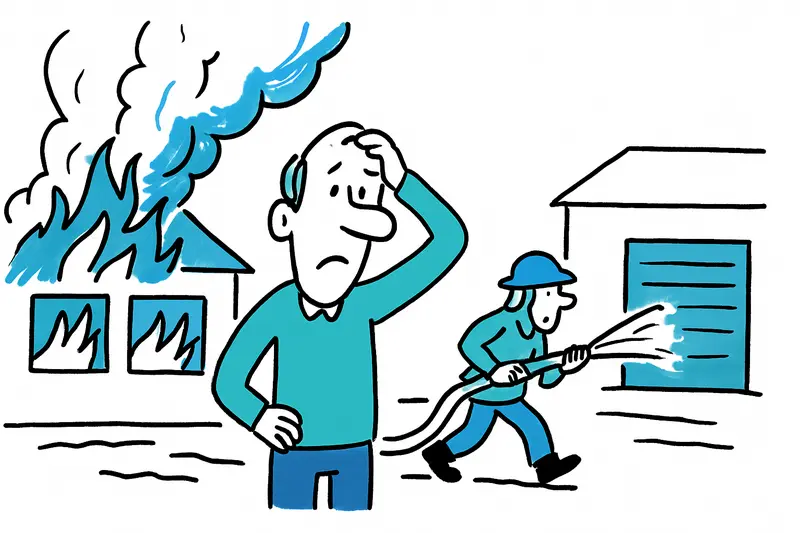
On the night of June 4, several industrial halls in the Binissalem commercial area burned down. The fire brigade fought for hours. Why did such a fire occur in an area with workshops and warehouses? A reality check looking at risks, everyday scenes and practical solutions.
Fire in Binissalem: Several halls destroyed – a reality check
Guiding question: Why can a night operation like the one in Binissalem so quickly lead to major damage, and what is missing from the public debate so that such fires become less frequent?
What happened
On the night of June 4, at around 1:30 a.m., a fire broke out in a hall of a sporting goods company in the Binissalem industrial area. The fire spread to at least two neighboring businesses; the fire brigade was on the scene for hours. Official causes are still pending and are under investigation.
Critical analysis
The bare facts are not enough to answer how a single fire could destroy multiple halls. In such industrial zones there are often highly flammable materials, narrow access roads and adjacent storage areas – a combination that can quickly make a fire powerful. The time of day also plays a role: at 1:30 a.m. staffing is minimal, automatic detection systems must work reliably, and neighbors may notice a small fire too late.
A second critical point is the infrastructure: supplies of extinguishing water, access routes for large vehicles and the location of hydrants determine the effectiveness of firefighting. In Mallorca, including around Binissalem, industrial areas often developed historically and are not optimized for modern hazard situations.
What is missing so far in the public discourse
First: the question of how dangerous or easily flammable goods are stored in small and medium-sized businesses. Public attention quickly focuses on spectacular operations, and less on prevention in workshops and storerooms. Second: the role of regular inspections and their enforcement. Having regulations is not enough if they are rarely checked. Third: the protection of residents and municipal coordination – how quickly can the neighborhood be warned and evacuated?
A scene from everyday life
Imagine the road leading to the industrial area: still warm from the day, cicadas quiet down, suddenly sirens. On a nearby terrace neighbors rub their eyes, the smoke over the vineyards of Binissalem stretches like a grey strip across the sky. A delivery driver parks hastily, a worker in work clothes stands on the pavement and stares at the flames in disbelief. These images are familiar here – but often without a clear answer as to how to prevent them.
Concrete approaches to solutions
1) Better mandatory checks: regular, documented safety inspections in industrial areas, especially for storage and electrical systems. Not as harassment, but as protection for businesses and employees.
2) Extinguishing water concepts: operators must coordinate with the municipality where sufficient extinguishing water is available; additional hydrants or water reservoirs can help, especially at night.
3) Escape and access planning: wide access roads, no-parking zones in front of gates and clear markings for fire department access routes.
4) Automatic systems: mandatory smoke detectors and sprinklers for halls that work with flammable materials; linked to central alarm systems.
5) Training and neighborhood organization: small businesses invest in fire protection training and practice evacuations. Neighbors in industrial areas should know simple alarm chains.
6) Transparency and sanctions: municipalities must publish inspections; those who repeatedly ignore regulations should face clear sanctions, not just recommendations.
Pragmatic steps for Binissalem
The municipality can quickly check which halls are particularly at risk and, in coordination with operators, set up temporary water reserves. In the medium term, a map of risk sites is needed, regular exercises with the fire brigade and mandatory safety concepts when approving new businesses.
Conclusion
The fire in Binissalem is more than a single operation: it exposes weaknesses that exist in many industrial areas. It's not just about blaming or finding causes, but about a sensible mix of prevention, infrastructure and clear rules. If you walk through Binissalem on a sunny morning today, you may still hear the coughing of water pumps in the distance. It would be better to need those sounds less often in the future.
Frequently asked questions
Why can a warehouse fire in Mallorca spread so quickly to nearby buildings?
What makes night-time fires in Mallorca harder to control?
What should businesses in Mallorca do to reduce fire risk in storage halls?
Do industrial areas in Mallorca have enough water for firefighting?
What does the fire in Binissalem mean for local safety checks?
Is Binissalem industrial area in Mallorca easy for fire crews to reach?
Should Mallorca industrial halls have sprinklers and smoke detectors?
How can Binissalem and other Mallorca towns improve fire prevention in industrial zones?
Similar News
So Many Tonnes: What Mallorca's Garbage Boats Accomplish — and What's Missing
23 boats patrol in summer, and 36.8 tonnes were recently pulled from the water. The fleet is shrinking — is that still e...
No Identification Documents on the Steep Slope: Body near Tolleric Raises Questions
The body of an elderly man was found over the weekend in a wooded area near the cliffs of Tolleric. He had no identifica...
Arrest at the Port: Three Suspected Pickpockets Left Mallorca After Series of Thefts
The National Police stopped three men at Palma harbour who are accused of several thefts at the airport. How could the g...

Palma's Rental Bike Boom: More Bikes, More People, More City Life
Since Bicipalma was opened to non-residents, the system has noticeably grown. Students, residents and tourists bring lif...

Palma–Lyon in Winter: Two Weekly Flights Bring Fresh Momentum
From October Transavia France will connect Palma and Lyon in winter as well: Wednesdays and Saturdays, around 17,000 sea...
More to explore
Discover more interesting content

Boat Tour with BBQ along Es Trenc Beach
Private transfer from Mallorca Airport (PMI) to Pollensa
