
Eviction at Palma's Old Prison: Where Will the Around 80 Residents Go?
Eviction at Palma's Old Prison: Where Will the Around 80 Residents Go?
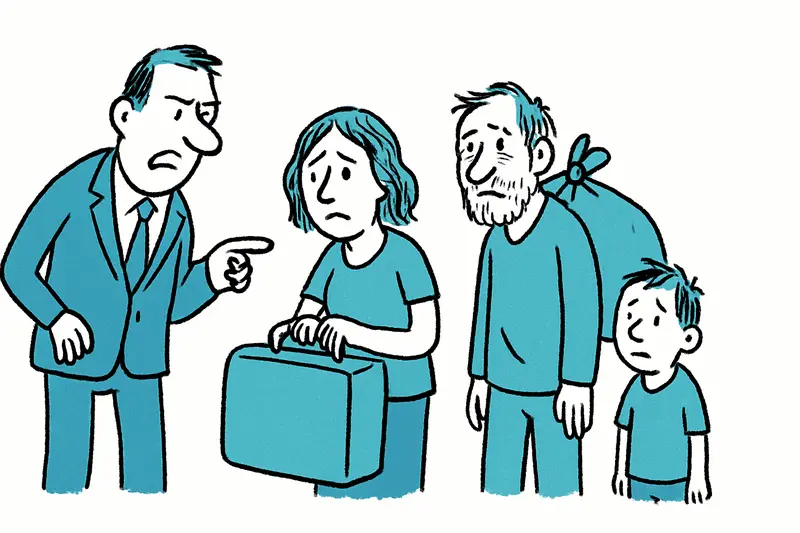
A court has approved the evacuation of the old prison complex in Palma. Mayor Jaime Martínez requested the measure. It remains unclear how and where the roughly 80 people living there will be relocated.
Eviction at Palma's Old Prison: Where Will the Around 80 Residents Go?
Palma's town hall has requested the evacuation of the old prison complex, and a court apparently granted that request the same day. Mayor Jaime Martínez is, according to the city council, the initiator of the procedure; he has recently presented a package to curb short-term rentals, party boats and hostels. Around 80 people currently live in the building. A meeting between the city administration and the Spanish government delegation is scheduled for tomorrow to discuss the next steps.
Key question
Who is responsible for ensuring that a rapid state-ordered evacuation does not lead to a social emergency?
Critical analysis
The speed with which the request and the court decision came about raises questions. A judicial decision can be legally correct and still create practical problems if an orderly rehousing plan is not organized. In Mallorca, where housing is scarce, despite initiatives to convert vacant offices and shops into apartments, and the pressure of the tourist season is tangible, a sudden relocation of dozens of people means additional strain on emergency shelters, social services and neighborhoods that are already burdened. Simply declaring that a building is to be cleared does not replace the task of providing follow-up solutions.
What is missing in the public discourse
In public, the decision is usually presented as a fact. Central details, however, remain barely audible: What are the profiles of the residents — families, single people, people with residency problems or health needs? Is there a timeline for the relocation? What role do the social services of the Balearic Islands play and what role does the municipal administration play? And: who ensures that the evacuation does not result in homelessness? This concern is sharpened by reporting that evictions are rising in the Balearic Islands. Answers to these questions are necessary so that an eviction does not become a displacement or security problem.
A typical Mallorca everyday scene
On an early morning in Palma you can hear vans behind the old walls, the rattle of the tram and occasionally anxious murmurs. People who have improvised for years in a masonry building may pack their few belongings into bags; outside, workers begin to sweep the streets. This is not an abstract administrative process, this is life — with names, illnesses, jobs, hopes. This scene takes place in immediate proximity to plazas, cafés and often full offices; the city will not simply "get rid" of these people, it must integrate them or house them properly.
Concrete solutions
Some pragmatic steps could help limit harm: 1) A clear, publicly accessible timeline for the evacuation with deadlines and responsible parties. 2) Mobile teams made up of social work, health services and legal advice to individually register residents and offer support plans. 3) Short-term placements in existing emergency shelters with guaranteed care and referral services instead of a one-time relocation. 4) A registry of vacant municipal or privately rentable apartments with incentive mechanisms for temporary use, informed by cases such as the Son Banya site confirmed as belonging to the city of Palma. 5) Close coordination between the Ayuntamiento, the Delegación del Gobierno and social organizations — including agreed funds and controls. 6) Legal assistance for those affected so that people entitled to special protection (families with small children, the sick, elderly people) are not overlooked.
Pointed conclusion
A court decision closes a chapter in the use of a building, but it does not solve social problems by itself. Palma's politicians and administrators must deliver more than legal certainty at this point: transparency, scheduling and a real social bridge for the roughly 80 affected people. Without that, a formal eviction risks becoming a humanitarian task — and that burden will fall on the city, amid the everyday noise of vans, street cafés and Palma's winding stone architecture.
Frequently asked questions
What is the weather usually like in Mallorca in spring?
When is the best time to swim in Mallorca?
What should I pack for a trip to Mallorca?
Is Mallorca good for a beach holiday outside summer?
What is Puerto Pollensa like for a holiday in Mallorca?
Is Cala d’Or a good place to stay in Mallorca?
What kind of weather should I expect in Mallorca in autumn?
Are beaches in Mallorca windy in spring?
Similar News

Arrest at the Port: Three Suspected Pickpockets Left Mallorca After Series of Thefts
The National Police stopped three men at Palma harbour who are accused of several thefts at the airport. How could the g...

Palma's Rental Bike Boom: More Bikes, More People, More City Life
Since Bicipalma was opened to non-residents, the system has noticeably grown. Students, residents and tourists bring lif...

Palma–Lyon in Winter: Two Weekly Flights Bring Fresh Momentum
From October Transavia France will connect Palma and Lyon in winter as well: Wednesdays and Saturdays, around 17,000 sea...

Budget holidays in Mallorca: What thriftier tourists really mean
Visitors are spending less: shorter stays, fewer restaurant visits, fewer excursions. A reality check for Mallorca's eco...

Mallorca gets winter link to Lyon: Transavia France flies from October
Transavia France will launch a winter direct connection Palma–Lyon from late October: twice weekly, around 17,000 seats ...
More to explore
Discover more interesting content

Boat Tour with BBQ along Es Trenc Beach

Private transfer from Mallorca Airport (PMI) to Pollensa
