
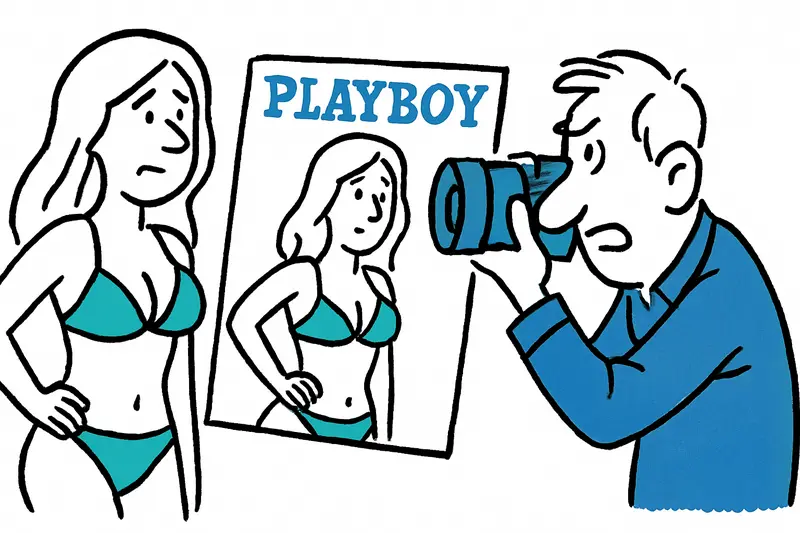
Hanna Weig on the 'Playboy' Cover: Between Self-Determination, Show, and What's Missing
Hanna Weig's cover shoot raises questions: self-determination or calculated move? Why does the debate about body diversity and platform rules remain so muted — even here in Majorca?
Hanna Weig on the 'Playboy' Cover: Between Self-Determination, Show, and What's Missing
Leading question: Does this photo really encourage women — or does the industry merely repeat old patterns?
The streets of Palma carry the typical early-summer air today: scooters hum, a café in Santa Catalina opens its awning, a shop assistant on the Passeig Mallorca still wears last night's dress. And in the middle of it all a topic that even market-goers pick up on: Hanna Weig, 30, appeared unclothed on the cover of a men's magazine. For many this is an expression of self-confidence; for others, another chapter in the story of influencer staging.
Facts, briefly: Weig, once a bank clerk in Bavaria, has built a career as a model and social media personality, lived in Berlin, and at times gathered around 550,000 Instagram followers before an account suddenly disappeared. She is the mother of a daughter, was married, and in recent years has repeatedly shown public interest in celebrity relationships. The current shoot took place in Cape Town; the protagonist herself says she likes to show her body and wants to encourage women toward self-love.
Initial analyses sound familiar: some call it self-determined, others call it marketing; similar debates played out around Between Harbor Coffee and the Limelight: What Lilly Becker's Ibiza Cover Has to Do with Mallorca. What is often missing in public discourse, however, is a sober distinction between personal self-determination and the mechanism behind it: paid attention follows known formulas. That does not mean personal motives are automatically less genuine. It does mean, however, that individual decisions enter an ecosystem — platforms, agencies, media — that prefer certain body types and images; this dynamic is discussed in From the Harbor to the Penance Camp: Jörg Dahlmann's Next TV Chapter.
This leads to two problems: first, the normalization of a narrow beauty ideal; second, the narrowing of the debate to 'empowerment' without context. On Majorca, where model and event culture is more visible than on many other islands, this is particularly noticeable, as Danni Büchner: Between Show and Protection – a New Summer in Mallorca shows. At the last fashion event in Palma the audience — from event staff to regulars at the beach bars — mixed with influencers. Conversations at the bar often revolved around how easy or difficult it is to remain truly authentic when engagement and assignments depend on producing content that promises likes.
So what is missing in the public debate? Three things: transparency, diversity, and media literacy. Transparency toward followers — for example clear indications when something is a paid campaign — remains patchy. Diversity does not only mean 'more body sizes', but also: making other life models visible, such as mothers over 30, people with ordinary jobs, those without influencer glamour. And media literacy: the island needs more conversations in schools, at parent evenings, and in cultural centers about how visual worlds affect us.
Concrete proposals for Majorca:
1) An open forum in Palma — organized by independent cultural associations and local schools — that twice a year discusses influencer culture, advertising rules and body images. Such evenings could take place in the cultural center La Misericòrdia or in cafés in La Llotja, where young women and parents can ask questions directly.
2) Collaboration between event organizers (fashion shows, events) and non-profit organizations to book more diversity for public appearances: not only 20- to 30-year-old influencers, but also local craftswomen, teachers, older models. Visibility costs nothing — but the responsibility to plan it requires courage.
3) Workshops for young people at schools on Majorca: short modules on influencer marketing, retouching, and healthy self-perception — practical, local and offered free by vocational schools or NGOs.
An everyday scene shows why this is important: one evening on Playa de Palma two friends talk, one nervous about her first model casting, the other convinced that certain measurements and 'the right look' are necessary. Such conversations shape decisions long before industry and media get involved.
In conclusion: the photo of Hanna Weig is more than a cover. It is an occasion to question the mechanics behind self-images — without reflexive condemnation, but also without naive applause. Self-determination does not mean that broader framework conditions are irrelevant. Those on Majorca who care about the island's image, identity and future should lead the debate — concretely, locally and matter-of-factly.
Conclusion: The cover is a statement by the protagonist. The question society must answer is: does this encourage genuine diversity — or do we merely reproduce a profitable aesthetic? Here on the island the answer can begin at neighborhood meetups, schools and small cultural events.
Frequently asked questions
What is the weather usually like in Mallorca in late May?
Can you swim in Mallorca in late May?
What should I pack for Mallorca in late May?
Is late May a good time to visit Mallorca?
What can you do in Palma de Mallorca in late May?
Is Valldemossa pleasant to visit in late May?
What is Alcúdia like in late May for a beach holiday?
Do you need a jacket in Mallorca during late May evenings?
Similar News

Mallorca gets winter link to Lyon: Transavia France flies from October
Transavia France will launch a winter direct connection Palma–Lyon from late October: twice weekly, around 17,000 seats ...
Ses Fontanelles: 1,700 Years Underwater – the Wreck That Makes Mallorca Proud
A Roman merchant ship lay hidden for 1,700 years off Can Pastilla. Now Ses Fontanelles is in the spotlight: salvage, con...
Mini-tsunamis in Mallorca: Harmless natural phenomenon — or an underestimated danger?
Two harbor towns in Mallorca recorded unusual water level fluctuations. An analysis: How rissagas form, who is at risk —...
Stinging jellyfish in Cala Banyalbufar: Why everyone suddenly fled the water
In Cala Banyalbufar, Pelagia noctiluca washed up in droves. A personal account of why this is no coincidence, what is of...
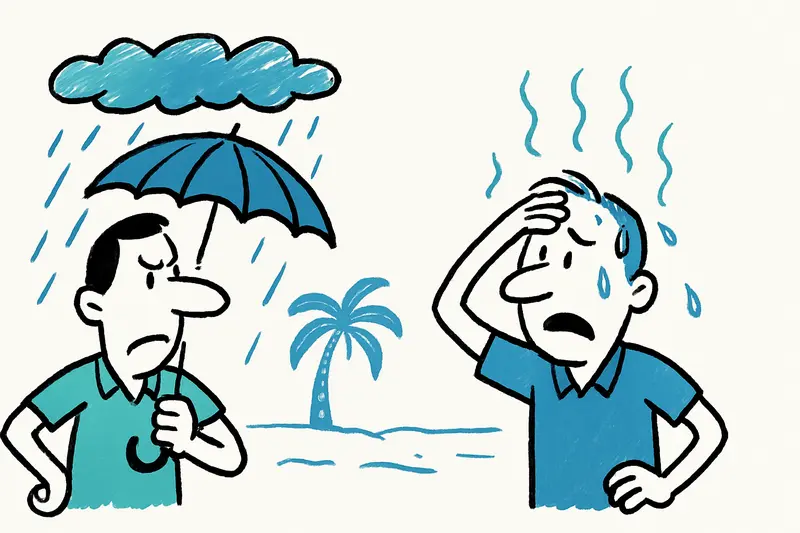
New low-pressure trough brings rain — and the heat remains: What's missing in Mallorca?
A short, intense window of showers hit Mallorca, yet the air remained muggy and warm. Key question: Why does rain hardly...
More to explore
Discover more interesting content

Boat Tour with BBQ along Es Trenc Beach
Private transfer from Mallorca Airport (PMI) to Pollensa
