
Is Mallorca Facing the Cuba Debacle? How US Sanctions Are Squeezing Our Hotel Giants
Is Mallorca Facing the Cuba Debacle? How US Sanctions Are Squeezing Our Hotel Giants
US sanctions against Cuba's military conglomerate are putting Meliá, Iberostar & Co. under pressure. What risks arise for Mallorcan corporations — and what should we do now?
Is Mallorca Facing the Cuba Debacle? How US Sanctions Are Squeezing Our Hotel Giants
Key question: Can Mallorcan hotel chains lawfully maintain their presence in Cuba without endangering their international financial relationships and reputation?
The dispute over sanctions feels distant — but in Palma you can already notice its effects in small ways. On the Passeig Mallorca in front of the old town hall, bus drivers and hotel porters quietly discuss "the Cuba thing," while from a café on Plaça d’Espanya the scent of freshly brewed café con leche drifts out. These are the scenes where economic issues turn into everyday worries: jobs, bookings — already vulnerable after Ryanair threatens capacity cuts — and payment routes.
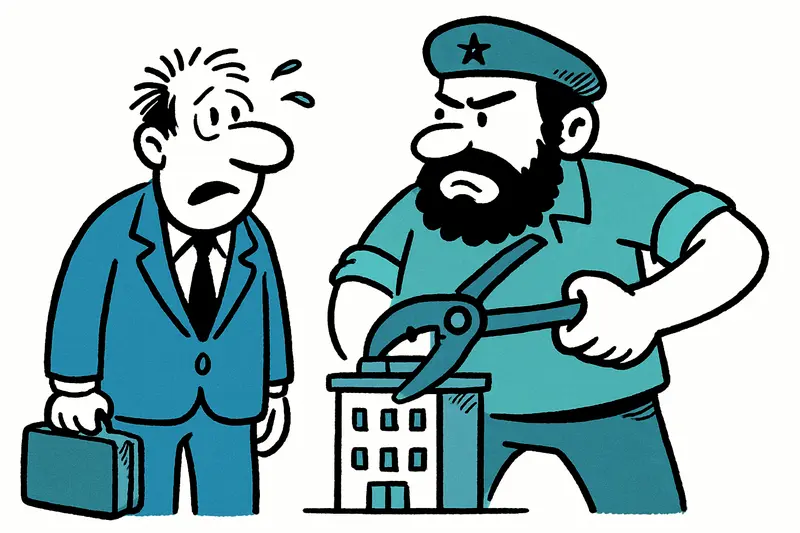
What happened: The US government tightened measures against the state-controlled conglomerate GAESA and is putting foreign partners under time pressure. Mallorcan chains have reacted: Iberostar removed twelve properties connected to Gaviota from its brand operations; Meliá suspended management and brand agreements at about 15 hotels. These decisions are not mere image maneuvers — they are direct responses to the risk of secondary sanctions and uncertainty about access to US-dominated financial channels.
Critical analysis: The situation is legally and economically complex. European companies operate in a field of tension: on the one hand, long-term investments and local contracts are at stake; on the other, there are significant consequences if payments run through US banks or US partners are involved. The hotel groups' steps so far show that many firms prefer legal certainty over short-term profit. But an orderly withdrawal from partnerships in Cuba is not an easy switch — it involves staff, ongoing maintenance and supply contracts, reservations, and the question of who ultimately bears responsibility for outstanding invoices.
What is missing from the public discourse: There is a lot of talk about brand names, too little about concrete legal risks for employees, suppliers, and local communities. Also underexplored is the dependence of international payments on US financial routes and the question of how EU rules and Spanish interests align with extraterritorial US sanctions; Rivalry over Chips and Standards: What the Global Race Means for Mallorca. In Mallorca nobody likes to talk about potential short-time work, food supply failures, or the loss of maintenance contracts for facilities, as Empty Tables, Growing Worries: Why Mallorca's Gastronomy Is on Low Flame reports — but that is exactly what can hit locally.
Everyday scene from the island: On Avenida Gabriel Roca, in the morning, a taxi stops; the driver, a man from Son Gotleu, says his cousin works in management on a hotel project in Cuba. "When the companies leave, it's not just a logo on the door," he says, shaking his head. He thinks of layoffs, of families that connect both sides of the Atlantic.
Concrete solutions that should now be discussed and implemented:
1) Legal due diligence and contract reviews: Immediate auditing of all Cuba contracts, clear exit clauses, escrow arrangements for outstanding payments.
2) Financial safeguards: Establish reserves for potential fines, examine alternative payment channels outside US jurisdictions, and secure coverage through insurers that handle geopolitical risks.
3) Political coordination: Pool interests through Spanish and EU channels; demand that Europe provides legal guidelines for companies in conflict situations.
4) Social measures: Emergency plans for employees in affected properties in Cuba and Mallorca — training, temporary employment programs, social funds.
5) Strategic diversification: Accelerate diversification of investments into regions with clearer legal frameworks; expand cooperation with partners not financed by US institutions.
These steps are pragmatic but not popular. Companies must act uncomfortably in the short term to remain operationally capable in the long term.
Punchy conclusion: The decisions by Meliá and Iberostar are less an ideological shift than an economic emergency brake. For Mallorca the consequences are twofold: the big brands will survive economically, since their core markets lie here in Europe — but their geopolitical ambitions become less predictable. What is really missing is a clear, public plan from the industry and politics on how to protect jobs and close legal grey areas for companies. As long as this gap remains, a distant sanction can quickly become a locally felt shock — on Passeig Mallorca just as in a coastal town where people empty their cups in the morning and hope the next booking is not the last.
Frequently asked questions
What is the weather like in Mallorca in winter?
Can you still swim in Mallorca outside summer?
What should I pack for Mallorca in winter?
When is the best time to visit Mallorca if you want mild weather?
Is Palma de Mallorca worth visiting in the off-season?
What is Sóller like in winter?
Can you do outdoor activities in Mallorca in winter?
Is Mallorca sunny in winter?
Similar News

Magaluf: Watchtower Alarm – Lifeguards Pull Unconscious Beachgoer from the Water
After a drama in the late afternoon, two lifeguards at Magaluf beach rescued an unconscious 44-year-old man. He was stab...

Turquoise in the City: How dangerous is the color play of the Sa Riera?
The Sa Riera in Palma suddenly turned turquoise — a pretty motif, but behind the effect lies a discharge of saline waste...

Jeckliner at Sunnesching: Cologne spirit sets sail from Palma
In September 2027 the Mein Schiff 2 briefly becomes a floating carnival stage: four days with Cologne bands, comedy and ...
Finally Home: Mike and Leyla Heiter Buy Villa with Sea View in Mallorca
The reality TV couple Mike and Leyla Heiter have bought a house in Mallorca with a roof terrace and sea view. An Instagr...

Arrest after series in Palma: Who protects apartments from repeat offenders?
The National Police arrested a man in Palma who investigators say may have broken into several apartments. In one incide...
More to explore
Discover more interesting content

Can Cap de Bou

Townhouse Lleo 72
