
From Fish Stall to Yacht: How Listings Really Work in Mallorca
From Fish Stall to Yacht: How Listings Really Work in Mallorca
Market stall or luxury item — on Mallorca it's often the listing, not just the product, that decides. Practical tips for clear titles, strong images and reliable data so offers are seen more quickly and taken seriously.
From Fish Stall to Yacht: How Listings Really Work in Mallorca
Why a good online shop window is just as important as the market display
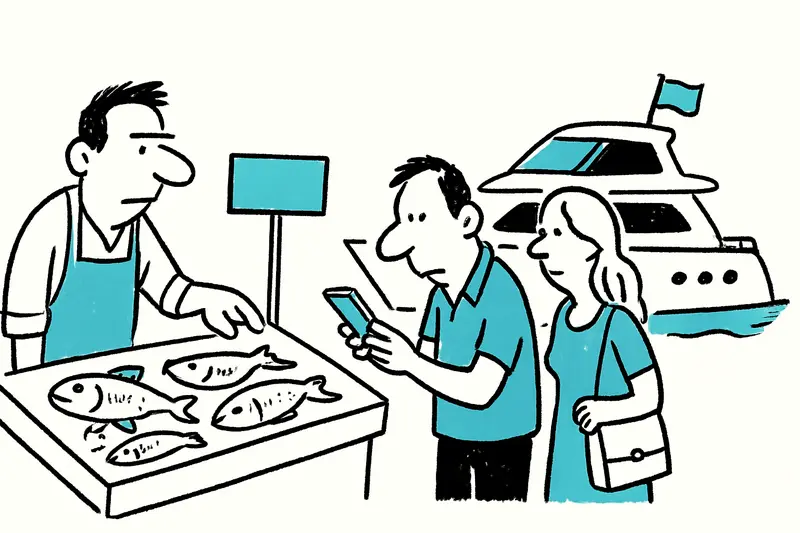
Early morning at Mercat de l'Olivar: a vendor lays dorades on ice, calls out, a tourist couple stops, reads the price tag and decides in seconds. That small scene reveals a lot about what a listing must achieve. On smartphones, sellers often have only those seconds — and the island depends on successful purchases, whether it's shrimp for dinner or a second-hand motor yacht.
The good news: many improvements are simple. A clear, keyword-oriented title, a main image that also works as a small thumbnail, and all required fields filled in — that immediately increases visibility and trust. On Mallorca I see this daily: whoever has a clean, complete listing receives inquiries faster than someone who only posts a blurred photo.
But not all goods follow the same rules. At the weekly market, speed and clarity decide: few, good photos, a clear price indication, a short description that names the benefit. When selling expensive items — yachts, villas, classic cars — completeness is trump. (For legal guidance on property purchases see Legally Secure in Mallorca: Why Legal Guidance for Property Purchases Is Not a Luxury.) Buyers want dimensions, service history, exact equipment and many detail photos. Openness here acts like a trust bonus; those who fairly describe signs of use appear credible.
Technology supports the presentation. Structured fields (price, condition, dimensions) are not just pretty — they are search-engine language. Those who leave gaps here fail filters. Also important: load time. A listing that loads slowly on mobile or is displayed poorly hardly stands a chance against typing, swiping vacationers on the island.
For small sellers this is an invitation: focus on the essentials. A simple order helps: 1) start the title with common search terms, 2) optimize the main image, 3) fill in required fields, 4) description with benefits first, details afterwards. That saves the quick sale of everyday goods.
High-priced offers require patience and depth. Here a standardized data sheet with technical details pays off, a photo series from the hull to the engine room and a clear contact routine for viewing appointments. Buyers in Mallorca who want to see a boat usually bring checklists — the more the listing answers beforehand, the fewer follow-up questions and the faster the negotiation phases. (International buying perspectives are explored in BARNES Mallorca: A Bridge for International Buyers Between Dream and Reality.)
Those who manage many listings should consider central tools: listing management saves time and ensures consistency, for example when prices need to be adjusted seasonally. Caution: templates are useful, but must not become text stencils. Local details, a brief note about the berth or the last inspection give back personality. (Local brokerage approaches are discussed in Living Blue Mallorca: How Real Estate Preserves the Island Feeling.)
Language and tone are craftily important. On Mallorca, concrete information works better than superlatives. Instead of 'top maintained' prefer 'last service: July 2026; engine oil and filter changed.' Such information can be verified and builds trust — and trust is the real currency here.
Measurement is the tool for fine-tuning. Click numbers, dwell time and inquiries show where it's failing. Many views without contact indicate price or description problems; few views point to a poor title or weak main image. Those who take these signals seriously improve deliberately instead of experimenting blindly.
On the island this has consequences: better listings mean fewer unnecessary appointments, fewer trips with empty hands and a higher closing rate — this saves time and CO2. For merchants in the port of Port de Sóller or the delicatessen shops in Palma this means: more sales with less effort and more satisfied customers.
A small, practical closing: checklist for immediate improvements — check the title, optimize the main photo, fill required fields, add three to eight detail pictures, state last service or origin, review the listing monthly. Those who heed this sell faster. And in the end maybe the exchange will work too: fresh dorade for a good story at the counter.
It's a simple thing: a good offer meets a clear shop window. On Mallorca this feels a bit more human — and that makes the island not only more livable but also economically more efficient.
Frequently asked questions
When is the best time to visit Mallorca for beach weather?
Do I need a car to explore Mallorca, or are public transport options enough?
What should I pack for a Mallorca trip?
Are Mallorca beaches safe for swimming?
What are good family-friendly activities in Mallorca?
How can I explore Mallorca's countryside without a strict itinerary?
How expensive is a trip to Mallorca, and how can I save?
What should I know about Mallorca’s weather across the year?
Similar News

24 Graves in Felanitx: Who Wins — Hospital or Culture?
During the hospital construction in Felanitx, a necropolis with 24 graves and Islamic pottery was discovered. A test exc...

Nighttime Break-in in Marratxí: Four Perpetrators, Smashed Door and Many Questions
A restaurant in Marratxí was robbed on the night leading into Thursday. Four masked perpetrators caused significant dama...

Rolex robbery in Santa Catalina: What does this attack say about Palma's safety?
In Santa Catalina, two attackers stole a Rolex worth €40,000 from a 65-year-old Swede. His pregnant daughter was shoved....
An End to Dolphin Shows in Mallorca? The Franz Weber Foundation Demands a Ban
The Swiss Franz Weber Foundation is calling on the island council to take a clear stance against marine animal shows. Be...
Cardiac Arrest at Palma Airport: A Reality Check for Safety and Assistance
At Palma Airport, an approximately 70-year-old tourist collapsed at a gate and died despite resuscitation attempts. What...
More to explore
Discover more interesting content

Can Cap de Bou

Townhouse Lleo 72
