
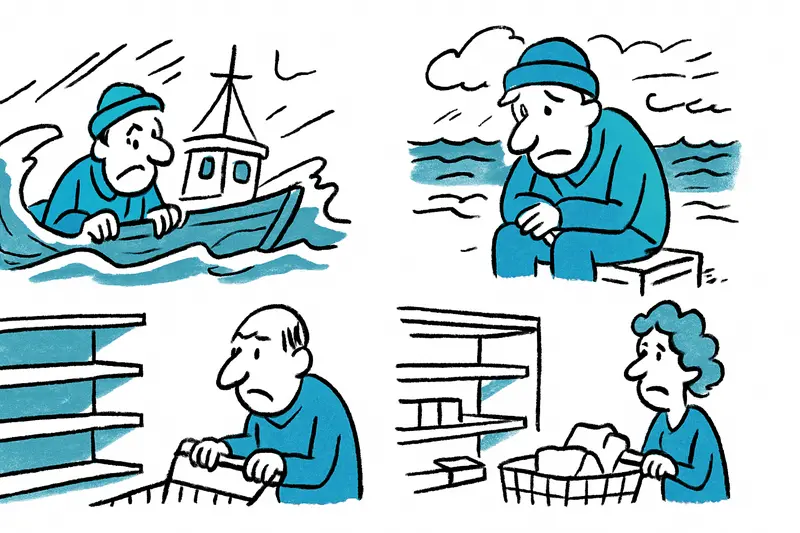
When the Sea Takes a Break: Mallorca's Fishermen between Storm and Supermarket
When the Sea Takes a Break: Mallorca's Fishermen between Storm and Supermarket
Aftermath of storms, short fishing trips and empty crates at the fish market — what does this mean for fishermen, prices and our coastal towns? A reality check with everyday scenes and concrete proposals.
When the Sea Takes a Break: Mallorca's Fishermen between Storm and Supermarket
The crates in the harbor are smaller, the counters in the markets more sparse. Anyone who wants to buy fresh fish these days feels it directly in the port: less variety, higher prices. The reason: a series of winter storms has made it almost impossible for many fishing boats to go out in recent weeks. Some crews went to sea on only five or six days in a month.
Key question
How can island society respond when the sea repeatedly takes a break because of extreme weather — and the affected families not only suffer in the short term but fall structurally behind?
Critical analysis
Fishermen work at the intersection of nature, market and technology. Stormy weather is not a new problem. But two things stand out: first, the frequency of strong winter storms seems to be increasing, as discussed in Sudden autumn in Mallorca: Are harbors and coasts prepared for short storms?; second, the financial buffering for small coastal businesses is thin. When a boat has to stay on the quay for days or weeks, income is missing. Many operations are small and react sensitively to a month with only a few outings. Consumers feel the result: less supply, higher prices.
In addition, trade remains flexible but is not always local. Supermarkets can restock from other regions, as noted in When the Cold Case Steals the Menu: How Supermarkets Are Changing Mallorca's Lunch. The small direct sellers at the harbor are hit harder. The consequence: money flows away from the local value chain, and the tradition of daily sales from the boat at the market suffers.
What is missing in the public debate
There is a lot of talk about tourism and infrastructure. The profitability of coastal fishermen, however, is discussed less. Three aspects are often overlooked: first, the social dimension: households that live from seasonally fluctuating fishing times. Second, logistics: lacking cold storage on land and missing short routes into processing and distribution structures. Third, long-term adaptation to changed weather patterns — not just a short-term aid package, but planning for more resilient businesses.
Everyday scene from Mallorca
Early in the morning at the Mercat de l'Olivar it smells of sea salt and coffee. Sellers wipe down half-filled counters, an older fisherman carries a crate with Söller fish, a scene echoed in Toni Font and the Fishermen: A Quiet Change in Sóller Harbor, the gulls circle loudly. On the Paseo Marítimo pedestrians pull their jackets tighter; the waves hit the breakwater, visibly rougher than ten years ago. Conversations revolve around simple things: fuel costs, repairs, and whether the next trip can take place at all. This is not a theoretical problem — it is here, every morning.
Concrete approaches
It is not enough to just talk about help. Measures are needed on several levels:
1) Short-term financial bridging: A fund for days lost at sea that provides simple grants for fuel and basic costs can prevent insolvencies after storm weeks. Important: quick payouts and low bureaucracy.
2) Improved onshore infrastructure: More cold storage in small harbors, shared processing facilities and mobile refrigerated trucks reduce spoilage and create better marketing opportunities when supply recovers.
3) Better weather and operational planning: Closer cooperation between AEMET, harbormasters and fishing guilds can make outings safer. Modern forecasts combined with local experience help avoid risky trips and use profitable windows.
4) Economic diversification: Promoting regional brands, direct marketing and small processing businesses (smoking, canning) provides additional income when fishing days are scarce.
5) Insurance and credit solutions: Tailored insurance against weather damage and microcredits on favorable terms help cover repairs and investments.
6) Cooperation instead of competition: Local marketing cooperatives can organize temporary help, plan joint transports and secure market access for small players.
Financing and responsibilities
No single actor can solve every point alone. Municipalities, regional authorities, ports and the fishing industry must think together. Partly EU programs or regional funding instruments can be used; what matters is a pragmatic concept that combines rapid aid with long-term investments.
Conclusion
The storms are not just weather events. They bring an economic force that quickly unbalances small coastal businesses. Anyone who walks through the markets in the morning sees more than empty crates: they reflect the question of how resilient an island society wants to be. A targeted package of short-term aid, better infrastructure and reliable planning can ensure that fishing families do not pay the price when the sea takes a break. Without such pragmatism the island loses not only part of its food supply but also a piece of everyday culture.
Frequently asked questions
Why is fresh fish in Mallorca harder to find after winter storms?
How do winter storms affect fishermen in Mallorca financially?
What can buyers in Mallorca expect at the fish market after bad weather?
Where do people in Palma buy fresh fish when the harbor supply is low?
What is the situation like at Mercat de l'Olivar in Mallorca after stormy weeks?
Are Mallorca fishermen becoming more vulnerable because of stronger winter storms?
What help do small fishing businesses in Mallorca need after storm damage?
Can fishing in Mallorca adapt to more extreme weather in the long run?
Similar News

More water than last year: Mallorca's reservoirs breathe easier
September rain refilled the Tramuntana's reserves: overall fill around 35 percent, Cúber at 40.42 percent, Gorg Blau at ...
Three Luxury Hotels in Banyalbufar: Lots of Money, Many Questions
A Danish investor plans three exclusive accommodations in Banyalbufar — including the historic Son Valentí. The announce...
2.1 tonnes of cocaine on sailing yacht off Spain's coast – a reality check for the coastguard
A 14-metre yacht was seized with 2.1 tonnes of cocaine. Who monitors the ports, how does the international hunt succeed ...
Heat Bonus in Mallorca: 100 Euros Extra for Outdoor Staff at MarSenses
MarSenses pays employees who worked outdoors in August an extra €100 as recognition. Lighter uniforms, reduced hours for...
Renovating in Mallorca: What You Really Can Do Without Neighbour Consent
Many think they can do whatever they want in their apartment. That's partly true — but only as long as structural elemen...
More to explore
Discover more interesting content

Can Cap de Bou

Townhouse Lleo 72
