
Flatshare alarm in Palma: Why pets and smoking reduce your chances when searching for a room
Flatshare alarm in Palma: Why pets and smoking reduce your chances when searching for a room
On Palma's room market, dog owners and smokers often come off worse. Why that is, what is missing in the discourse and which local solutions could work.
Flatshare alarm in Palma: Why pets and smoking reduce your chances when searching for a room
Key question: Why are pets and smokers so often excluded when searching for a room in Palma — and what can the city do about it?
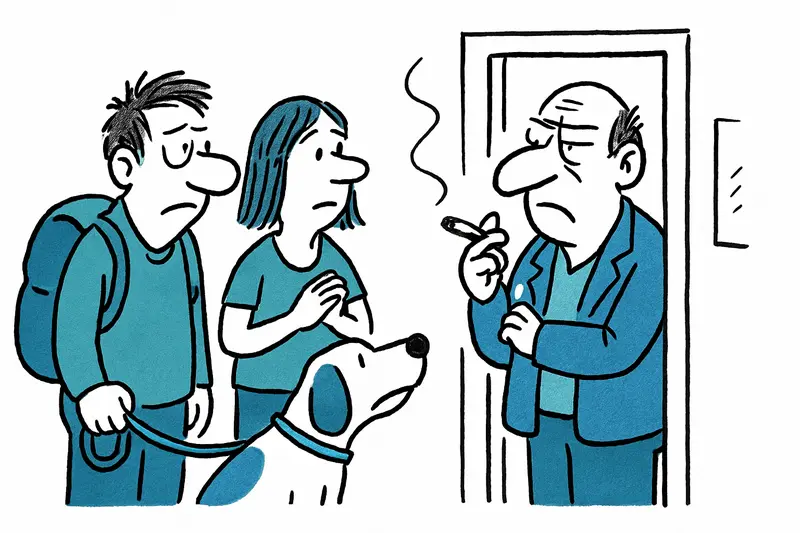
Early in the morning, when the street sweepers brush the dust off the Plaça Major and the smell of coffee drifts from a bar on the Passeig del Born into the alleys, you can see them: people searching with a backpack, a laptop and sometimes a dog on a leash. Increasingly, however, the search for accommodation ends at the front door when the landlord signals rejection from the outset. On the Palma market this means concretely: in about a quarter of adverts pets are allowed, smoking is permitted in only about one in eight offers. Nationwide, smokers are tolerated in roughly one in ten rooms, pet owners in even fewer. These figures reflect not only preferences but also conflicts — and a market failure.
The reasons are varied. Many landlords fear damage by animals or odor and fire damage from smoking. In multi-occupancy buildings neighborhood conflicts, smell nuisances and fire hazards can escalate quickly — especially in older buildings in districts like El Mercat or La Lonja, where thin walls and narrow staircases leave little margin for error. At the same time, scarce housing increases selectivity: with high demand, candidates with seemingly "lower risk profiles" are preferred, a trend discussed in Flatshare Rooms in Palma: More Rooms, More Questions — Why Rents Are Still Rising.
A look beyond the island's borders shows that tolerance varies greatly by region. In some cities pets are welcome in significantly more listings, in others they are practically excluded. Values for smoking also vary widely — in some cities tolerating nicotine is much more common than in metropolitan centers. These differences suggest that local traditions, supply-and-demand ratios and municipal rules play a role. Regional price pressures are examined in When the Shared Flat Room Becomes a Luxury: Palma Under Pressure.
Critical analysis
The debate often stays on the surface: individual cases are complained about, but structural causes are rarely discussed. What is missing is an honest engagement with the following points: lacking standardized rental contracts, insufficient options for deposit rules regarding animal-related damage, inadequate insurance offers for short-term flatshare replacements and a diluted intermediary role that brings interest groups together. The role of short-term tourist rentals — which put pressure on the long-term market — is also only mentioned tangentially in discussions about flatshare rules.
Another blind spot: the consequences for the social fabric. Those who have to give up their pet often lose more than just a companion; they lose routine, social networks and sometimes their health. Smokers, meanwhile, are not always excluded out of consideration for neighbors but out of concern for the re-rentability of the room. This hits low-income people particularly hard.
Everyday scene from Palma
In front of a flatshare on Carrer de Blanquerna two young people talk quietly while a dog tugs impatiently on its leash. A neighbor opens a window and shakes her head at the noise level. A note on the front door announces “no pets”. This small scene sums up what appears in advertisement statistics as a percentage: emotions, fears and practical problems collide — in the middle of a city that at the same time needs more housing.
Concrete approaches to solutions
1. Standardized lease clauses for pets: clear rules on cleaning duties, deposits and liability issues that are available online and provide legal certainty for both sides.
2. Insurance models for short-term rentals and flatshare compositions that cover damage caused by animals and thus reduce landlords' fears.
3. Municipal incentives: tax advantages or small subsidies for landlords who offer pet-friendly long-term rentals.
4. Smoking zones and technical solutions: clear non-smoking rules combined with tested ventilation in common areas, instead of blanket exclusion.
5. Mediation centers and dispute resolution: local advisory offices that help draft fair house rules and mediate conflicts.
Many of these measures could be tested in Palma relatively quickly: pilot projects in municipal housing or in neighborhoods with a high density of flatshares could provide data on whether financial incentives or insurance offers increase acceptance of pets and at the same time reduce neighborhood conflicts.
What is missing in the public discourse
The discussion needs more practical data and fewer moral judgments. There is a lack of a common language between landlords, tenants and the authorities. Instead of buzzwords like “problem tenants,” concrete rules, transparent liability issues and economic incentives should be put on the table. The debate should also pay more attention to the social dimension: who is particularly disadvantaged by exclusionary rules?
Conclusion: Palma's room market is a mirror: housing shortage collides with fears and missing instruments. Blanket bans help little. More pragmatic rules, insurance and subsidy offers as well as municipal mediation would be better. Only then can the city be prevented from increasingly answering the quiet voices — those with a backpack and sometimes a dog — with “occupied.”
Frequently asked questions
Why are pets often not allowed in flatshares in Palma?
Can smokers still find a room in Palma?
What should I check before moving into a flatshare in Mallorca with a pet?
Why is it harder to rent a room in Palma if you have a dog?
Is smoking allowed in shared flats in Mallorca?
Why does the Palma room market seem so strict about pets and smokers?
What could Palma do to make flatshares more pet-friendly?
Are older districts in Palma more difficult for pet owners and smokers?
Similar News

More water than last year: Mallorca's reservoirs breathe easier
September rain refilled the Tramuntana's reserves: overall fill around 35 percent, Cúber at 40.42 percent, Gorg Blau at ...

Three Luxury Hotels in Banyalbufar: Lots of Money, Many Questions
A Danish investor plans three exclusive accommodations in Banyalbufar — including the historic Son Valentí. The announce...
2.1 tonnes of cocaine on sailing yacht off Spain's coast – a reality check for the coastguard
A 14-metre yacht was seized with 2.1 tonnes of cocaine. Who monitors the ports, how does the international hunt succeed ...

Heat Bonus in Mallorca: 100 Euros Extra for Outdoor Staff at MarSenses
MarSenses pays employees who worked outdoors in August an extra €100 as recognition. Lighter uniforms, reduced hours for...

Renovating in Mallorca: What You Really Can Do Without Neighbour Consent
Many think they can do whatever they want in their apartment. That's partly true — but only as long as structural elemen...
More to explore
Discover more interesting content

Can Cap de Bou

Townhouse Lleo 72
