
Warning in Alcudia and Cala Rajada: How Pickpockets Are Operating Right Now — and How You Can Protect Yourself
Warning in Alcudia and Cala Rajada: How Pickpockets Are Operating Right Now — and How You Can Protect Yourself
Collected sightings in the northeast show: pickpockets are active again — often disguised as harmless female tourists. A practical checklist of what's missing and what helps now.
Warning in Alcudia and Cala Rajada: How Pickpockets Are Operating Right Now — and How You Can Protect Yourself
Key question: Why are the old town of Alcudia and the promenade of Cala Rajada being targeted — and what can the island community do about it?
In recent days reports from holidaymakers and residents in the northeast of Mallorca have increased: suspicious people appear at sights, along seafront promenades and in narrow alleyways, as also highlighted in Alert on the East Coast: Pickpockets in Cala Millor and Sa Coma — What to Do Now.
Anyone walking along the harbour promenade in Cala Rajada knows the sound of the seagulls, the clinking of ice cream spoons and the voices of German and Spanish guests. Exactly this loud, colourful hustle is a paradise for pickpockets: bags hung on chairs, phones on the table, backpacks on backs. For similar tactics reported elsewhere on the island see New Tricks at Ballermann: How Pickpockets Exploit Playa de Palma — and What Actually Helps.
Critical analysis: The problem is not only the presence of individual offenders, but an environment that makes it easier for thieves to operate. High visitor numbers, changing groups of guests and often missing visible prevention notices create favourable conditions. Police presence is often invisible at peak times, informational material for holidaymakers needs to be multilingual and staff in small bars and at beach stalls are not always trained to recognise theft behaviour, a gap highlighted after recent arrests in Pickpockets Stopped in Port d’Andratx – What the Case Reveals About Crime Tourism.
What is missing in public discourse: There is little transparency about times and places with increased case numbers—no easily accessible, up-to-date map and hardly any coordinated prevention notices in hotel chains, tourist information centres and at central points such as car parks and bus stops. Moreover, simple organisational weaknesses are rarely discussed openly: poorly secured luggage rooms, open beach bags or placing handbags on chair backs.
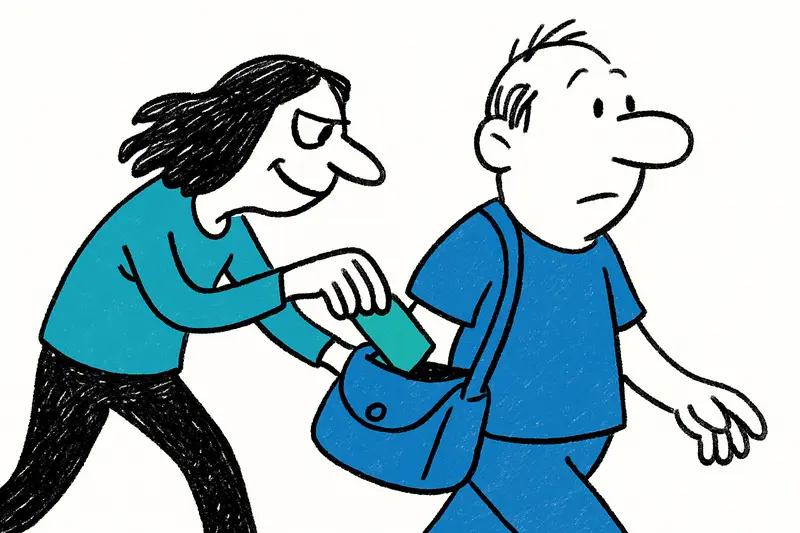
Everyday scene from Mallorca: picture the Plaça, an older married couple sits with a café con leche, a couple photographs the wall, children run between the tables. In this familiar scene a woman with a neutral expression passes the group, reaches unnoticed into a hanging open bag and has already disappeared before the waiter brings the bill. That's how fast it happens — and how inconspicuous.
Concrete solutions: In the short term hosts and business owners should implement simple measures: clearly visible signs in several languages, instructions for staff (watch bags, discreetly question suspicious behaviour), secure storage options behind counters. For guests: always keep a digital copy of your ID/passport, store cash and cards separately, carry bags in front of your body and do not leave phones unattended on tables; for further practical advice see Stay Safe: How to Avoid Pickpocketing in Mallorca.
For authorities and municipalities pragmatic steps are possible: temporarily increased foot patrols during particularly affected hours, cooperation between Policía Local and Guardia Civil for rapid information exchange, exchange platforms for residents (e.g. WhatsApp or Telegram groups) and a short-term information campaign at the start of the season in hotels, rental agencies and bus stations.
What tourists can do immediately: carry documents and larger amounts of cash in the front part of your clothing, use closable cross-body bags, enable location services on your smartphone and note down serial numbers of important devices. In case of theft: stay calm, go immediately to the local police station and file a report (denuncia) — this report is important for insurance and possible investigations.
A small pragmatic appeal to residents and employees: report suspicious behaviour, share observations in neighbourhood groups, take photos of suspicious behaviour patterns (without risking your own safety) and speak to guests politely about exercising caution instead of only scolding. Visible attention deters.
Pointed conclusion: Pickpockets do not use miracles, but opportunities. If we organise the surroundings a little differently and give up a few habits ourselves, we make life harder for the gang. Mallorca's alleys remain beautiful — if we all become a little more vigilant.
Frequently asked questions
How common are pickpockets in Alcudia and Cala Rajada right now?
What are the usual pickpocket tactics in Mallorca tourist areas?
How can I protect myself from pickpockets in Mallorca?
What should I do immediately if I get pickpocketed in Mallorca?
Is Cala Rajada promenade safe in the evening?
Are the old streets of Alcudia a target for pickpockets?
What should hotels and bars in Mallorca do to reduce pickpocketing?
What is the best time to be extra careful about pickpockets in Mallorca?
Similar News
More water than last year: Mallorca's reservoirs breathe easier
September rain refilled the Tramuntana's reserves: overall fill around 35 percent, Cúber at 40.42 percent, Gorg Blau at ...
Three Luxury Hotels in Banyalbufar: Lots of Money, Many Questions
A Danish investor plans three exclusive accommodations in Banyalbufar — including the historic Son Valentí. The announce...
2.1 tonnes of cocaine on sailing yacht off Spain's coast – a reality check for the coastguard
A 14-metre yacht was seized with 2.1 tonnes of cocaine. Who monitors the ports, how does the international hunt succeed ...

Heat Bonus in Mallorca: 100 Euros Extra for Outdoor Staff at MarSenses
MarSenses pays employees who worked outdoors in August an extra €100 as recognition. Lighter uniforms, reduced hours for...
Renovating in Mallorca: What You Really Can Do Without Neighbour Consent
Many think they can do whatever they want in their apartment. That's partly true — but only as long as structural elemen...
More to explore
Discover more interesting content

Can Cap de Bou

Townhouse Lleo 72
