
'For sale Mallorca' at Coll den Claret: Anger at the signs, bewilderment on the streets
'For sale Mallorca' at Coll den Claret: Anger at the signs, bewilderment on the streets
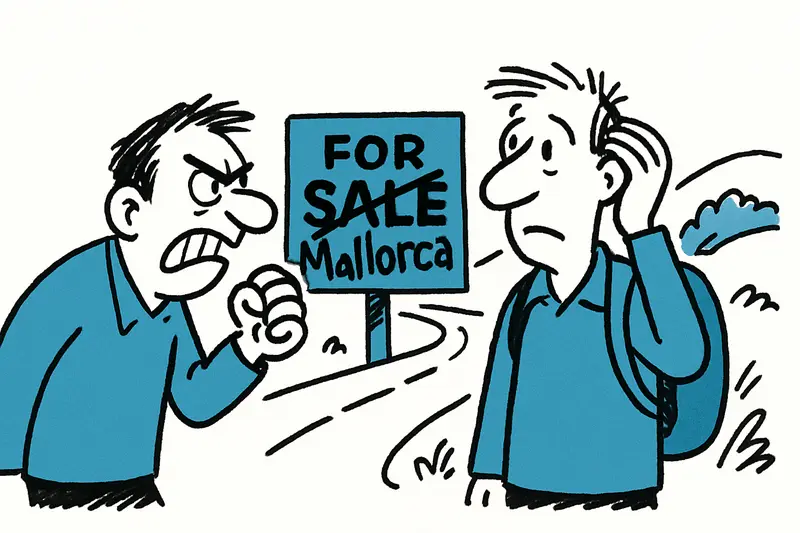
A graffiti at Coll den Claret near Esporles — 'For sale Mallorca' — strikes a raw nerve: it is protest, vandalism and a warning signal at once. What can be learned from it?
'For sale Mallorca' at Coll den Claret: Anger at the signs, bewilderment on the streets
A spray on a welcome sign shows: the issue of property and housing is simmering — but how do we deal with it?
Key question: How do we react when frustration over rising prices and foreign property purchases turns into graffiti and sometimes xenophobia?
At Coll den Claret, a few kilometres beyond the last houses of Esporles, the wind rarely pauses for long. On an idle morning with 19 degrees and a heavily overcast sky you can hear the scuff of tractor tyres, the tinkling of sheep bells and the distant conversation of two hikers climbing the hairpins. On one of the green welcome signs there has recently appeared in black paint 'For sale Mallorca'. A brief spray act, but a message that hits more than just the metal plate.
Critical analysis: The graffiti is both an outlet and a provocation. Posters, Provocation, Polarization: How Mallorca's Streets Become a Campaign Ground shows similar provocations have appeared on campaign materials. It picks up a real concern — the increase in property purchases by foreigners, which in some municipalities according to the cadastre office now make up a large share of ownership — and turns it into a drastic formula: sell instead of protect. The problem is multilayered. On one side are real burdens for residents: rising rents, vacant second homes, pressure on local services. After Eleven Years at the Top: What Mallorca's Tourism Radar Really Needs to See examines how tourism dynamics contribute to these pressures. On the other hand, protest that sprays anonymous walls quickly slides into generalisation and exclusion. The message is loud but not nuanced; it offers no plan, only outrage.
What is missing in the public discourse: There is much talk about figures, less about concrete local perspectives. Rarely do you hear robust concepts for how housing for people with ordinary incomes can be secured without immediately stoking a hostile mood toward newcomers. Equally absent are transparent data on how many properties are truly permanently empty, how many function as second homes, or what role investors play compared with private buyers. Without clear facts there is room for rumours — and for slogans on signs.
An everyday scene: On the main road through Esporles people with daypacks park at the weekend, they buy ensaimadas at the small bakery on the village square, talk about prices for simple flats and swap the latest listings. An elderly woman waters bougainvillea against a house wall, a bicycle courier rings his bell, a child runs by with mud on their shoes. These scenes show that this is not just abstract politics, but neighbours, shopkeepers, craftsmen — people whose daily lives are changed by a cascade of economic decisions.
Concrete approaches: First: faster, transparent collection of data at municipal level — who is buying, how are properties used, how many lie empty? Second: legal measures against permanently vacant properties and stronger instruments against abusive conversion of rental apartments into holiday homes (municipal vacancy registers, levies for second homes, stricter approval procedures). Third: a municipal dialogue process bringing affected parties — neighbours, landlords, new owners, town council — to the table; mediation instead of placard insults. Fourth: rapid removal of hate slogans and vandalism combined with information offers: a sign must not replace discourse, but its repair can show that breaking the law is not tolerated; this connects with debates over public signage in New Traffic Signs in Mallorca: Smaller Design, Clearer Signals. Fifth: regionally coordinated housing support for employees in care, hospitality and trades, linked to long-term rental commitments.
Rule-of-law aspects must not be undermined. Graffiti is property damage; anti-democratic or xenophobic slogans fall under statutes that must not be ignored. Recent instances include New xenophobic graffiti at Playa de Palma – How is the island reacting?. At the same time it would be a mistake to dismiss protest as merely criminal: it points to real social tensions that will not disappear through purely repressive means.
What the island society needs now is a twofold course: no tolerance for hate and vandalism, but also more courage for policies that address the causes. Faster data, clear rules for second homes, targeted support for locally rooted tenants and a new, open offer for dialogue — that would be a start. Above all, local politics needs to explain, listen and make solutions visible before the anger ends up again on the signs.
Conclusion: The graffiti at Coll den Claret is a symptom — it signals frustration and insecurity. If we only scrape the paint off the signs, the problem is not solved. Those who want to live on Mallorca must find ways to reconcile economic interests with social cohesion. It is uncomfortable, but necessary.
Frequently asked questions
Why are people in Mallorca so angry about rising house prices?
Is graffiti about housing a common sign of tension in Mallorca?
What is Coll den Claret near Esporles like?
How do foreign property purchases affect Mallorca's housing market?
What can Mallorca municipalities do about empty homes and second residences?
What is the housing situation like for workers in Mallorca?
How should Mallorca deal with vandalism linked to housing protests?
When is the best time to understand rural Mallorca, like around Esporles?
Similar News

The Maricarmen Case: Why an Eviction Is Forcing Spain's Housing Debate
Images of an 87-year-old woman on a stretcher have sparked a debate in Spain that also runs deep in Mallorca. Who protec...

Parking dispute in Els Hostalets: When a gap leads to violence
A parking dispute on Calle Aragón escalated into a mass brawl at night. Why do trivial conflicts here turn bloody so qui...

Bodycams in Palma: More clarity needed so surveillance doesn't become the norm
Palma's local police equip UII officers with Axon Body 4 cameras. Useful for evidence collection — but specific rules on...
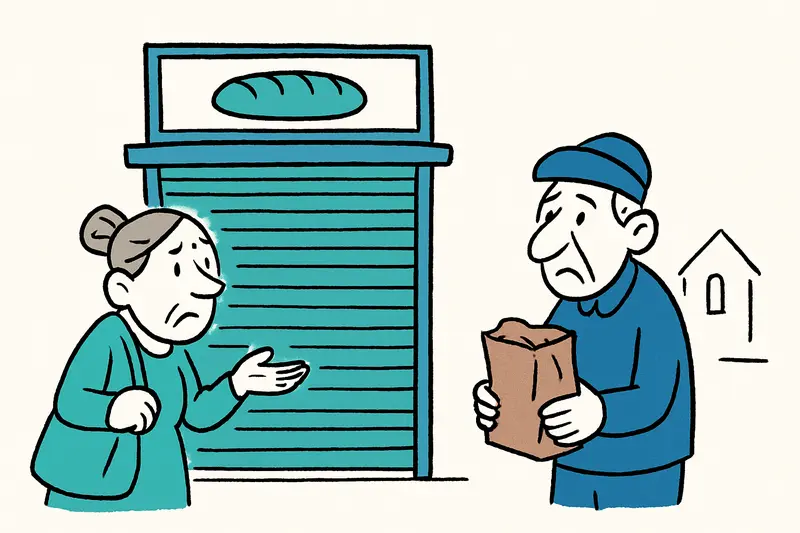
When the Bread Door Closes: Why Maria de la Salut Lost Its Last Bakery
The only bakery in Maria de la Salut, a sales outlet of Forn de ca'n Joan Terès from Palma, has permanently closed. What...
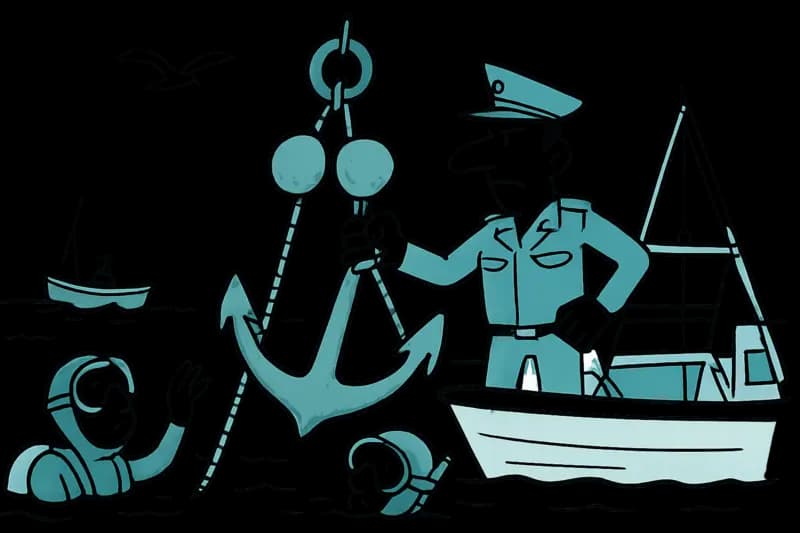
Ancient Piece Brought to Light: Guardia Civil Recovers Roman Anchor Fragment off North Coast of Mallorca
Divers from the Guardia Civil recovered a massive iron piece from Roman times off Mallorca's north coast. The roughly 35...
More to explore
Discover more interesting content

Can Cap de Bou

Townhouse Lleo 72
