
Four Seasons Formentor removes 'private beach' — cosmetic fix or turning point for free access?
After complaints, the Four Seasons in Formentor removed the phrase 'private and exclusive' from its website. Is this just PR — or does the change actually protect free beach access for locals and visitors?
Four Seasons Formentor removes 'private beach' — cosmetic fix or turning point for free access?
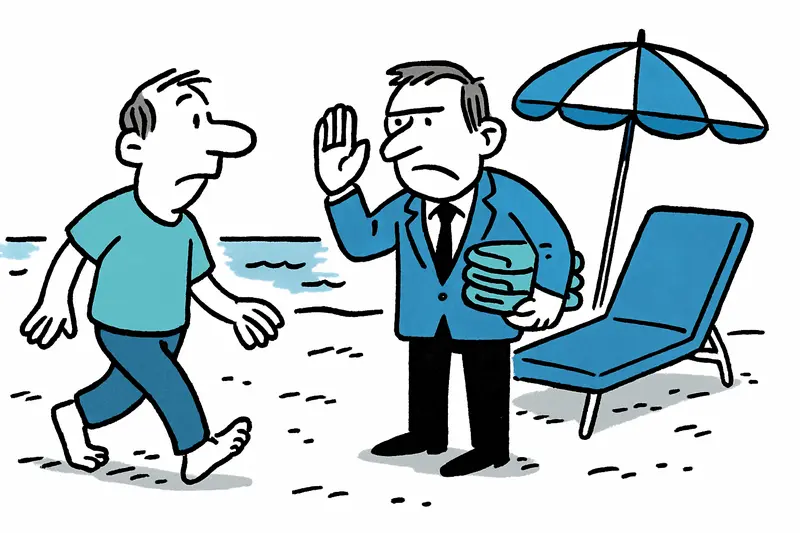
Early on Tuesday morning, while fishermen were still sorting their nets and the scent of pine drifted across the bay, one thing stood out: in front of the luxury hotel's loungers there were suddenly no white towels anymore, which usually act like small barriers that barefoot walkers have to avoid. The Four Seasons in Formentor had caused upset in recent days — and has now responded online Four Seasons Formentor website.
A central question
Is removing the words 'private and exclusive' from the hotel's website a genuine step toward restoring public beach access — or merely PR to deflect pressure from social media and potential regulatory scrutiny?
What sparked the outrage
Multiple visitors and locals described how areas between hotel loungers and the waterline were marked for days with towels and personal items. Some had the impression that loungers or parasols were only available for a fee. For island residents this is not an abstract issue: children, joggers and elderly neighbours use the small coves daily, not only in high season.
Spanish coastal law protects free access to beaches; public land does not end because a sunbed stands in front of it. Yet in practice the boundary is often blurred: who owns the space right at the water's edge when loungers look 'reserved'? This is where the grey zone begins, now visible in Formentor, as noted in analyses of Spanish coastal law (Ley de Costas).
The hotel's reaction — symbol or substance?
A few days after the public outcry, the Four Seasons removed the contentious terms from its website, according to reports Four Seasons Formentor eliminates 'private beach' indication after complaints. For many locals the change feels like a small victory. But the question remains: were physical barriers actually removed, or were only the words deleted?
On the beach the typical towel lines were gone on Tuesday. Some said the bad weather had washed the layers away. Others suspected public indignation had had an effect. Such observations show how sensitive the situation is: a single photo on social networks can force a response — while administrative checks often take much longer.
Official intervention: necessary, difficult, overdue
The Balearic government and the municipality of Pollença have announced investigations, a development covered in local reporting Who is allowed on Playa de Formentor? Investigations into hotel raise questions about beach access. Possible consequences range from fines to the revocation of concessions if it turns out access was permanently restricted. Environmental councillor Stephy Pozo stressed that the problem is not easy to prove — and exactly for that reason needs systematic control: 'Beaches are public and freely accessible,' she said in substance.
The flip side: authorities are limited in personnel, the stretches of beach are numerous, and the distinction between hotel service and public space is legally complicated. Proceedings often drag on for months, while the people on site continue to be affected day to day.
Less highlighted aspects
1) Economic pressure: luxury hotels argue they must offer special areas to paying guests to remain competitive. The result: subtle demarcations that change locals' habits.
2) Guests as allies or co-causes: many tourists accept reservations out of convenience — and then photograph in outrage when they no longer fit into the picture. A problem of awareness on both sides.
3) The role of guest communication: ambiguous wording on websites creates expectations. 'Private' is a politically charged word in this context — its use shows how much marketing and public space collide, and it has been linked to controversies such as reported premium offerings like Is the beach being privatized? €210 sunbeds at Formentor cause controversy.
Concrete opportunities and solutions
The debate can be used as an opportunity to create clear rules and implement practical controls. Some proposals:
1. Mapping public access: Municipalities should provide clearly visible digital and analogue maps showing the exact course of public beach sections — including markings for lounger areas, concessions and rescue routes.
2. Regular beach audits: Mobile teams during the season to check in the mornings and afternoons whether lounger areas are being used lawfully and whether access points are blocked.
3. Transparent signage and contractual conditions: Hotels must clearly indicate online and on-site which beach areas are private and which are public — and adhere to this consistently. Concession contracts should include sanctions for abusive demarcations.
4. Local hotline and community monitoring: An easily accessible reporting platform for locals and visitors, complemented by targeted awareness campaigns for tourists.
5. Training for hotel staff: Friendly but firm instructions on how to deal with public areas can prevent conflicts.
Outlook
Removing the word 'private' is a first step — no more, but also no less. What will be decisive is whether practices change and whether authorities seriously follow through on the announced controls. For the people here in Mallorca it's about more than words: it's about access to everyday life and traditions, about jogging to the sound of the sea in the morning, children splashing at the shore, and elderly neighbours who have used the same cove for decades.
I will keep following up to see whether the disappearance of the towel barriers is permanent — or whether they return once the cameras are gone. Until then: get up early, let the cove breathe, and remember that beaches are not a luxury good but a common resource.
Frequently asked questions
Are beaches in Mallorca private if a hotel places sunbeds near the water?
What should visitors in Mallorca know about beach access rules?
Why is the Four Seasons Formentor beach controversy getting so much attention in Mallorca?
Has the Four Seasons Formentor changed its beach policy in Mallorca?
What can Mallorca authorities do if a beach access issue is suspected?
What is the best time to go to Playa de Formentor in Mallorca?
Can locals in Mallorca use coves in front of luxury hotels?
What should hotels in Mallorca do to avoid beach access disputes?
Similar News
Residents outraged: plastic 'memories' at the Mirador — who protects the Formentor view?
At the Mirador de la Creueta, packaging and wet wipes are increasingly hanging from the railing. Who turns these into 'm...

Just before landing: Brawl on Ryanair plane — What does it say about flight safety?
A dispute over the toilet escalated on a flight to Ibiza. Question: Are rule enforcement and de-escalation on board stil...
Open in the afternoons: New indoor pool "s'Aigo Dolça" brings life back to the Passeig Marítim
A new public indoor pool opened on the Passeig Marítim. 's'Aigo Dolça' offers two 6-lane pools, fitness rooms and aftern...
Barceló Takes Over Valparaíso Palace: A Reality Check for Palma
The pending sale of the Valparaíso Palace & Spa to Barceló raises hopes — and questions. What will the modernization mea...

From Manacor to the Gulf: Nadal expands international network with new center in Bahrain
Rafael Nadal's academy opens its ninth tennis center on the Amwaj Islands in Bahrain. Six tennis courts, three padel cou...
More to explore
Discover more interesting content

Can Cap de Bou

Townhouse Lleo 72
