
Who is allowed on Playa de Formentor? Investigations into hotel raise questions about beach access
At dawn, employees of Pollença town hall found signs that areas at Playa de Formentor may have been marked as "private." The coastal authority is investigating — and the central question remains: How do you defend public coastal space against subtle privatization?
Who is allowed on Playa de Formentor? Investigations into hotel raise questions about beach access
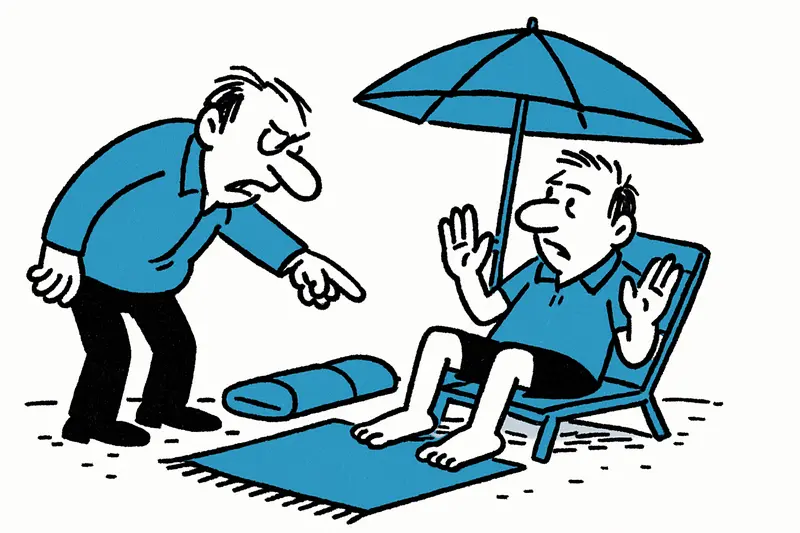
In the early hours of Tuesday, before the ferries from Alcúdia started the day and the spray at Cap Formentor glittered in the low sunlight, employees of the Pollença town hall discovered indications that have provoked discussion: on Playa de Formentor, sunbeds, umbrellas and apparently even towels seemed to have marked areas advertised as exclusive for hotel guests — a controversy that included reports of €210 sunbeds at Formentor. Gulls circled, the wind carried the salty scent of the bay — and in the middle of this calm the question arose: Can a hotel effectively reserve parts of a public beach?
What the legal issue is about
At the core is the Spanish Coastal Law. The coastal strip is public property — it must not be permanently privatized. The problem in Formentor is not only a forgotten towel in the early morning, but the practice behind it: if a hotel labels areas on its website as "private and exclusive" and guests or staff mark spots by the water, it shifts the usage possibilities for everyone. The Dirección de Costas has therefore formally launched an investigation; the passage on the hotel's website has since been removed, as reported in Four Seasons Formentor removes 'private beach' — cosmetic fix or turning point for free access?, and the visible markings were recently taken away.
What is being investigated so far — and what is rarely heard
Officials are reviewing photos, aerial footage and witness statements, including testimony from a lifeguard who was on duty over the weekend and reported marked guest areas. Similar reports about white towels and high prices are detailed in 160 Euros for Two Sunbeds? Dispute Over Beach Access at Formentor. If a violation is confirmed, warnings, fines and orders to remove all private markings may follow; in extreme cases, usage rights can also be revoked.
Less often discussed is the economic and organizational side: hotels argue they must provide services and attend to their guests — for some operators the reference to “exclusive areas” is a selling point in a highly competitive market. At the same time, conflicts arise with rescue services and local fishers who rely on clear access to the water. Seasonality also plays a role: when every square meter counts in high season, the pressure to secure areas increases — legally or, more subtly, beyond that.
Consequences for locals and visitors
For locals, such incidents often trigger resentment: the memory of early mornings when towels blocked the best spots runs deep. For tourists the situation can be confusing — are beach loungers included, reservable, or public after all? Such uncertainties harm the whole region's image. At the same time, Mallorca's natural attractions — the sound of the waves, the scent of the pines at the Cap — are non-negotiable: access to the sea is part of local quality of life.
Concrete measures: How to avoid conflicts
The ongoing investigations are important, but they are not enough on their own. The discussion suggests concrete steps that both clarify the law and provide practical solutions for everyday life:
- Clear, visible signage: Municipalities and the coastal authority should clearly mark which areas are public. Posting information signs reduces misunderstandings.
- Binding guidelines for hotels: A code of conduct that clearly stipulates that no permanent markings or physical barriers are allowed — combined with training for hotel staff.
- Documented reporting channels: Quick reporting options (app, hotline, town hall desk) and an obligation for lifeguards to document observations provide evidence and speed up sanctions.
- Seasonal and time-limited usage rights: Where services are offered on the beach, they should be clearly time-limited and authorized — not treated as permanent exclusive rights.
- Visible enforcement: Regular checks by the Dirección de Costas and local police, including drone footage, can have a deterrent effect. And: real fines, not just warnings.
Such measures help maintain the balance between the economy of tourism and the protection of public space. They are not rocket science, but they require coordination between municipalities, the coastal authority and the industry.
Inside the town hall — and looking ahead
I visited the Pollença town hall briefly in the afternoon. The atmosphere there was businesslike, almost routine: low voices, paper rustling, an official repeatedly looking at aerial images on his screen. "We are working transparently," they told me. Whether it was an isolated incident or a sign of a systematic business model with "private" beach access will only become clear after the investigations are concluded.
For people on site the central guiding question remains: Do we want access to the sea to become a selling point for individual providers — or should it remain common property, accessible to everyone at any time of day? Answers require rules, enforcement and a measure of community spirit.
Update: We will report further from Pollença and the coast as soon as details on possible sanctions or an official statement from the hotel are available.
Frequently asked questions
Can a hotel in Mallorca reserve part of a public beach for its guests?
What happens if a hotel in Mallorca marks beach space as private?
Are sunbeds and umbrellas on Mallorca beaches always public use?
What should beachgoers do if they see towels or signs reserving space on a Mallorca beach?
Is Playa de Formentor in Mallorca public access only?
Why is Playa de Formentor often in the news about beach access?
What should visitors know about beach loungers in Mallorca before paying?
How can Mallorca keep hotel beach services and public access from clashing?
Similar News

Residents outraged: plastic 'memories' at the Mirador — who protects the Formentor view?
At the Mirador de la Creueta, packaging and wet wipes are increasingly hanging from the railing. Who turns these into 'm...

Just before landing: Brawl on Ryanair plane — What does it say about flight safety?
A dispute over the toilet escalated on a flight to Ibiza. Question: Are rule enforcement and de-escalation on board stil...
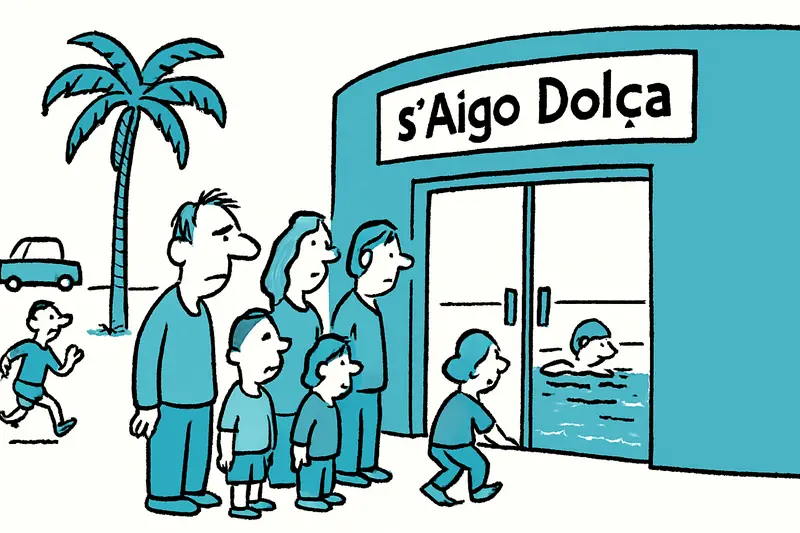
Open in the afternoons: New indoor pool "s'Aigo Dolça" brings life back to the Passeig Marítim
A new public indoor pool opened on the Passeig Marítim. 's'Aigo Dolça' offers two 6-lane pools, fitness rooms and aftern...
Barceló Takes Over Valparaíso Palace: A Reality Check for Palma
The pending sale of the Valparaíso Palace & Spa to Barceló raises hopes — and questions. What will the modernization mea...

From Manacor to the Gulf: Nadal expands international network with new center in Bahrain
Rafael Nadal's academy opens its ninth tennis center on the Amwaj Islands in Bahrain. Six tennis courts, three padel cou...
More to explore
Discover more interesting content

Can Cap de Bou

Townhouse Lleo 72
