
Fuel vapors, spark, explosion: Who protects the fincas?
Fuel vapors, spark, explosion: Who protects the fincas?
In a powerful vapor deflagration on a finca near Pollenca, a 58-year-old man lost his life. The Guardia Civil is investigating. An accident that raises questions about occupational safety among Mallorca's landowners.
Fuel vapors, spark, explosion: Who protects the fincas?
Key question: Why do routine tasks in the countryside sometimes end fatally, and what needs to change?
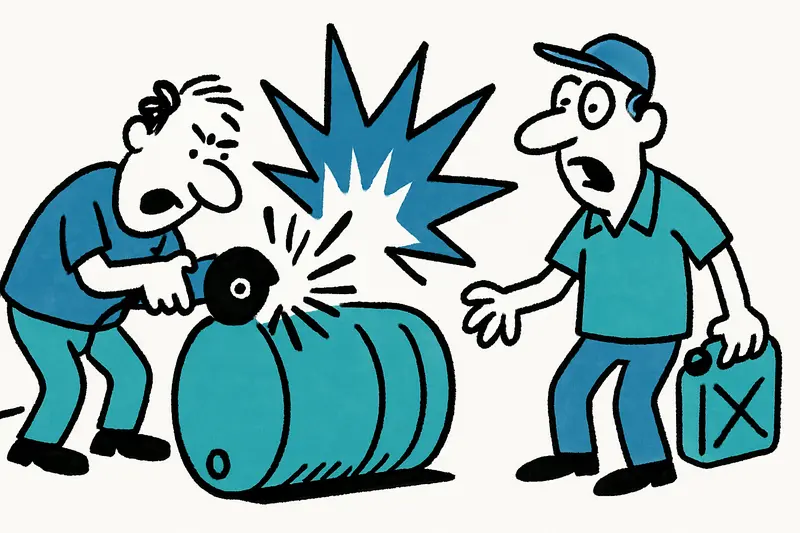
Early in the afternoon on a finca in the Serra de Tramuntana, near Torre de Ariant: a 58-year-old man suffered a fatal deflagration while doing maintenance and garden work. According to emergency services, he had apparently been using an angle grinder on the lid of a steel container that still contained fuel residues and therefore explosive vapors. A single spark was enough and the drum exploded. The injured man suffered severe head injuries and second- and third-degree burns to his legs. Rescue attempts by the local police and later by emergency crews were unsuccessful; death was officially pronounced in the afternoon. The Guardia Civil has launched an investigation into the cause and the circumstances are being examined. A similar recent incident is recounted in Chimney Explosion in Coll d’en Rabassa: 18-Year-Old Seriously Injured — Investigation and Safety Questions.
These facts are stark, but they do not answer the main question: How often do dangerous situations occur on the island's countless small fincas because people work on machines or containers without training, without protective equipment and sometimes without a proper safety plan? We are not talking about large construction sites, but about farm work where tools like angle grinders are used daily and jerry cans of petrol can remain on the premises for decades.
Critical analysis: everyday causes
Several risk factors can be deduced from the accident that are often overlooked in public debate. First: the misjudgment of a supposedly "empty" container. Many believe a can is empty because no liquid is visible — the danger comes from invisible vapors. Second: inappropriate tools. Cutting discs and angle grinders produce sparks — that's what they do. Third: lack of labeling and safe storage of hazardous substances. Small farms often have old containers and mismatched jerry cans, frequently unlabelled. Fourth: accessibility in emergencies. In this case a rescue helicopter was called and arrived after around 20 minutes; provisions for remote locations apply once an ambulance would take more than 30 minutes, but the time until real help arrives remains critical.
What is missing in the public discourse
We talk a lot about tourism, housing prices and nature conservation — and too rarely about occupational safety in rural areas. It rarely makes the news when a self-employed person or a worker on a small finca is seriously injured, although incidents such as Es Molinar in Shock: Attempt to Set a Housemate on Fire – What Needs to Be Done Now and Attempted Insurance Fraud in Mallorca: Who Sets Fires — and Why the System Fails show how fire-related events attract attention. Nor is there much discussion about how simple and effective prevention can be: clear labeling, safe disposal of old fuels, short regular training sessions for finca owners, affordable gas detectors for workspaces, or the clear advice not to use tools on closed containers.
An everyday scene from Pollenca
If you walk through Pollenca on a late morning, you hear market traders, see retirees on benches, smell coffee from the bakery. Just half an hour's drive into the hills and the scene changes: narrow gravel tracks, an old stone wall, the chirping of cicadas and scattered fincas. People work there, weld, cut — often without much formality. This contrast makes clear how varied safety standards are on the island.
Concrete proposals — practical and local
1) Information campaigns by local administrations (ayuntamientos, consell): short workshops for finca owners about hazardous substances and safe working practices. 2) Mandatory labeling and safe disposal: simple rules, e.g. hand in old jerry cans at municipal collection points instead of leaving them on the farm. 3) Subsidised basic equipment: CO/gas detectors and simple non-sparking tools for particularly risky tasks. 4) First-aid training for municipal and local police as well as neighbours; the first minutes often decide. 5) Review and adaptation of emergency protocols for remote areas: faster access for rescue teams, designated helicopter landing sites, better radio coverage. 6) Awareness for retailers: include guidance when selling machines or welding equipment on how to handle containers.
Demand and conclusion
It is easy to become emotional after such a tragedy. Even more important is to draw sober lessons: many risks can be reduced with small, clear measures. The Guardia Civil is now investigating the details of this case; regardless of that, workplace safety on small farms must be higher on the agenda. Those who live and work in Mallorca's countryside deserve protection — not only beautiful landscapes and traditions, but also clear rules, simple tools and access to information. If we fail to do that, the next tragic chapter is only a matter of time.
Frequently asked questions
Why can a fuel container explode during work on a Mallorca finca?
Is it safe to use an angle grinder near old petrol cans in Mallorca?
How should fuel and old containers be stored on a Mallorca finca?
What should Mallorca finca owners do to reduce accident risks while working?
Why are emergencies on remote Mallorca fincas especially difficult?
What safety training is useful for people working on Mallorca fincas?
What can local authorities in Mallorca do to improve safety in the countryside?
What are the main fire and explosion risks on a Mallorca finca?
Similar News
When the Wallet Becomes a Danger: Attack in Peguera and Lessons for Mallorca
In Peguera, two women are said to have stolen the wallet from a 75-year-old German couple. When the victim intervened, t...
Plata stays Plata: Young people take over, Llonguets remain
A small bar on Carrer de l'Argenteria will continue: Tolo Serra hands the place over to young Mallorcans at the end of t...
Unnoticed in the Luggage Compartment: How a Boy Traveled More Than 100 Kilometers in a Team Bus
A minor traveled in the undercarriage of a team bus for more than 100 kilometers until his cries for help were heard. A ...

Cap Vermell Grand: Second Michelin Key – a Gift for the East
The Cap Vermell Grand in Capdepera has been awarded its second Michelin key. For the region this elevates the luxury off...
Eurowings lets four aircraft carry names – a friendly idea that also reaches Mallorca
Eurowings is launching a campaign: four Airbus A320s are to carry the first names of people who help others in everyday ...
More to explore
Discover more interesting content

Can Cap de Bou

Townhouse Lleo 72
