
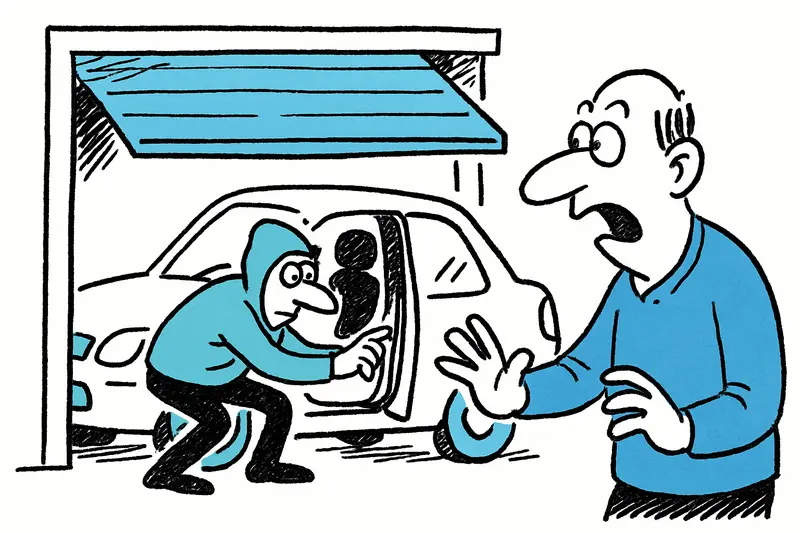
When the Garage Becomes a Trap: Palma Alarmed After Wave of Car Break-ins
When the Garage Becomes a Trap: Palma Alarmed After Wave of Car Break-ins
The National Police report a sharp rise in car break-ins in Palma — offenders are increasingly shifting tactics to communal garages. A reality check with concrete tips for residents.
When the Garage Becomes a Trap: Palma Alarmed After Wave of Car Break-ins
An unpleasant scenario is on the rise in Palma: in recent months cases of broken-into cars have multiplied and the National Police now report numerous arrests, including three juveniles arrested in a Palma car-theft series. The new notable point: perpetrators are increasingly striking in communal garages, no longer just in street parking. For many residents this means that the supposedly secure underground garage suddenly feels unsafe again.
Key question
How can housing communities, authorities and the police work together so that private parking in Palma becomes safer again?
Critical analysis
The figures cited by officers are striking: significantly more deployments, over 60 arrests in the first months of this year and most recently two people who were caught breaking into vehicles in garages during the Easter holidays. This shows the police are closing in on the perpetrators. Recent coverage of an arrest after a nighttime break-in spree in Palma reinforces that point. At the same time their methods are changing. Communal garages often present mechanical weaknesses: poorly secured access gates, insufficient lighting, doors that can be yanked open — and drivers who out of habit leave the garage remote control in the car. In this mix lies the advantage for the offenders.
What's missing from the public debate
There is talk about arrests and alleged offender numbers, but rarely about the structural and organizational causes. In neighborhoods like La Soledad or Santa Catalina many apartment blocks have old communal garages that were never designed with crime prevention in mind. There is a lack of clear responsibility: who maintains the rolling gates? Who pays for better lighting or a camera? Discussions also rarely address how insurers react to changes in residents' behavior or what incentive property managers have to invest in security measures. An honest debate would need to address these gaps; media accounts such as eight break-ins in one week that ended with an arrest often focus on arrests rather than underlying causes.
Everyday scene in Palma
The other morning at half past seven on the Paseo Marítimo, the air fresh, delivery vans starting up, I saw a neighbor open the garage door with the remote. She didn't wait until the gate was fully closed but sprinted up the steps — the usual hurry. A few buildings away a young courier was swearing because his bag had been stolen from his car. It's these small moments: the click of the remote, the smell of coffee from the corner bar, the careless putting down of the key. That's exactly what the offenders are betting on.
Concrete solutions
The good news: many measures are inexpensive and help immediately. Suggestions that have proven useful in talks with residents and security experts include:
1. Increase visibility: Better lighting in driveways and parking bays is cheap and deters. Motion sensors illuminate intruders immediately.
2. Control access: Simple door contacts or timed functions on garage doors prevent them from being left open. Also, the remote control should not remain in the vehicle — a good tip that is often underestimated.
3. Community organization: Property managers and neighborhood associations should commission security checks and share costs collectively. Monthly walk-throughs with the police, where irregularities are reported, create routine.
4. Use technology purposefully: Cameras at entrances, not necessarily expensive, can deter offenders and provide evidence. Important: respect data protection and communicate clearly who records and how long footage is stored.
5. Strengthen reporting culture: Immediate reports to the police, even for minor incidents, help identify patterns. Anyone who observes a suspicious vehicle or person should take photos and note time, license plate and direction.
6. Insurance and prevention: Residents should check policy terms: some insurers offer premium benefits if additional security measures can be proven to have been installed.
What the police and city can do
The National Police show presence with plainclothes patrols and arrests — that helps. The city administration can complement this by defining minimum standards for garage security: minimum lighting levels, emergency contacts for garage gates, subsidy programs for retrofits in older facilities. A central hotline through which property managers can request quick inspections would also be useful. Public attention on the issue, as in Palma on edge: Seven arrests after daytime burglary spree – what now?, underlines the demand for coordinated action.
Pointed conclusion
The message to the public is clear: small behavior, big effect. A remote in the glove compartment instead of on the seat, a light sensor at the entrance, reporting a suspicious car — these are measures that work immediately. The police and city are doing their part, but the rest is up to us in the neighborhoods, the housing communities and the way we talk and act together. Anyone who thinks the underground garage is private and therefore safe is mistaken. Without a joint effort the garage remains a weak spot — for all of us.
Frequently asked questions
Why are car break-ins in Palma happening more often in communal garages?
What can residents in Mallorca do to protect cars parked in an underground garage?
Is it safe to leave a car in a communal garage in Palma at night?
What should I do if I notice a suspicious person near my garage in Palma?
Which parts of Palma are affected by garage car break-ins?
Do cameras and better lighting really help prevent car theft in Mallorca garages?
Will my insurance cover theft from a communal garage in Palma?
What can housing communities in Mallorca do to make garage gates safer?
Similar News
Magaluf: Watchtower Alarm – Lifeguards Pull Unconscious Beachgoer from the Water
After a drama in the late afternoon, two lifeguards at Magaluf beach rescued an unconscious 44-year-old man. He was stab...
Turquoise in the City: How dangerous is the color play of the Sa Riera?
The Sa Riera in Palma suddenly turned turquoise — a pretty motif, but behind the effect lies a discharge of saline waste...

Jeckliner at Sunnesching: Cologne spirit sets sail from Palma
In September 2027 the Mein Schiff 2 briefly becomes a floating carnival stage: four days with Cologne bands, comedy and ...
Finally Home: Mike and Leyla Heiter Buy Villa with Sea View in Mallorca
The reality TV couple Mike and Leyla Heiter have bought a house in Mallorca with a roof terrace and sea view. An Instagr...
Arrest after series in Palma: Who protects apartments from repeat offenders?
The National Police arrested a man in Palma who investigators say may have broken into several apartments. In one incide...
More to explore
Discover more interesting content

Can Cap de Bou

Townhouse Lleo 72
