
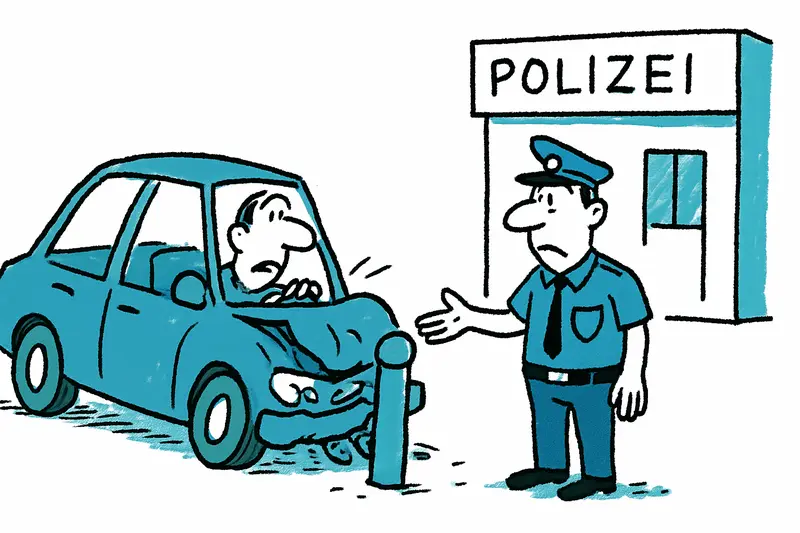
In Front of the Police Station in Manacor: German Driver Crashes into Bollard — Without Driving License or Vehicle Inspection
In Front of the Police Station in Manacor: German Driver Crashes into Bollard — Without Driving License or Vehicle Inspection
A car driver from Germany collided with a bollard directly in front of the police station in Manacor. He was uninjured but was arrested for lacking a driving license and having an expired vehicle inspection. What does this say about traffic checks and safety on the island?
In Front of the Police Station in Manacor: German Driver Crashes into Bollard — Without Driving License or Vehicle Inspection
Last Friday a short joyride by a German driver ended abruptly: his car struck a bollard in front of the police station in Manacor. The man walked away shaken but physically unharmed, yet the subsequent checks were serious. Officers of the National Police found neither a valid driving license nor the required technical inspection for the vehicle. The driver was subsequently arrested.
Key Question
How widespread is the problem of uninsured and unauthorized driving on Mallorca — and are roadside checks sufficient to prevent dangerous situations?
Critical Analysis
The incident is more than a curious picture: a car hitting an obstacle at the doorstep of law enforcement seems almost symbolic. But behind the anecdote lie real risks. Driving without a valid license increases the danger of accidents because drivers may not be adequately trained. And vehicles without a valid technical inspection can have faults in brakes, steering or lights — problems that can become critical at speed in narrow island towns. That the check happened right in front of a police station is no coincidence; it reminds us how important immediate intervention is. However, a single case says little about the general situation; reliable figures are often missing from public discussion; other incidents, such as Sant Elm: Family car rolls down embankment – 18-year-old without a driving license at the wheel, highlight the problem.
What Is Missing from Public Debate
There is a lot of talk about crowded roads in high season and inconsiderate drivers, but less about systematic data: How many vehicles on Mallorca drive with expired ITV (vehicle inspection)? How often are foreign driving licenses checked and in which cases do arrests follow? The role of rental car companies also remains unclear: are cars regularly inspected before handover and is the driver's identity sufficiently verified? Without this information the debate remains superficial and solutions often miss the root cause. Cases involving lack of insurance have been reported, for example Sant Elm: Car slides down the embankment — Driving without a license and insurance raises questions, and the issue of dangerous behaviour on the roads is illustrated by episodes such as Aggressive driver in Bendinat: Why the streets can no longer remain calm.
Everyday Scene from Manacor
The morning after the accident I stood briefly on the street in front of the police station. From the bakery opposite came the smell of freshly baked ensaimadas. A few residents stopped, shook their heads, a delivery van backed off with a screech. The bollards protecting the sidewalk café looked intact; the damaged car had already been towed away. Scenes like this are not unusual on Mallorca: short, hectic encounters between people, machines and stone — and always the thought that it could have gone differently.
Concrete Proposals
1) More frequent and targeted checks: mobile teams could increase inspections in known problem areas, especially during peak times. 2) Cooperation with rental companies: mandatory checks before handover, digital uploads of ITV documents and identity verification by video would close gaps. 3) Information campaigns for holidaymakers in multiple languages, distributed at airports and ferry terminals; brief notices about obligations and penalties would reach many before they take the wheel. 4) Sanctions with tangible consequences: besides fines, vehicles without documents should be easier to impound. 5) More transparency: police and authorities could regularly publish figures — how many checks, how many arrests, which defects are most common. These data would make the discussion more factual and enable targeted measures.
Why This Matters
Mallorca depends on mobility: tourists, commuters, delivery traffic. If people and vehicles without adequate checks operate at stops, in towns and on country roads, the risk for everyone increases. Controls are annoying, but they protect pedestrians, cyclists and those who follow the rules. They ensure that small lapses don’t turn into serious accidents.
The incident in Manacor is a wake-up call, not a one-off joke. Authorities, rental companies and holidaymakers share responsibility here. Greater clarity, better checks and simple information offerings could help prevent similar scenes in the future.
Conclusion: A car hitting a bollard may look like slapstick, but in the rearview mirror the question remains: do we want to keep reacting to individual cases when it comes to road safety, or systematically ensure that such collisions become rarer?
Frequently asked questions
What happens in Mallorca if someone drives without a valid licence?
Can a car in Mallorca be stopped if it does not have a valid ITV?
Why are police checks on Mallorca roads important?
What should holidaymakers in Mallorca check before driving a car?
Are rental cars in Mallorca checked before they are handed over?
Is it common to drive without insurance or documents in Mallorca?
What happens after a traffic accident in Manacor if the driver has no licence?
What are the safest ways to drive in Mallorca’s towns and narrow streets?
Similar News
Failed before the first flight: How Fischer Air's plans for Palma were ground down
Announced routes, repeated postponements and now apparent insolvency: Why the Fischer Air project for Mallorca is not me...
Seconds in the Water: 19-year-old Fights Her Way Out of Flooded Car in Palma
A 19-year-old managed to rescue herself from her half-submerged car after sliding under the Verge de Lluc underpass. Res...

Between Dream and Reality: Thorsten Legat and the Challenges of FC Germania Mallorca
The former Bundesliga pro has assembled a colorful squad in a short time. But how realistic is the grand plan for promot...

Arrest warrant at check-in: Why two travelers at Cologne/Bonn Airport suddenly had to pay
At Cologne/Bonn Airport, federal police in mid-September found two German passengers subject to enforcement measures. Bo...

Balearic Islands as a New Route: A Reality Check on Rising Boat Migration
For the first time the Balearic Islands are ahead of the Canary Islands in boat arrivals. What do the numbers really say...
More to explore
Discover more interesting content

Can Cap de Bou

Townhouse Lleo 72
