
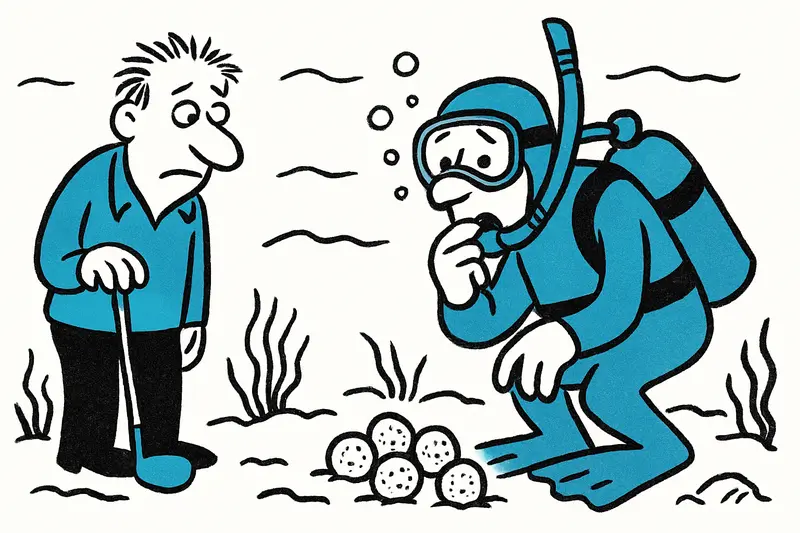
Golf balls off Camp de Mar: Small find, big questions
Golf balls off Camp de Mar: Small find, big questions
A diver discovers several golf balls on the seabed near Camp de Mar. How dangerous are they really — and who has to act?
Golf balls off Camp de Mar: Small find, big questions
A diver finds several white spheres among seagrass and rocks. What does this say about litter, responsibility and solutions in Mallorca?
In the early afternoon, when the cafés on the coastal road MA-1 between Andratx and Camp de Mar are still half empty and the seagulls are only beginning to eye the beach chairs, diver Ramón Javier Fernández Barea, known by the nickname "Es Canari", made a small, unusual find: several white golf balls lay quietly on the seabed, nestled between Posidonia fronds and small rock ledges.
Key question: How threatening is such a find? Is it an alarm signal for new sources of pollution or rather a curious episode in a long list of items washed up here?
Initial assessment: Golf balls are durable. Modern balls have a robust core and a harder outer layer, materials that age slowly in the sea. That means they remain visually intact and can persist longer than a plastic bag. The problem is less the single specimen than the quantity and what the balls symbolize. In lakes and artificial water hazards thousands of "lake balls" accumulate; there are entire businesses that recover and reuse them. On the open sea some companies use biodegradable practice balls, for example eco-variants from manufacturers like FUNAR that break down in water and contain feed. That said, conventional golf balls still behave as long-lasting foreign objects in coastal waters.
Critical analysis: Two hypotheses are plausible. First: the balls come directly from the neighboring golf course and were washed into the sea during heavy rains via a torrente. Second: they are lost balls from recreational use — tees from boats, near a practice area, or from some other context. Both scenarios lead to similar consequences: visible pollution, potential danger to animals, and an additional burden on an already stressed coastal ecosystem.
What is often missing in public discourse is the differentiation between symbol and scale. A few balls make a memorable story for social media videos — as when a diver discovered several face-like objects in the shallow water near Son Caios — but distract from the larger problems: lost nets, microplastics, oil residues and overflowing sewage drains. At the same time the symbol should not be downplayed. Durable items accumulate, travel with currents and can end up inside animals or alter the seabed.
An everyday scene from Camp de Mar: a fisherman mends his net on the jetty, children tramp barefoot between the rocks, a bus honks on the MA-1 while tourists take pictures of the bay. The sea there is both a space for use and a habitat. When sports facilities lie on the slopes above, sometimes a heavy rain is enough and things that lie on the grass take unexpected paths.
Concrete solutions: 1) Coastal golf courses should install rain retention basins and simple barriers in torrentes to catch items before they reach the sea. 2) Municipalities and environmental authorities can order targeted inventories in sensitive coves and regularly log what is washed ashore. 3) Promote collection and take-back programs for lost balls; cooperation with divers who already document debris in Portet d'es Salinar could be organized more systematically. 4) Replace practice balls in coastal areas with certified, biodegradable variants where practicable. 5) Awareness-raising: signs at torrentes, information campaigns at golf clubs and with boat rental companies.
What can be done immediately: surveys by local environmental units, a simple clean-up at low tide and networking volunteers with professional divers like Es Canari. In the longer term we need rules for surface drainage at sports facilities and clear responsibilities for protecting Posidonia meadows and beaches.
Punchy conclusion: A few golf balls are not an ecological apocalypse, but they are an indication of how quickly small things add up. Those who show willingness — from the club to the municipality — can prevent a curiosity from becoming a larger problem. And until then: on the next walk in Camp de Mar, just keep your eyes open. Sometimes it is enough to pick up a ball.
Frequently asked questions
Are golf balls in the sea around Mallorca a real pollution problem?
How long do golf balls last in seawater?
Can golf balls harm marine life in Mallorca?
Why are golf balls found near Camp de Mar in Mallorca?
What can golf courses in Mallorca do to stop litter reaching the sea?
Are biodegradable golf balls a better option for coastal use in Mallorca?
What should divers do if they find litter on Mallorca’s seabed?
Is the seabed near Camp de Mar in Mallorca especially sensitive?
Similar News
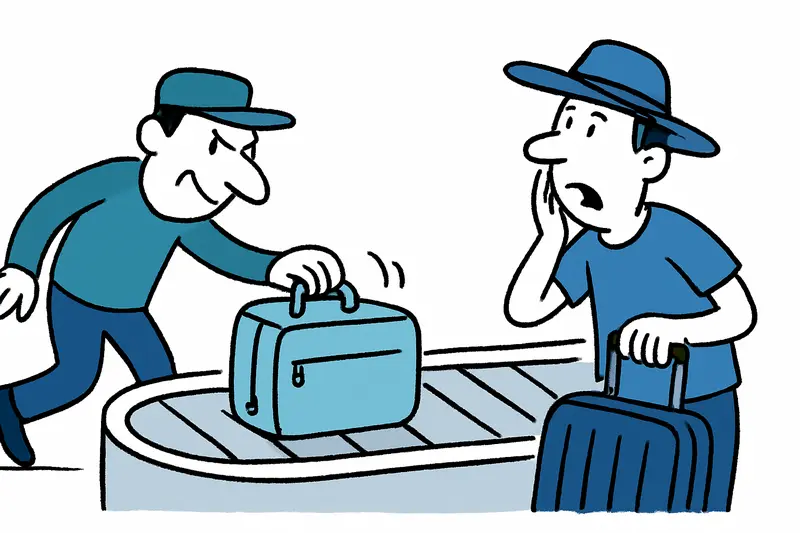
New trick at Palma Airport: suitcase stolen from the belt — a reality check
On September 28 a 36-year-old allegedly stole a suitcase from the baggage belt of a 51-year-old German passenger at Palm...
Urgent Clearing of Palma's Torrents: Flood Prevention or Symptom of Short-Sighted Planning?
The city of Palma is responding to storm forecasts and has cleared several torrents. We ask: Is the short-term clearing ...

Evaneos and Mexico: A Reality Check for Sustainable Travel
Travel advertising often reads like a promise: local, sustainable, unique. But how deep do these promises really go? A c...

From Megapark to the Altar: Party Singer Now Offers Weddings in Mallorca
A well-known party artist combines partying and marriage: instead of a traditional church there are ceremonies at the Me...

The Maricarmen Case: Why an Eviction Is Forcing Spain's Housing Debate
Images of an 87-year-old woman on a stretcher have sparked a debate in Spain that also runs deep in Mallorca. Who protec...
More to explore
Discover more interesting content

Can Cap de Bou

Townhouse Lleo 72
