
Hair Transplantation Turkey 2026: A Critical Look from Mallorca
Hair Transplantation Turkey 2026: A Critical Look from Mallorca
Cheap offers for hair transplants from Turkey are tempting. This reality check explains what costs are realistic, which risks and additional expenses may arise, and how patients from Mallorca can make wiser decisions.
Hair Transplantation Turkey 2026: A Critical Look from Mallorca
Reality check for everyone in Palma who saw an ad at the café with €1,490
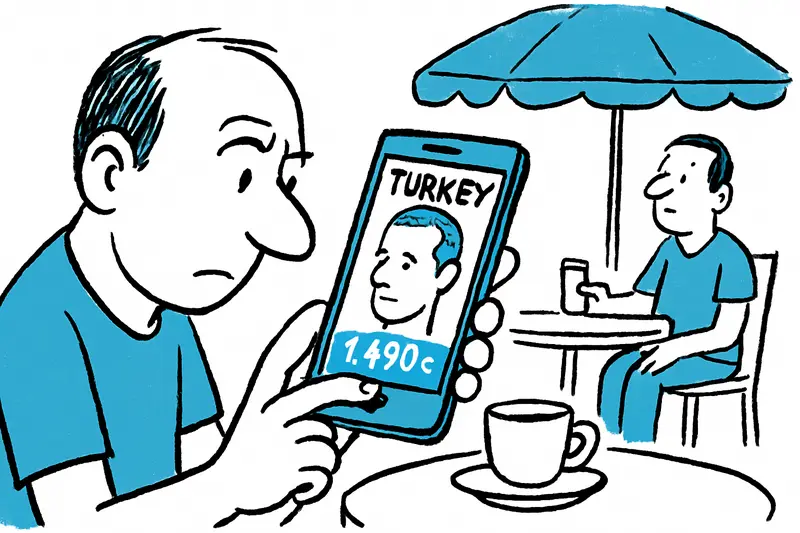
On a hot August afternoon, 34°C on the Plaça Cort, people sit under the café parasols. At the next table someone scrolls through advertising images on their phone: street lamps in Istanbul, tight hairlines, a price barely higher than a weekend in Port d’Andratx. I have been seeing scenes like this more often in Palma this season – WhatsApp links just before boarding at Son Sant Joan airport. The central question that is often overlooked is: Key question: What does a reliable hair transplant really cost, and what should you look out for before booking?
My overview is aimed at people in Mallorca who are considering flying to Turkey for a hair transplant, an issue I explored in Hair Matters in Turkey: What Mallorcans Should Know Before a Hair Transplant in Istanbul.
Realistic all-inclusive prices at reputable clinics in 2026 generally range between about €2,500 and €5,500. Offers well below that are not free bargains; they indicate that savings are being made elsewhere – on staff, on pre-examinations or on aftercare.
Why the comparison is so hard at first glance: Some providers advertise a price per "graft". A graft can contain one, two or three hairs. Two clinics with the same number of grafts can therefore deliver visually very different results. Equally relevant are questions such as: Does a specialist doctor perform the operation or do only technicians work? Are blood tests, medications and structured aftercare included in the package?
The hidden costs are the big problem. Missing pre-examinations, photos sent only by phone, no reliable follow-up care at home – all of this often leads to further treatments being necessary. A corrective operation can be significantly more expensive than the initial treatment and the donor area is limited: an area that has been poorly harvested once cannot simply be restored.
As an example of an all-in-one practice described on its website: There are clinics in Istanbul that offer only hair transplants, where doctors perform the procedures personally and where special planning tools are used. Some facilities name techniques such as an in-house FUE procedure, additional regenerative measures like PRP or laser therapies and cite high success rates. For patients from German-speaking countries, German-speaking support, VIP transfers and partner doctors in the home country are often important – such services explain a higher price, but do not replace the patient's own duty of verification, as discussed in Beauty Tourism in Mallorca: Between Clinic Luxury, Cryo Chambers and Everyday Life.
What is missing in the public discourse: first, long-term control. Many people think about the operation and not about the five years afterwards. Second, the legal situation in case of complications: cross-border medical claims are time-consuming. Third, the role of documentation: good clinics provide measurement data on donor capacity, a comprehensible plan and written aftercare instructions.
Concrete tips for Mallorca residents before booking:
- Ask who is performing the operation. Names, qualifications and whether a specialist doctor is leading the whole procedure – not just part of it.
- Insist on a thorough pre-examination. Live video or an in-person appointment are better than just phone photos.
- Clarify what is included in the package. Transfers, hotel, blood tests, medications, PRP or other complementary therapies and above all aftercare.
- Avoid using price-per-graft logic as the sole decision criterion. Ask for an honest assessment of expected density and results.
- Secure aftercare in Spain. Ask about partner doctors or written agreements in case problems arise after returning to Palma or elsewhere.
- Get a second opinion in Palma before the operation. A local private practice can help assess risks and provide initial care in case of complications, and local trends are explored in When Men Visit the Cosmetic Doctor in Mallorca — Between Self-Confidence and Risk.
On Mallorca, consultation routes can be short: an appointment at a specialist practice in Palma or a conversation with the family doctor before departure is often cheaper than a later corrective procedure. Those willing to invest a few hundred to several thousand euros more buy time, transparency and often also human proximity during treatment.
Conclusion: Cheap lure prices are tempting but rarely complete. Check carefully, demand clear answers and think about aftercare – then treatment in Turkey can be a serious option. If you decide on the Plaça Cort at 34°C, don’t only look at the price tag but at the people and processes behind it.
Frequently asked questions
When is the best time to visit Mallorca for mild weather and fewer crowds?
Are Mallorca's beaches suitable for swimming with kids?
What should I pack for a Mallorca trip?
Is it easy to get around Mallorca without a car?
What’s the climate like in winter on Mallorca?
What outdoor activities suit beginners in Mallorca?
How should I stay safe while swimming in Mallorca?
How can I balance culture and nature on a Mallorca visit?
Similar News
When the Wallet Becomes a Danger: Attack in Peguera and Lessons for Mallorca
In Peguera, two women are said to have stolen the wallet from a 75-year-old German couple. When the victim intervened, t...
Plata stays Plata: Young people take over, Llonguets remain
A small bar on Carrer de l'Argenteria will continue: Tolo Serra hands the place over to young Mallorcans at the end of t...
Unnoticed in the Luggage Compartment: How a Boy Traveled More Than 100 Kilometers in a Team Bus
A minor traveled in the undercarriage of a team bus for more than 100 kilometers until his cries for help were heard. A ...

Cap Vermell Grand: Second Michelin Key – a Gift for the East
The Cap Vermell Grand in Capdepera has been awarded its second Michelin key. For the region this elevates the luxury off...
Eurowings lets four aircraft carry names – a friendly idea that also reaches Mallorca
Eurowings is launching a campaign: four Airbus A320s are to carry the first names of people who help others in everyday ...
More to explore
Discover more interesting content

Can Cap de Bou

Townhouse Lleo 72
