
When a Hammer Escalates a Neighborhood Dispute: 86-year-old Woman Convicted in Arxiduc
When a Hammer Escalates a Neighborhood Dispute: 86-year-old Woman Convicted in Arxiduc
A neighborhood dispute in Palma ended in February 2024 when an 86-year-old woman damaged a neighbor's garage wall with a hammer. A court convicted her and ordered fines and compensation. Why does neighborhood assistance fail?
When a Hammer Escalates a Neighborhood Dispute: 86-year-old Woman Convicted in Arxiduc
How a small conflict turned physical and ended up in court — and what this has to do with everyday life in Palma
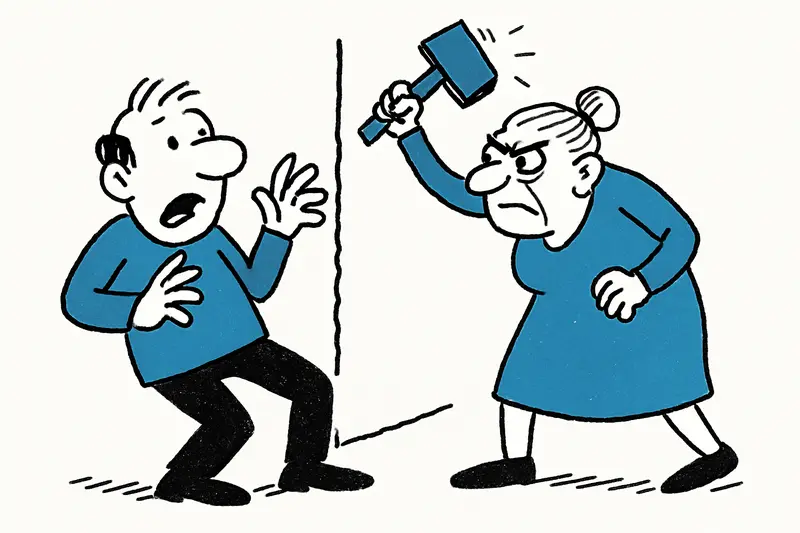
On an early afternoon, when the bakeries in Arxiduc still smell of fresh ensaimada and delivery vans rattle down the narrow streets, something happened in February 2024 that one does not expect here: a then 86-year-old resident went to a neighbor's garage wall with a hammer and caused visible property damage. An attentive witness stopped the action and the police secured the tool. In the end, the incident was classified as a minor offense, the woman accepted a settlement and was sentenced to a fine of €90 and ordered to pay €574.75 in compensation.
Key question: How can an everyday quarrel escalate so far that a senior becomes physical and the justice system has to be involved? This question is not only legally interesting; it also reflects how neighborhoods in Palma deal with — or fail to deal with — conflicts.
Critical analysis: On one hand, there is the fact that there had already been disputes between the parties. On the other hand, the case reveals a chain of failures: lack of conflict mediation, possible social isolation of the elderly neighbor, and the routine involvement of criminal law in cases of property damage, as in a Palma care-home assault case. The court's decision — a relatively small penalty and recognition of civil compensation — mirrors the incident's character as a local, personal conflict. Yet it remains open whether a judicial sanction addresses the root cause or merely treats a symptom.
What is often missing in public discourse is a look at the social factors behind such outbursts. Overburdened relatives, a lack of contact points for neighborhood disputes, and the stigmatization when older people raise their voices — these issues rarely appear in police reports, as in the Fatal Discovery in Son Macià. Nor is there much discussion about which preventive services the city of Palma or the island's municipalities offer or could expand for such cases.
An everyday scene from Palma: sitting in a small café on Carrer del Arxiduc, smelling the buses, watching older people carry their shopping, and the youths walking by in heated discussion. Conflicts between neighbors are no strangers here — they are often resolved with hand signals, brief words, or neighborly mediation. When that does not work, the next step is to go to the police — sometimes over issues like a 72-year-old Palma parking permit case — or, as in this case, a physical reaction that is then documented and criminally prosecuted.
Concrete solutions: 1) Expand low-threshold mediation services: a municipal offer that intervenes quickly before a dispute escalates. 2) Outreach social work for elderly people: regular home visits can reduce loneliness and detect early warning signs. 3) Neighborhood workshops: simple courses in conflict communication offered in cultural centers or community halls. 4) Coordination between police, social services and municipal administration so that recurring disputes are not always answered only with fines. These steps are not cure-alls, but they will likely prevent more hammer-than-word moments.
Conclusion: The incident in Arxiduc is less an exception than a warning sign. A hammer used as an expression of anger on the street says something about the social networks that are missing or torn. The justice system has reacted, the victim received compensation, and the act was classified as a minor offense. More important is the question of how such escalations can be prevented in the future. If we see the loud conflicts, we should also pay attention to the quiet, everyday fractures and begin to mend them — before someone picks up a hammer again.
Frequently asked questions
What happened in the Arxiduc neighborhood dispute in Palma?
How are minor property damage cases usually handled in Mallorca?
Can neighborhood disputes in Palma end up in court?
What can help prevent conflicts between neighbors in Mallorca?
Why do small disputes sometimes escalate among older residents in Palma?
What should you do if you witness property damage during a dispute in Mallorca?
What kind of support can Palma offer for recurring neighbor disputes?
What does this Arxiduc case say about everyday life in Palma?
Similar News
Released with Conditions: The Plus Ultra Suspicion and a Mallorcan Finca as Residence
A Dutch entrepreneur, sought in connection with the Plus Ultra case, was extradited to Spain after his arrest in Germany...

Haute Nuit in Puerto Portals: Fashion, Art and Indulgence by the Water
On October 2 the Lobster Club in Puerto Portals will be transformed into a stage for curated fashion, art and culinary e...

Magaluf: Watchtower Alarm – Lifeguards Pull Unconscious Beachgoer from the Water
After a drama in the late afternoon, two lifeguards at Magaluf beach rescued an unconscious 44-year-old man. He was stab...

Turquoise in the City: How dangerous is the color play of the Sa Riera?
The Sa Riera in Palma suddenly turned turquoise — a pretty motif, but behind the effect lies a discharge of saline waste...

Jeckliner at Sunnesching: Cologne spirit sets sail from Palma
In September 2027 the Mein Schiff 2 briefly becomes a floating carnival stage: four days with Cologne bands, comedy and ...
More to explore
Discover more interesting content

Can Cap de Bou

Townhouse Lleo 72
