
Collapses in Mallorca: Who protects us from dilapidated buildings?
Collapses in Mallorca: Who protects us from dilapidated buildings?
The house collapse in Manacor that killed an 18-year-old is not an accident. There have been a number of similar tragedies in the past 25 years — time for clear answers and swift measures.
Collapses in Mallorca: Who protects us from dilapidated buildings?
Key question: Why do residential buildings collapse — and who is responsible?
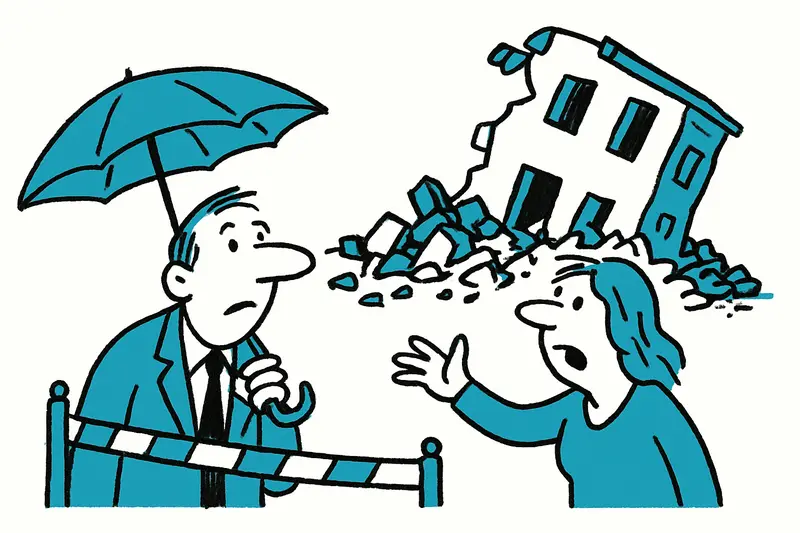
On the night of the accident in Manacor, an 18-year-old lost his life and his twelve-year-old brother was seriously injured. The city announced that the building had no valid technical inspection and that no building permit or records of alterations could apparently be found in the planning archive. The police are now investigating whether work was carried out without authorization. Such dry statements read like routine, but the images at the cordon, the sirens, the people with hot coffees in their hands — this is everyday reality that shows us this is about more than statistics.
Since 2001, at least 29 people have died on the island in building or structural collapses. The names, places and dates of these incidents are still remembered by many older neighbors: renovations that went wrong, terrace foundations that gave way, walls that could not withstand the rain, as in reports such as Wall Collapse at Palma Airport: More Than an Accident — How Safe Are the Major Works Really?. Some accidents happened during renovation work, such as the Fatal accident in Santa Margalida: Concrete slabs bury worker – How safe are our construction sites?, others in completed residential buildings. Yet the pattern repeats: missing inspections, poor documentation, retrofits carried out without official oversight.
Critical analysis: the failure is not only technical. Organizational gaps increase the risk. When a structure disappears without trace from municipal records or was never properly registered, there is no basis for supervision. When owners save a few euros and do not report repairs, control is missing; short-term rental pressures have also led to emergency closures elsewhere, for instance Risk of Collapse in Cala Major: Six Venues Temporarily Closed — What Needs to Happen Now. And in the end a family stands before the rubble.
What is often missing in the public debate: clear responsibilities and data. People talk about individual culprits, contractors or owners, but too rarely about the system that allows these risks. There is a lack of a reliable, publicly accessible inventory of older buildings, of prioritized inspections, and of transparent sanctions that actually deter. The focus is often on individual cases and court proceedings, less on prevention and long-term planning.
A scene from everyday life: in front of Manacor’s town hall older women stand and wave to the workers, the barriers clatter in the wind. A taxi driver says they were missing a boy at school that morning who is now in an emergency shelter. The children on their way to school look unsettled instead of walking through the narrow lane as usual. Such images repeat in villages and towns across the island — whenever a house collapses, routine cracks.
Concrete solutions are not a wish list but a task: 1) All buildings older than 50 years must be systematically recorded and digitized; 2) mandatory technical inspections at fixed intervals (for example every ten years), prioritizing buildings that are rented out or lie in tourist zones; 3) a central, public database that records building permits, inspection reports and open proceedings; 4) financial support programs and low-interest loans for private owners to enable safety-related renovations; 5) tougher penalties and faster enforcement against illegal alterations; 6) an anonymous reporting office for neighbors who observe risks; 7) improved training and better pay for municipal inspectors so checks do not fail halfway.
At the local level, town halls and municipal administrations should also have emergency plans ready: evacuation routes, alternative accommodations and rapid communication to affected residents. Every inspection should include the question of short-term use — who rents regularly to tourists, who has retrofitted balconies, who has moved walls? These questions can be answered technically if the structures are right.
What residents themselves can do: watch for cracks and new settlements, report unusual creaking noises, do not tolerate improvised structures on balconies and take official notices seriously. Neighbors are often the first witnesses to changes; they need ways to report observations quickly and without fear of reprisals.
Pointed conclusion: every collapse, every death, every injury is a reminder that we must not leave responsibility solely to the courts. We need more transparency, more oversight and realistic support offers for owners, otherwise tragedies will repeat. The question remains: do we wait for another house to fall, or act now before another evening ends in the glare of a rescue operation?
Frequently asked questions
Why do buildings collapse in Mallorca?
Who is responsible if a building collapses in Mallorca?
How can I tell if an old house in Mallorca may be unsafe?
When should buildings in Mallorca be inspected for structural safety?
What should neighbours do if they suspect a building risk in Mallorca?
Was the collapse in Manacor linked to missing permits or inspections?
Are older buildings in Mallorca more at risk of collapse?
What safety checks should Mallorca owners keep up to date?
Similar News
Several Days of Rain Approaching: How Well Is Mallorca Prepared?
Aemet says: rain from Thursday until at least Tuesday, especially heavy on Monday. Temperatures remain mild. A reality c...
Nervous Reaction at a Traffic Stop: Why Campos Is Not Just a Sniffer-Dog Problem
At a traffic stop in Campos a 37-year-old German was arrested with a bag full of drugs. Our reality check explains why s...
Cameras Against Illegal Dumping: Porto Cristo Monitors Problem Areas – a Reality Check
Manacor has installed four surveillance cameras at particularly problematic waste spots in Porto Cristo. A local check a...
Reality check: Palma's "white" torrent — harmless salt or neglected warning sign?
White crusts on the Torrent de Sa Riera are causing a stir. Emaya describes them as salt deposits. Our reality check: wh...
When Ryanair's fleet grows: What Mallorca's travelers should know
Ryanair will soon receive 737 Max 10 jets. The larger aircraft offer potential savings — but also new risks for flight o...
More to explore
Discover more interesting content

Can Cap de Bou

Townhouse Lleo 72
