
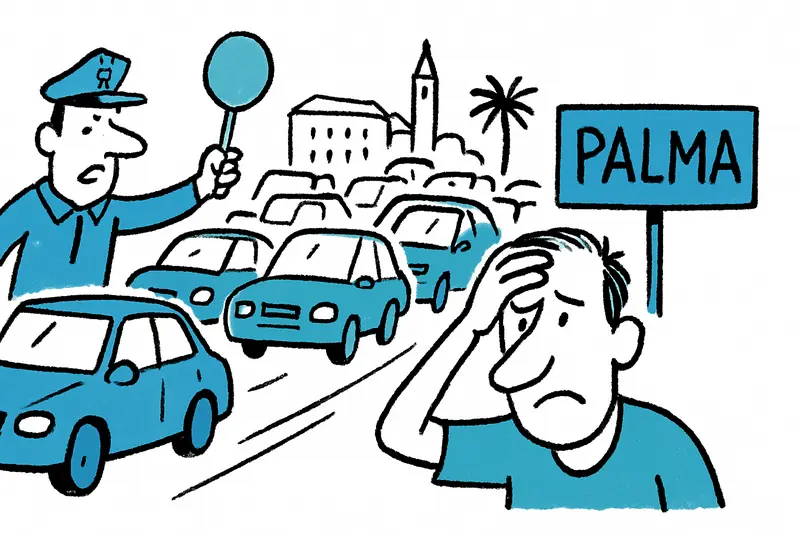
Traffic in Palma during Saint Sebastian: Well planned or too hectic?
Traffic in Palma during Saint Sebastian: Well planned or too hectic?
From January 16 to 20, Palma's city center around Passeig del Born, Avinguda Jaime III and the Ramblas will be partially closed for Sant Sebastià. A reality check: what works, what's missing — and how should the city inform people better?
Traffic in Palma during Saint Sebastian: Well planned or too hectic?
A clear question
From January 16 to 20, Palma will experience closures, detours and restricted traffic — focused on Passeig del Born, Avinguda Jaime III and the Ramblas. In addition, a run in Portixol on Sunday and the Sant Sebastià bike tour on Tuesday will cause further restrictions. Authorities recommend avoiding cars and the Bici-Palma stations in the center where possible. Is that enough — or is the city once again only half-prepared? For recent weekend examples see Palma at the Weekend: Closures, Detours and What Residents Should Know.
Critical analysis
On paper it sounds logical: closures for major events are necessary. In practice, however, information is often provided too late, is confusing, or appears only on a few channels. Bus passengers frequently encounter last-minute route changes; recent events such as the Fira del Variat and night run illustrate this problem Palma packed: Fira del Variat and night run cause traffic stress – what residents and visitors need to know now. EMT lines are altered and stops are removed. Visitors unfamiliar with the area can quickly end up searching for alternative stops and facing longer walks. For residents this means deliveries arrive late, parking spaces are blocked and the usual calm of the neighborhood is disturbed.
What is missing in the public discourse
There is a lot of talk about closures and events, but little about how the measures actually work for different user groups. Seniors, people with reduced mobility, parents with strollers and shopkeepers need concrete guidance: Which replacement stop is accessible? Where do taxis pick up passengers with the shortest possible walk? Will there be special services for people with reduced mobility? The routines of parcel services and the supply of shops are rarely discussed, even though they are directly affected, as was also highlighted during the patronal festival Patronal Festival in Palma: Celebrations — but how can residents and mobility stay in sync?.
A typical scene from Palma
Imagine Passeig del Born on an event evening: cafés lit by candles, street lamps glowing, musicians rehearsing in a side street. At a barrier a police officer explains to two elderly women that their usual stop is three blocks away. A bike courier diverts into a side street, delivery vehicles stop at the foot of Avinguda Jaime III where staff carry boxes across the pavement. Small shop owners look worriedly at their delivery schedules — this lively, slightly chaotic snapshot illustrates better than any statistic how planning and everyday life can drift apart.
Concrete solutions
- Early, unified maps: An interactive city map showing open streets, detours and temporary stops; accessible via QR codes at key points and available in several languages. - Clearly signed replacement stops: Temporary EMT stops must be accessible and marked with clear walkways. - Temporary Bici-Palma hubs: Instead of broadly asking users to avoid central stations, temporary alternative stations could be set up at the edges. - On-site information points: Mobile info desks at Passeig del Born and Plaza Major with staff explaining timetables, detours and access routes. - Priority for residents and deliveries: Short-term parking with permit areas for suppliers and residents so business operations are not blocked. - Increased evening and night services: Additional EMT trips during peak times so visitor flows disperse faster and spontaneous taxi surges are avoided. - Communication across multiple channels: Notices, social media, local radio and information in several languages so tourists and residents are equally informed.
Why this matters
Sant Sebastià is a firmly rooted part of Mallorca's annual calendar. People come to the old town to take part, shop and go out. Smooth traffic is not a luxury but a prerequisite for trade, culture and neighborhood life to coexist. Good logistics reduce stress, prevent dangerous situations and protect small shops from revenue losses.
Pointed conclusion
Closures and detours are necessary; practice shows that every year. What is too often missing is the consistent implementation of small measures: clear maps, accessible replacement stops, understandable communication and consideration for residents and businesses. If the city addresses these points, Sant Sebastià can remain a festival with less traffic friction and more togetherness. Until then: allow extra time, check your route in advance and, if possible, avoid the center on the busiest days.
Frequently asked questions
How bad is traffic in Palma during Sant Sebastià?
Can I still use buses in Palma during Saint Sebastian celebrations?
Is it better to avoid driving in Palma city centre during Sant Sebastià?
What should I do if I need to get around Palma with reduced mobility during the festival?
What happens on Passeig del Born during Sant Sebastià in Palma?
How does Sant Sebastià affect Avinguda Jaime III in Palma?
What is happening in Portixol during Sant Sebastià in Palma?
When is the Sant Sebastià bike tour in Palma and what should riders expect?
Similar News
Released with Conditions: The Plus Ultra Suspicion and a Mallorcan Finca as Residence
A Dutch entrepreneur, sought in connection with the Plus Ultra case, was extradited to Spain after his arrest in Germany...

Haute Nuit in Puerto Portals: Fashion, Art and Indulgence by the Water
On October 2 the Lobster Club in Puerto Portals will be transformed into a stage for curated fashion, art and culinary e...

Magaluf: Watchtower Alarm – Lifeguards Pull Unconscious Beachgoer from the Water
After a drama in the late afternoon, two lifeguards at Magaluf beach rescued an unconscious 44-year-old man. He was stab...
Turquoise in the City: How dangerous is the color play of the Sa Riera?
The Sa Riera in Palma suddenly turned turquoise — a pretty motif, but behind the effect lies a discharge of saline waste...

Jeckliner at Sunnesching: Cologne spirit sets sail from Palma
In September 2027 the Mein Schiff 2 briefly becomes a floating carnival stage: four days with Cologne bands, comedy and ...
More to explore
Discover more interesting content

Can Cap de Bou

Townhouse Lleo 72
