
Hammock in Sa Feixina: Fall exposes shortcomings in public space
Hammock in Sa Feixina: Fall exposes shortcomings in public space
A man fell from a hammock secured high in the Sa Feixina park and suffered serious injuries. The incident raises questions about safety, supervision and the situation of homeless people in Palma's old town.
Hammock in Sa Feixina: Fall exposes shortcomings in public space
Key question
Why did an improvised sleeping spot in the heart of the old town end in a serious fall — and what does this say about Palma's handling of public space and people without fixed housing?
Brief summary of the incident
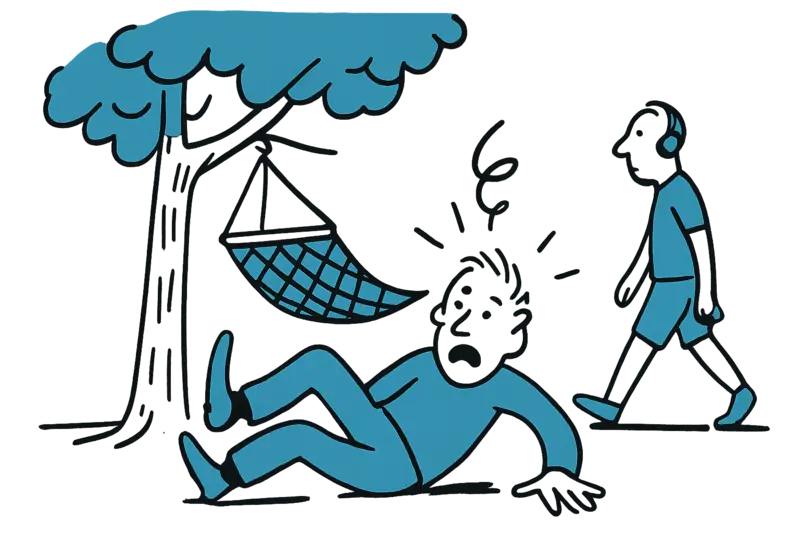
On Friday afternoon, October 2, at around 4 p.m., a man fell from several meters high in Parc de sa Feixina after attempting to climb into a hammock fastened in a tree crown. Emergency responders from 061 found the injured man on the ground; he complained of severe pain and was taken to hospital with a serious bone fracture. The hammock hung high in a stately ficus, not far from the steps to the monolith — precisely where walkers, exercisers and people who spend the night in the park are often found.
Critical analysis
A fall is an accident — but this accident has several aspects. First: the hammock was not intended for relaxing Sunday visitors, but evidently installed as a sleeping place high up. That points to an improvised solution that carries risks: poor attachment, difficult getting in and out, and low visibility for helpers. Second: why could something like this take place in the crowns of trees at all, without being noticed or prevented earlier? Parks are not lawless spaces. Similar episodes in the city — such as the Palma: Club roof climbing stunt exposes safety gaps — underline failures in prevention. Third: the incident reveals a social problem: people without fixed housing increasingly seek shelters even during the day and in central green areas, and existing services apparently do not reach them sufficiently.
What is missing in the public discourse
Discussion often focuses only on order or fines, rarely on short-term safety risks or gaps in support structures. There is a lack of sober debate about how to prevent hazards for those affected and for third parties without further marginalizing people. Also barely discussed: how urban green spaces can be better monitored and simultaneously protected — both the trees and the dignity of the people who use them temporarily.
Everyday scene from Palma
Imagine the park on a Friday afternoon: joggers with headphones pass the usual wooden benches, children run toward the playground, older women feed the pigeons, and in a sheltered niche a ficus overlooks the steps to the monolith. There, between the chatter of passersby and the low hum of nearby traffic, the hammock hung — a visibly unsafe hiding place high above the heads of pedestrians. The scene seemed familiar, almost everyday; but the fall abruptly shattered that calm.
Concrete solutions
1. Preventive inspections: The city could establish regular assessments in central parks without immediately criminalizing people. Visual checks should identify hazards such as improperly attached hammocks and remove them safely. 2. Mobile social teams: Outreach teams that patrol at night and late afternoon can engage people in precarious situations directly, provide short-term support and refer them to shelters. 3. Low-threshold sleeping spaces: In addition to existing emergency shelters, a few simple day and night spaces are needed — rooms that do not require bureaucratic activation. 4. Tree protection and attachment rules: Clear regulations banning the attachment of items to trees combined with a practical procedure (removal, storage, information offer) would prevent damage to vegetation. 5. First-aid information for park visitors: Short information boards with emergency numbers and recommended actions can help parks respond more quickly in an emergency; even incidents like the Balcony fall in Palma: When sleepwalking can become a deadly danger demonstrate the importance of quick response. 6. Coordination: Police, municipal enforcement services, health services and social work must have coordinated routines; a clear contact person in city administration (Ajuntament) can shorten communication paths.
Who pays and who acts?
Control alone is not enough. Those who increase park surveillance must also offer safe alternatives. Costs for mobile teams and additional sleeping places should be borne by the municipality, possibly with support from regional social funds and NGOs. Pure displacement — pushing people out of parks without replacement — is neither humane nor sustainable. Other recent incidents in Palma, such as the Fall in Can Pastilla: More Than an Accident?, illustrate how falls and precarious situations intersect and why comprehensive responses are needed.
Pointed conclusion
The fall in Sa Feixina is more than an isolated accident. It is a warning signal: our parks are meeting places — for leisure, for workers, for those seeking sleep. When a hammock becomes a risky sleeping chamber, the city has not fully met its responsibility toward public space and the most vulnerable people. A mix of pragmatic inspections, social support and clear rules would make such cases less frequent in the future — and the little ficus tree could continue to grow in peace.
Frequently asked questions
When is the best time to visit Mallorca for good weather and fewer crowds?
Is it safe to swim in Mallorca's sea year-round?
What should I pack for a Mallorca trip in spring?
What are easy day trips from Palma to see Mallorca's scenery?
Which beaches in Mallorca are best for families?
How can I get around Mallorca without a car?
Do people in Mallorca speak English, and should I learn some Spanish?
What should I know about Mallorca's weather and sea conditions for planning a trip?
Similar News
Catamaran on the Rocks: Who Pays for the Damage — and Who Protects the Sea?
A sailing catamaran has been lying on the cliffs near Ibiza since the last storms. The images show more than a stranded ...
Near-drowning off Formentera: 64-year-old in critical condition – Could he have been saved?
A 64-year-old tourist was pulled from the water off Formentera and treated in intensive care. A reality check on causes,...
Disguised as a Handyman: How a Thief Robbed Hotel Guests in Manacor — and What It Says About Our Security
A man posed as an electrician in Manacor, broke windows and doors and stole from hotel rooms. Time for a reality check: ...
Legat furious: Germania feels robbed of victory in derby against Marratxí
After a heated local clash in Marratxí, coach Thorsten Legat accuses the officials of manipulation and numerous wrong de...
Why Sánchez Is Calling Elections Now: A Reality Check from Mallorca
Retreating into an election year is the response to social unrest and political deadlock. A look at the gap between prot...
More to explore
Discover more interesting content

Can Cap de Bou

Townhouse Lleo 72
