
Hashish Package in Palma: When Delivery Workers Become Investigators
In early September in Palma, a package emitting a strong smell of hashish was discovered. A German recipient was arrested. What the incident reveals about supply chains, legal gaps, and the role of the neighbourhood.
Hashish Package in Palma: One Case, Many Questions
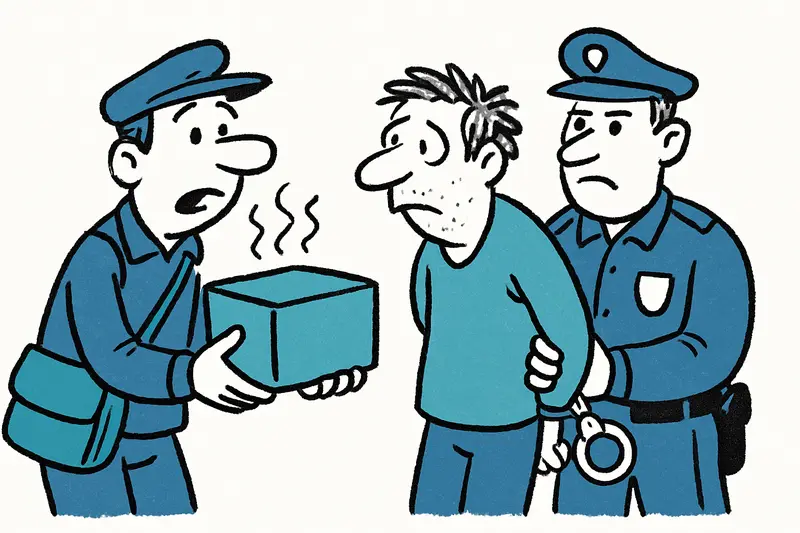
On a hot late-summer morning in early September, as delivery vans stopped honking in Palma's narrow streets and voices from the cafés grew louder, couriers noticed an unusual smell coming from a package. Not the typical cardboard scent, not perfume — it was the sharp, unmistakable smell of hashish. They reacted correctly: employees of a delivery service alerted the National Police. Result: on September 10 a German citizen was arrested; investigators found more than half a kilo of hashish and other marijuana products in the shipment.
The key question: How often do we miss what's inside a package?
Cases like this raise a central question: how do larger quantities of drugs make their way into the city unnoticed — and how often are they only discovered thanks to attentive people? In Palma, where delivery vans brake on every corner and parcel shops spring up like mushrooms, reliance on human attention is high. Decisions are often not made in large warehouses, but at the doorstep, between the sound of a scooter and the surf of the bay.
What is often missing from the public debate
Public discussion usually focuses on arrests and quantity figures. The logistics behind it receive little attention: sender addresses that differ on the label versus inside the package, the role of parcel shops acting as transfer stations, and the routes through international couriers. This is illustrated by Drug discovery on a ferry from Barcelona: Three arrests in Palma and the questions that remain. Also underexposed is how well public reporting channels are networked — police, couriers, shop owners. In our case, couriers and investigators helped each other; that is the exception, not the rule.
Two incidents, one lesson
Just one day before the hashish discovery, the National Police found small bottles of poppers in a phone shop that also serves as a parcel point. The manager handed over the goods and a recipient from Slovakia was identified, as reported in Quiet raid in Palma: Arrest after neighborhood tips — and what's still missing. Two different deliveries, one common denominator: vigilance of people on site. Postal workers, shop owners, neighbours — they are the first line of defence against smuggling in a city whose daily life is shaped by constant coming and going.
Where systems reach their limits
There are technical and organisational hurdles: packages are sorted, labelled and repackaged internationally, which makes controls difficult. Customs checks are designed for freight volumes, not every single shipment. Criminals often exploit the anonymity of digital marketplaces and multiple address changes to erase traces. The police speak of deception attempts — in practice this means investigators often have to do a lot of detective work before they find a lead, as shown in From Investigator to Suspect: How an Ex-Head of Drug Enforcement Rocked Mallorca.
Concrete opportunities and solutions
What could help: targeted training for courier staff and parcel shop operators, clear reporting channels and digital interfaces to the police, increased checks at hubs and the use of sniffer dogs. It would also be important to tighten laws on sender verification — simple measures, like mandatory scanning of an identity document when sending large or repeatedly shipped packages, could create barriers. Awareness campaigns in neighbourhoods and markets would also encourage reporting: better one anonymous email to the authorities too many than one package too few reported.
Practical tips for the neighbourhood
The National Police reminds people that it is possible to send tips anonymously by email to antidroga@policia.es. A few neighbourhood tips: watch out for packages with an unusually strong smell, for repeated shipments to changing addresses, and for couriers who seem unsure. Reporting costs nothing — and sometimes prevents a street, a building or a neighbourhood from making headlines.
Outlook
Investigations are now under way against the arrested person on suspicion of drug trafficking; court dates are still pending. The incident in Palma is not isolated, but it is a reminder: in a city where daily life is accompanied by deliveries — the squeak of a parcel van, the clatter of market bowls, the bustle at the Lonja — it is often simple senses and cooperation among people that make the difference. The challenge remains to improve systems so that prevention relies less on chance and more on measures.
Frequently asked questions
What should I do in Mallorca if a parcel smells like drugs?
How do drug shipments get detected in Mallorca deliveries?
Is it normal for parcel shops in Palma to alert the police?
What kinds of warning signs should delivery workers watch for in Mallorca?
Can I report a suspicious package anonymously in Mallorca?
Why are drug parcels hard to detect in Palma?
What happened in Palma when couriers reported the hashish parcel?
What can neighbourhood residents in Mallorca do if they suspect drug deliveries?
Similar News

Palma's Subway Project: Environmental Review Begins — More Questions Than Answers
The environmental review for Palma's planned subway extension to Son Espases has started, raising concerns and unanswere...
When Tents Return by the Sea: Palma Between the Congress Palace and Sleeping Places
Tents repeatedly appear in Albert Camus Park and on the beach at Can Pere Antoni. Why don't evictions solve the problem ...
Alleged Rape in Palma: How Home Videos Changed the Investigation
A woman reports an assault in Palma. Secretly recorded videos are said to have supported her account. Why migrant women ...

After Major Partners Exit: Palma Rewrites the Rules for the Waterbus
The port authority has changed the rules for the planned waterbus: removal of rigid minimum revenue guarantees, higher u...
Rats in Llucmajor: How Uncollected Garbage Became a Health Problem
In Llucmajor, uncollected trash bags, overflowing containers and rain are leading to increased rat sightings. An assessm...
More to explore
Discover more interesting content

Can Cap de Bou

Townhouse Lleo 72
