
When the Heat Clears Out the Shops: Palma Needs Shade, and Fast
When the Heat Clears Out the Shops: Palma Needs Shade, and Fast
Midday in Palma: shop windows stand open, but doors remain closed. The sun drives customers away from Sant Miquel, Oms and Jaume II — and reveals a gap in planning and politics.
When the Heat Clears Out the Shops: Palma Needs Shade, and Fast
Key question: How can Palma prevent extreme summer sun from permanently desiccating the city centre — and who will pay for it?
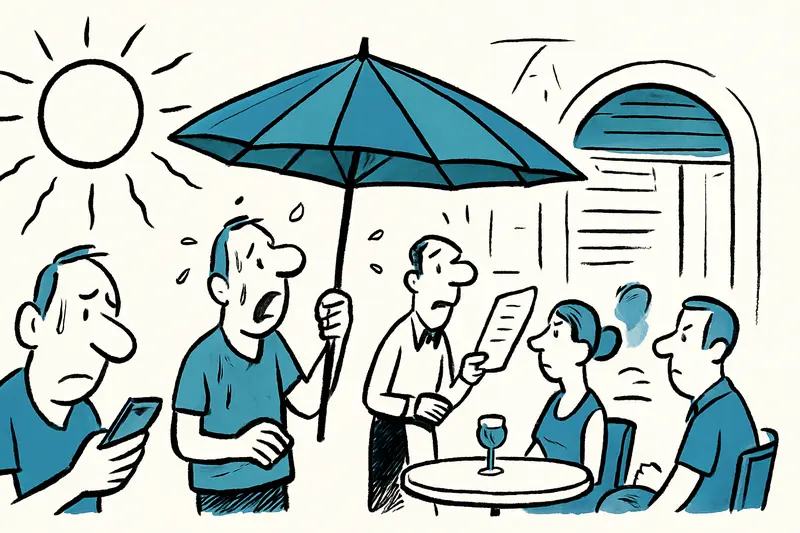
Midday, Sant Miquel. The heat lies over the paving stones like an invisible shoplifter, the roller shutters of some boutiques half lowered, gates closed. Barely anyone sits on café terraces; waiters fan menus to bring air to the faces of the few guests. This is not an isolated observation: shopkeepers in the passages toward Oms and Jaume II have been reporting noticeably fewer customers during the hottest hours for weeks, as covered in When the Shop Windows Fall Silent: Small Shops in Mallorca Feel the Pressure in Summer 2025.
Critical analysis
The situation has two facets: an immediate economic problem for small businesses and a structural problem of urban planning. In the short term, shop owners lose revenue at midday because visitors prefer the hotel pool or an air-conditioned mall at 34 degrees, and When Palma Is Sweating by Mid-Morning: Heat Alert, Risks and What's Missing Now documents how early temperature spikes increase risk and change behaviour. In the long term, recurring heat changes strolling behavior—and with it the face of the old town.
Urban planning and heritage protection clash when it comes to sun protection. Many facades in Palma's centre are listed, narrow streets leave little room for trees, and pavement fixes limit options for permanent structures. At the same time, there are examples from other Spanish cities where temporary sails, prominent sun canopies or permanently installed awnings have improved conditions for shops and pedestrians.
What's missing from the public debate
The debate often remains superficial: "more shade" is demanded, but there is a lack of concrete figures, a cost–benefit analysis and a plan that connects heritage protection, safety and climate compatibility. Two groups are also barely heard: residents, who experience heat and noise differently from business owners, and the specialists—landscape architects, structural engineers, fire safety authorities—who could say what is technically feasible.
There is also a lack of short- and medium-term measures: mobile, easy-to-install solutions, pilot projects on a single street as a test lab, clear rules for permits. Without such steps, demands remain politically appealing but practically ineffective.
Everyday scene from Palma
I walk down Jaume II street: the smell of grilled food from a bar, an older man with a shopping bag, a young couple slipping into the shade of a tree — barely three meters wide. Vendors half-extend the awnings of their food stalls and ask tired tourists to stop for a moment. A shopkeeper calculates on his smartphone; morning-hour revenues have visibly dropped. Such small scenes repeat every hot day.
Concrete approaches
1) Jaume II pilot route: The city should designate one street as an experimental field, with temporary sun sails executed with precise, aesthetically tuned design. A four-week test during the high season would provide behavioral data and feedback from customers and residents.
2) Speed up approval processes: A simplified, time-limited permit process for mobile shading—with clear rules on anchoring, wind loads and fire safety—would provide rapid relief.
3) Allow hybrids: Combinations of permanent, sensitively placed sun protection on non-protected facades, freestanding pergolas and coarse net sails that do not require façade anchoring. This keeps heritage protections intact.
4) Green infrastructure: Where space allows, street trees and planted troughs must be prioritised. This is more expensive and slower, but more sustainable—and cools the urban surface in the long term.
5) Business-friendly measures: Adjusted opening hours (opening later, siesta-like closures during peak heat) and marketing activities in the cooler evenings help to spread turnover, a debate echoed in Dark Shop Windows at 7 PM: Relief for Palma's Boutiques — or a Blow to the Evening?.
6) Financing: Funding could come from several sources—municipal funds, a dedicated budget from tourism tax revenue or EU regional funds for climate-resilient cities. Private contributions from business associations make sense but should not bear the sole burden.
7) Safety and maintenance: Clear responsibilities—who inspects wind damage, who removes seasonal sails after a storm? A publicly accessible maintenance plan is necessary, otherwise measures quickly end in complaints and decay.
Why Palma must act
Heat not only reduces revenue; it changes how people move through the city. If squares, streets and passages are lifeless at midday, the urban scene suffers. That, in turn, can reduce the attractiveness for visitors—exactly the opposite of what a tourism-driven centre needs, a contrast highlighted in When the Clouds Come: Palma's Old Town Between Gain and Limits.
It's time for a pragmatic, technically informed response that provides short-term relief and invests in long-term adaptation to a warmer climate. There will be compromises: a few façade exceptions here, temporary solutions there. But inaction is not an option.
Conclusion: Palma needs more shade—not just as a demand from shopkeepers, but as a thought-out program of pilot projects, accelerated approvals, combined technical solutions and clear financing. If the Cort just watches now, shopkeepers, people vulnerable to heat and the lively street scene will all lose out. Acting means experimenting; those who do not take risks will let the city centre dry up.
Frequently asked questions
What is the best time of year to visit Mallorca for outdoor activities?
Is Mallorca suitable for a beach holiday with kids?
What should I pack for a Mallorca trip?
How easy is it to get around Mallorca without a car?
What local foods should I try in Mallorca?
What are the must-see natural areas in Mallorca?
Is it safe to swim in Mallorca’s seas, and what should I know about beach water conditions?
When planning a trip, what time of year is best for exploring Mallorca without extreme heat?
Similar News
More water than last year: Mallorca's reservoirs breathe easier
September rain refilled the Tramuntana's reserves: overall fill around 35 percent, Cúber at 40.42 percent, Gorg Blau at ...
Three Luxury Hotels in Banyalbufar: Lots of Money, Many Questions
A Danish investor plans three exclusive accommodations in Banyalbufar — including the historic Son Valentí. The announce...
2.1 tonnes of cocaine on sailing yacht off Spain's coast – a reality check for the coastguard
A 14-metre yacht was seized with 2.1 tonnes of cocaine. Who monitors the ports, how does the international hunt succeed ...
Heat Bonus in Mallorca: 100 Euros Extra for Outdoor Staff at MarSenses
MarSenses pays employees who worked outdoors in August an extra €100 as recognition. Lighter uniforms, reduced hours for...
Renovating in Mallorca: What You Really Can Do Without Neighbour Consent
Many think they can do whatever they want in their apartment. That's partly true — but only as long as structural elemen...
More to explore
Discover more interesting content

Can Cap de Bou

Townhouse Lleo 72
