
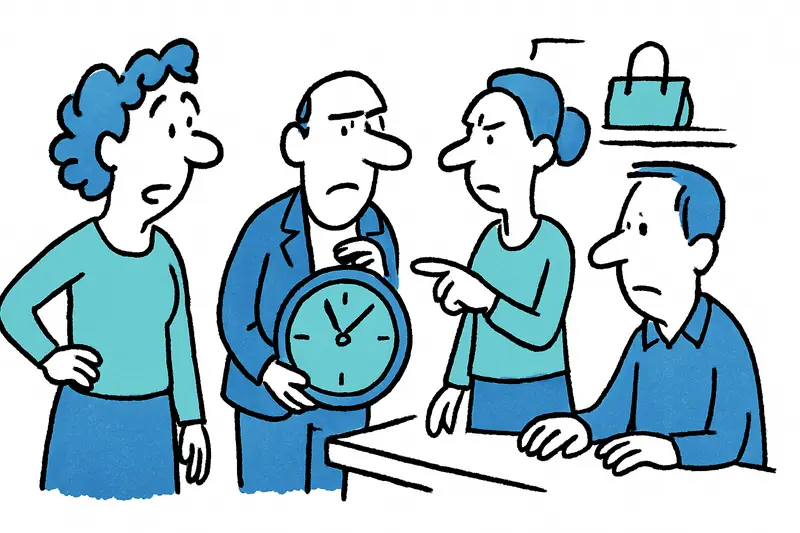
Dark Shop Windows at 7 PM: Relief for Palma's Boutiques — or a Blow to the Evening?
Some small shops in Palma want to close as early as 7 p.m. in winter. A pragmatic response to costs and safety — but what does it mean for the city's evening life?
Why some boutiques in Palma want to close earlier
On a cool winter evening in Palma, when the sea breeze makes the palm trees on Jaume III rustle and the clatter of cups drifts softly over from Plaça Major, you notice the dark shop windows. Not by accident: From January 20 to March 1, several small fashion shops in the old town plan to lower their shutters already at 7:00 p.m. For many owners this is a pragmatic response to dwindling evening customers, rising energy costs (as noted in Austerity Winter 2025: Mallorca's Service Providers Cut Opening Hours – How Long Can They Hold Out?) and the increasingly pressing question of family-friendly working hours.
Central question
The question is simple to state but complex in its consequences: Is an earlier closing time for small boutiques a necessary relief — or a factor that permanently weakens Palma's evening offerings and urban charm?
Merchants' arguments — and their validity
Merchants name concrete reasons: fewer idle hours, more predictable shifts for a small number of employees, lower electricity costs. For shop owners with one or two employees, every saved half hour of wages can add up significantly by the end of the month — findings echoed in When the Shop Windows Fall Silent: Small Shops in Mallorca Feel the Pressure in Summer 2025. The proposals for clear discount periods also sound practical — winter offers from January 7, summer promotions from July 6 — which are intended to promote predictability and solidarity among shops.
The other side of the coin
But there are real risks: those arriving late from the cruise port or wanting to browse after office hours will encounter closed doors. Then only the bars and cafés remain lit — the city appears half-bright, the alleys partly like display dioramas with skipped shops (a pattern mirrored by debates about nightlife in nearby municipalities; see Discos in Calvià: Opening as Early as 6:00 PM — Does 'Tardeo' Really Bring Quiet?). In addition, the measure creates competitive distortions. Large chains and shopping centers outside the old town can offer more flexible hours. Over time, this could reduce the time people spend in the streets and thus curb spontaneous local purchases.
What is often overlooked
Public debates usually revolve around emotions: more peace versus less life. Hard facts are named less often. What pedestrian numbers underlie the decisions? How often do evening customers actually come? And what about safety: shop owners working alone feel vulnerable after 8 p.m. Delivery logistics are another point: delivery times, returns and tradespeople's appointments collide with earlier closing times.
Constructive, data-driven proposals
A blanket 'closes at 7 p.m.' is hardly the ideal solution for a city with a diverse mix of shops and varying customer demand. A better approach would be a flexible, tested one:
1) Data-based pilot: Two-week measurements of pedestrian numbers during core times, supplemented by store opening logs. This allows a more objective decision about whether and where an earlier closing time makes sense.
2) Coordination with the port and hotels: If cruise arrivals and departures or late hotel check-ins are taken into account, opening hours can be better coordinated and guests informed.
3) Flexible models instead of uniformity: Some days (e.g., Thursday) open later, others earlier. A coordinated weekly plan can accommodate employees while also serving evening customers.
4) Joint "late shopping" events once a month: These attract visitors deliberately, create atmosphere and spread the load across a few, predictable evenings.
5) Support for digital offerings: Click & Collect, simple ordering platforms, or shared pick-up points can capture sales without shops having to be staffed around the clock.
A pragmatic way forward
It would be a mistake to see the initiative purely as a cost-saving measure — and equally a mistake to reject it reflexively. Afedeco can provide recommendations, but the shop owners themselves should decide. What matters is that decisions are based on data, neighborhood coordination and flexible models. Palma needs both: lively streets in the evening and economically viable shops in the morning.
For customers this currently means: better to call briefly or note the shopping hours. For retailers it means: test, document and adapt together — so that winter may be quieter, but not emptier.
Frequently asked questions
Why are some small boutiques in Palma closing earlier in winter?
Is winter shopping in Palma still possible after 7 p.m.?
What do Palma shop owners gain from shorter opening hours?
Could earlier closing times make Palma feel quieter in the evening?
What is the best time of year to shop in Palma if you want longer opening hours?
How can small shops in Mallorca still serve customers if they close earlier?
What is happening with shop opening hours in Palma’s old town?
Should I call Palma boutiques before going shopping in the evening?
Similar News

Cap Vermell Grand: Second Michelin Key – a Gift for the East
The Cap Vermell Grand in Capdepera has been awarded its second Michelin key. For the region this elevates the luxury off...

Eurowings lets four aircraft carry names – a friendly idea that also reaches Mallorca
Eurowings is launching a campaign: four Airbus A320s are to carry the first names of people who help others in everyday ...

From the Reality Studio to the Pitch: Aleks Petrovic Makes Mallorca His Base
The former participant in numerous TV shows moves from Dubai to the island and launches a project with FC Germania Mallo...

When the Phone Falls Silent: Concern for Sarah Joelle in Mallorca — and What It Reveals
After days without a response, the TV personality's unreachability in Mallorca sparked concern. Shortly afterwards an al...

Ultraluxury on the Ground: Four Seasons Jet in Palma — a Reality Check for Formentor and the Island
A high-priced flight crosses Mallorca and its guests stay for days at the Formentor resort. What does the island get bes...
More to explore
Discover more interesting content

Can Cap de Bou

Townhouse Lleo 72
