
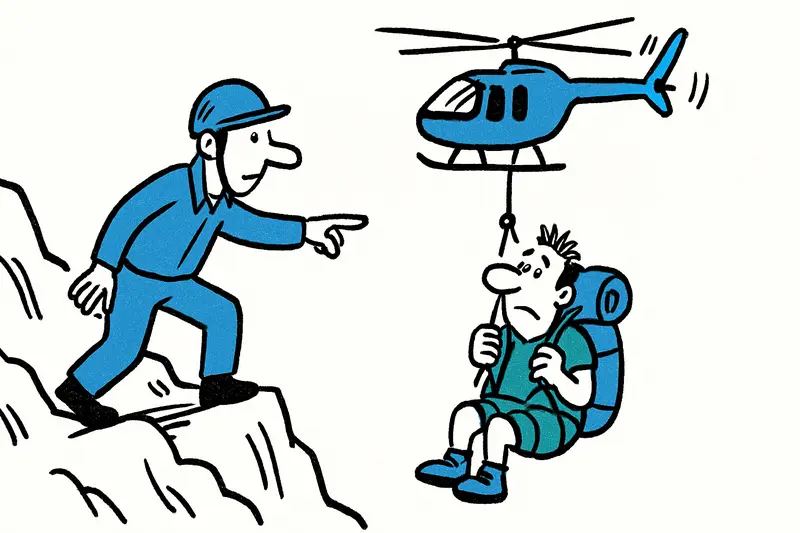
Helicopters over the Tramuntana: Three Germans rescued in three days
Helicopters over the Tramuntana: Three Germans rescued in three days
Within 72 hours, rescuers responded to three incidents involving German holidaymakers – two by helicopter in Torrent de Pareis and La Trapa, and a serious fall in Biniamar. A reality check on safety, prevention and what is missing on site.
Helicopters over the Tramuntana: Three Germans rescued in three days
Key question: Why are rescue missions involving foreign hikers clustering in short periods — and what concrete changes could be made?
In recent days on Mallorca, emergency services were deployed several times to assist German day-trippers. A senior woman fell in the Torrent de Pareis and had to be retrieved by helicopter using a winch; this echoes From Mountain to Hospital: What the Rescues at Puig de Galatzó and Torrent de Pareis Reveal About Mallorca's Hiking Tourism. A 53-year-old woman was airlifted by helicopter near La Trapa in the Andratx area after 45 minutes of searching; an approximately 55-year-old cyclist was injured on a mountain path near Biniamar after falling about two metres. Two of the cases required the rescue helicopter of the Bombers de Mallorca, known as "La Milana," as described in 115 Rescue Missions, Hot Trails: Why Mallorca's Mountain Rescue Got Busier — and What Helps Now.
At first glance it sounds like an unfortunate cluster. But anyone who spends time in the Serra de Tramuntana notices: the island attracts many enthusiastic visitors over a weekend — some are well prepared, others are not. On the narrow trails of the Torrent de Pareis, between steep walls, you hear the roar of the sea, the crunch of hiking boots, and then suddenly the thumping drone of a helicopter. Such scenes stick with you, and similar operations have been reported, for example in Helicopter over Cala Deià: Rescue in the Tramuntana and the Uncomfortable Questions.
Critical analysis: the incidents reveal several problem areas. First: orientation and risk assessment. Nature trails are not uniformly signposted, maps are often only skim-read, and German-language notices are rare where many Germans walk. Second: material preparation. Wrong footwear, lack of first-aid supplies, and underestimating the risk of falls on loose scree are factors. Third: communication. In some sections there is little mobile reception, emergency calls take longer, and searches are prolonged — as in the La Trapa case, when rescuers searched for 45 minutes.
What is missing from the public debate: there is lots of reporting on spectacular mountain rescues, but little on concrete prevention. Statistics on accident frequency by visitors' origin, clearer marking of hazardous spots in multiple languages, and transparent information on clinic and transport costs remain sparse. Also rarely discussed is the role of landlords, rental companies and tour operators in informing their guests.
Everyday scene: at the Sa Calobra parking lot early in the morning: tour buses, the smell of coffee from the small kiosk, older couples with walking poles. Locals walking their dogs shake their heads. In Biniamar, a farmer sits on a wall, watches the narrow path and calls the spot "dangerous when wet" — warnings that often exist only locally and not in brochures.
Concrete solutions: 1) Multilingual, clearly visible warning and information signs at access points to hiking areas; QR codes with short route info, steep sections and emergency instructions; 2) cooperation between town halls, the Bombers and tourism offices for targeted awareness campaigns in German during the hiking season; 3) more mobile first-responder teams at known hotspots on weekends; 4) a free, short online check-up tool for tourists (difficulty level, required footwear, expected duration, mobile reception); 5) stronger involvement of car rental companies, landlords and guides who point out dangers at check-in.
Practical tips for visitors: good hiking boots instead of trainers, an external battery for your phone, water and basic bandaging materials, informed route choice, check the local weather forecast (AEMET weather forecasts), and when in doubt shorten the route or don't start it. Anyone who regularly hikes without a guide should begin with a basic first-aid course.
Conclusion: helicopters in the sky are impressive and reassuring — they save lives, as shown in Dramatic Helicopter Rescue at Puig Major: Lessons from an Afternoon in the Tramuntana. But they are no substitute for better prevention and local information work. On Mallorca a lot can be improved with modest effort: clear signage at starting points, targeted information in foreign languages and responsibility from providers. Otherwise the island remains beautiful, but for some visitors unnecessarily dangerous.
Postscript: For everyone thinking of the Tramuntana now — the mountains are proud and headstrong. Respect for the terrain is not a luxury, but a survival aid.
Frequently asked questions
Is hiking in the Tramuntana on Mallorca safe for casual visitors?
What should I pack for hiking in Mallorca’s mountains?
Why are mountain rescues in Mallorca happening so often?
When is the best time of year to hike in Mallorca’s Tramuntana?
What should I know before hiking Torrent de Pareis in Mallorca?
Is the path near La Trapa in Mallorca difficult to walk?
What should I do if I get injured while hiking in Mallorca?
Are there warning signs for dangerous hiking areas in Mallorca?
Similar News

Fewer Airlines, Fewer Destinations: What Palma's Winter Flight Schedule Means for Mallorca
Analysis shows: Winter at Son Sant Joan Airport will be quieter, with significantly fewer airlines and destinations. Who...
German tourist dies in Sa Calobra – a reality check for emergencies on Mallorca's beaches
A 40-year-old tourist died at the Torrent de Pareis. The emergency call, a doctor who happened to be present, a defibril...
Deadly Tractor Accident in Bunyola: What Needs to Be Done Now
In a work accident on an estate near Bunyola, a roughly 40-year-old man lost his life. His wife and a small child were o...
Head-first dive into the shallow part of Cala Fonoll: An accident and the unresolved question of responsibility
A young tourist dove into Cala Fonoll and was seriously injured. Key question: Why are clear warning signs missing at da...
Mistaken identity with fatal consequences: Brutal assault in S'Aranjassa — what's missing in the follow-up?
At S'Aranjassa a visitor to a finca was tied up, beaten and thrown out of a van. Three men have been arrested, including...
More to explore
Discover more interesting content

Can Cap de Bou

Townhouse Lleo 72
