
Why Palma's Harbor Must Not Become a Stage for an Architectural Spectacle
Why Palma's Harbor Must Not Become a Stage for an Architectural Spectacle
The heritage protection commission rejected a bold but controversial design for the traditional El Pesquero. Good news for the old town — but the debate exposes larger gaps in planning, procurement and public participation.
Why Palma's Harbor Must Not Become a Stage for an Architectural Spectacle
Guiding question: How much visibility may a restaurant roof claim near the Lonja and Consolat de la Mar?
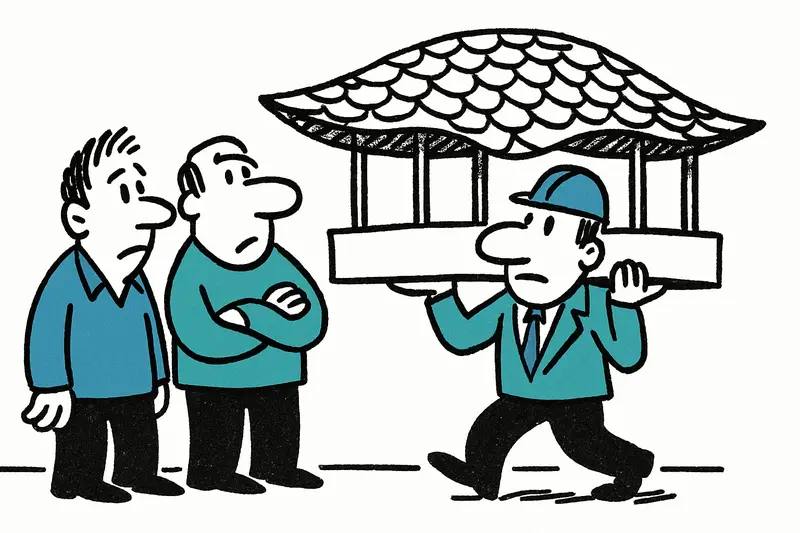
The decision of the heritage protection commission not to approve the planned conversion of El Pesquero is, to begin with, a clear sign: Palma's historic waterfront is not a free space for design experiments that would overlay the old town's architecture. Councilor Óscar Fidalgo called the design "disruptive", and the local preservation association ARCA criticized that the wooden roof would dominate the surroundings and turn into a stage at night. Those are harsh words, but they strike a nerve.
In short: the design would have started with a large wooden structure reminiscent of fish scales. Critics fear that this would have impaired important sightlines to the Lonja and the Consolat de la Mar. The port authority (APB) is formally responsible for awarding the spaces — so the final decision does not rest with the city alone, as shown by its recent ban on party-boat berths opposite the Auditorium. Still, the commission and parts of local politics expect the APB to show "respect for the will" of Palma.
Critical analysis: two logics clash here. On one side is the desire to make a venue modern and recognizable — economic interests, branding, the appeal of a striking appearance. On the other side are historical values, public sightlines and the question of who the harbor actually belongs to: residents, tourists, business owners or the monuments? The commission made it clear that the balance would be disturbed to the detriment of the historical context, a stance similar to interventions in heritage protection such as the demolition halted on Carrer 31 de Desembre.
What has so far been underrepresented in the public debate: the criteria by which the APB awards spaces are not very transparent to residents and restaurateurs. There is no binding checklist for visual impact, lighting concepts, and for weighing commercial interests against the common good. Hardly discussed either is how nighttime illumination competes with historic façades — an issue that grows in importance for projects with prominent lighting, especially in light of incidents like the collapse of part of the medieval Baluard de Sant Pere, which underline the vulnerability of historic structures.
An everyday scene from Palma makes this tangible: in the late afternoon people sit on the terrace in front of the Lonja, the smell of grilled fish mixes with the salt of the sea, a fisherman mends his net at the quay, children run over the cobblestones. Exactly here, large, conspicuous structures would feel alien — they interrupt conversations, change perspectives, and take away people's sense of being part of a historical backdrop rather than an audience of a show.
Concrete solutions: first, the APB must publish transparent awarding criteria that regulate visual compatibility, height, choice of materials and lighting. Second, projects in sensitive areas should undergo a mandatory visual impact analysis (including night views). Third: establish an accompanying committee with representatives from the city, heritage protection, dock workers and residents — not just an expert panel, but a body that brings local experience. Fourth: promote alternative designs that adopt local materiality but are more restrained in scale and illumination — for example recessed, partially movable canopies instead of large, permanently lit structures.
For El Pesquero itself a pragmatic option is on the table: instead of a dominant wooden roof in a sensitive spot, work on a flexible, lower solution — a lightweight, weatherproof sunshade that respects sightlines, uses local woods in smaller dimensions and employs discreet lighting with timers and limited intensity. That way the venue remains recognizable without overpowering the historic surroundings.
What else is missing: clear rules for "flagship architecture" in historic contexts. It's not about opposing modernity per se, but it must be made to fit. We also need more transparency about which economic arguments count for the APB — and who gets a say in decisions. Public participation must not be a fig leaf.
Conclusion: the rejection is not a blanket reflex against innovation, but a reminder that public spaces in Palma are a shared responsibility. If the city, the port authority, business owners and neighbors approach each other earlier and more openly in future, designs can be found that are neither provincial nor pretentious — simply: appropriate. And El Pesquero? Perhaps a new concept that favors restraint over attention. In the end, the people who live, work and stroll along the harbor every day benefit most — and they should not be driven away by an architectural show.
Frequently asked questions
Why is Palma's harbor so sensitive to new restaurant designs?
Can a restaurant roof near the Lonja in Palma be too dominant?
Who decides on new restaurant spaces in Palma's harbor?
What makes lighting a problem for projects in Palma's old harbor?
What should be checked before approving a new terrace or roof in Palma?
What is a more discreet design option for a waterfront restaurant in Mallorca?
Why do residents in Palma care about harbor architecture decisions?
Is Mallorca against modern architecture in historic places?
Similar News

When the Wallet Becomes a Danger: Attack in Peguera and Lessons for Mallorca
In Peguera, two women are said to have stolen the wallet from a 75-year-old German couple. When the victim intervened, t...
Plata stays Plata: Young people take over, Llonguets remain
A small bar on Carrer de l'Argenteria will continue: Tolo Serra hands the place over to young Mallorcans at the end of t...

Unnoticed in the Luggage Compartment: How a Boy Traveled More Than 100 Kilometers in a Team Bus
A minor traveled in the undercarriage of a team bus for more than 100 kilometers until his cries for help were heard. A ...

Cap Vermell Grand: Second Michelin Key – a Gift for the East
The Cap Vermell Grand in Capdepera has been awarded its second Michelin key. For the region this elevates the luxury off...

Eurowings lets four aircraft carry names – a friendly idea that also reaches Mallorca
Eurowings is launching a campaign: four Airbus A320s are to carry the first names of people who help others in everyday ...
More to explore
Discover more interesting content

Can Cap de Bou

Townhouse Lleo 72
