
Heatstroke in the Torrent de Pareis: Rescue Raises Questions About the Safety of Hiking Groups
A 70-year-old hiker was rescued from the Torrent de Pareis by helicopter. The operation in blistering heat raises the question: Are preparation and rules for guided tours in Mallorca still sufficient?
Heatstroke in the Torrent de Pareis: Rescue Raises Questions About the Safety of Hiking Groups
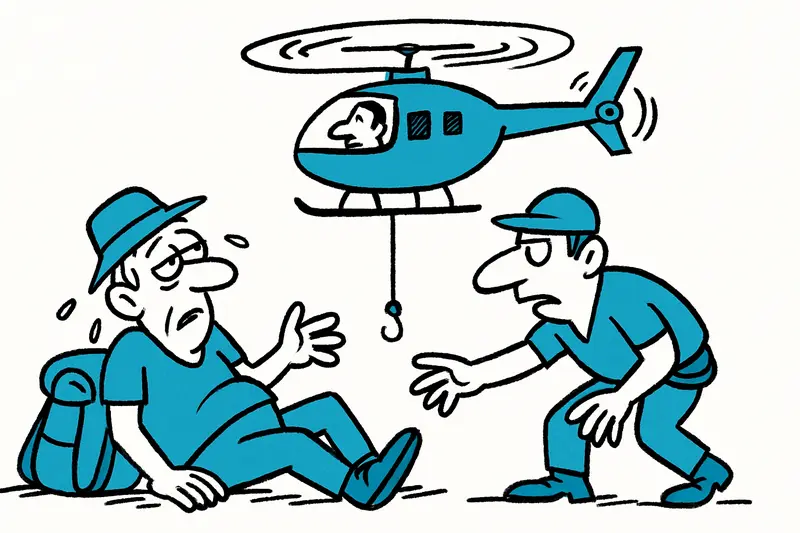
At midday on August 17, the quiet echo in the narrow throat of the Torrent de Pareis was abruptly cut by helicopter rotors. The accompanying sounds – the crunch of stones under hiking boots, the distant hum of boat engines in the port of Sa Calobra, the dry wind that offered little relief – became secondary for a moment. A 70-year-old German participant of a guided tour suddenly collapsed. It was around 1:20 p.m.; the sun was blazing and the thermometer registered well over 34 °C.
What exactly happened — and how help was provided
The terrain there is ruthless: narrow paths, sharp-edged rocks, minimal shade. The local mountain rescue (Servicio de Rescate) and units of the Guardia Civil arrived quickly. Emergency medics stabilized the man on site. Due to the difficult route and his medical condition, evacuation by helicopter was the only practical option. One companion was led back down the valley on foot.
Such scenes are unfortunately not uncommon in hot summer weeks; a recent piece, Heatstroke in the Torrent de Pareis: When Will Heat Protection Become Mandatory?, explores whether current warnings and guides are enough to protect hikers in midsummer heat.
Key question: Who is responsible?
The short answer is: several. But who exactly decides whether a tour may start late in the morning, whether enough water is carried, or whether an older person can manage the route? The group leaders, the companies offering the hikes, the participants themselves — and ultimately the authorities that oversee information and regulation. The central question remains: Are today's standards sufficient to curb such incidents in times of rising temperatures?
Aspects often overlooked in the debate
First: age composition. Many guided hiking groups include older participants who are at higher risk of heat-related harm. Second: start times. Starting later sacrifices sleep but increases risk in the midday heat. Third: visitor expectations. Some guests expect a picturesque walk without realizing how exhausting the conditions can be. Fourth: infrastructure. There are no water sources in the Torrent de Pareis; shade is scarce. And fifth: on-site signage — are notices at car parks and trailheads up to date and sufficiently visible?
Concrete solutions and opportunities
A few pragmatic ideas that could have an immediate local effect:
Early-start rule: Guided mountain hikes in high summer should be required to start before 08:00. The morning air and the canyon's shade can save lives.
Mandatory checklist: Each group should perform a short health and equipment check — water reserves, sun protection, emergency numbers, pulse/BP check if needed.
Maximum group sizes and supervision: Smaller groups, more guides; special consideration for older participants towards the end of the season.
Use technology: Require tour operators to carry a satellite emergency device or a GPS unit with an emergency button, especially in hard-to-reach gorges.
Information campaigns: Signs at popular start points with daily updated warnings (heat index, recommended start time, recommended water per person).
Looking from the rescue side
For the Guardia Civil and the Servicio de Rescate, operations this season are a stress test; similar rescues and their wider implications are examined in From Mountain to Hospital: What the Rescues at Puig de Galatzó and Torrent de Pareis Reveal About Mallorca's Hiking Tourism. Helicopters are effective but expensive and weather-dependent, and nighttime operations, as shown in Nighttime Misadventure in the Torrent de Mortitx: What the Mountain Rescuers' Operation Reveals, further illustrate the complications. Prevention eases the burden on rescue teams and protects people. A preventive system — simple rules, clear information, better training for guides — costs little but can prevent many emergencies.
Conclusion: Respect instead of romance
The Torrent de Pareis remains one of Mallorca's most beautiful places: the steep walls, the play of light and shadow in the morning, the salt in the wind. But romance must not obscure the fact that nature is merciless in summer heat. A little more caution, an earlier start, enough water — these are not optional rules but life insurance.
We wish the rescued man a speedy recovery. And to everyone planning to walk down the path to Sa Calobra in the coming days: watch the sun, listen to your body — and respect what 34 °C on bare rocks can do.
Frequently asked questions
Is hiking the Torrent de Pareis safe in summer heat?
What should you bring for a hike in the Torrent de Pareis on Mallorca?
When is the best time to start a hike in the Torrent de Pareis?
Can older people join guided hikes in the Torrent de Pareis?
What happens if someone collapses during a hike in the Torrent de Pareis?
Why are guided hikes in the Torrent de Pareis more risky in hot weather?
How much water do you need for a hike in Mallorca's dry gorges?
Is Sa Calobra a difficult place to reach on foot from the Torrent de Pareis?
Similar News
First Day, First Consequences: What Palma's Rent Freeze Really Means
A new decree stops a planned eviction in Palma — but what really changes for tenants and landlords? A reality check with...
When Housing Becomes a Matter of Survival: Mallorca Between Rental Frenzy and Everyday Life
The case of 87-year-old Maricarmen showed that on Mallorca many people's lives are poised between affordable and uninhab...
Autumn in Mallorca: When Melancholy Gets a Window
Why autumn quietly tightens here — and how to make use of the mood: walks, culture, candles and the light from Palma to ...
Near-miss on Lanzarote: Landing Ryanair Jet and Iberia Takeoff — what really went wrong
On Lanzarote there was a dangerous incident: A Ryanair flight (FR5910) from Dublin landed on runway 03 while an Iberia E...
Eurowings introduces new Premium Business seats on Mallorca routes
From December 1, selected Eurowings flights to Palma and other destinations will feature eight particularly generous sea...
More to explore
Discover more interesting content

Can Cap de Bou

Townhouse Lleo 72
