
Hot Coffee, Cold Help: Why the Ryanair Case after Mallorca Is More Than an Isolated Incident
Hot Coffee, Cold Help: Why the Ryanair Case after Mallorca Is More Than an Isolated Incident
A cup of coffee without a lid, a slipping tray and a passenger with burns that took eight months to heal: what this incident reveals about on-board service, first aid and safety culture.
Hot Coffee, Cold Help: Why the Ryanair Case After Mallorca Is More Than an Isolated Incident
A hot accident on the Bournemouth–Mallorca flight led to months of suffering and an out-of-court payment of around €5,000. Time for a reality check.
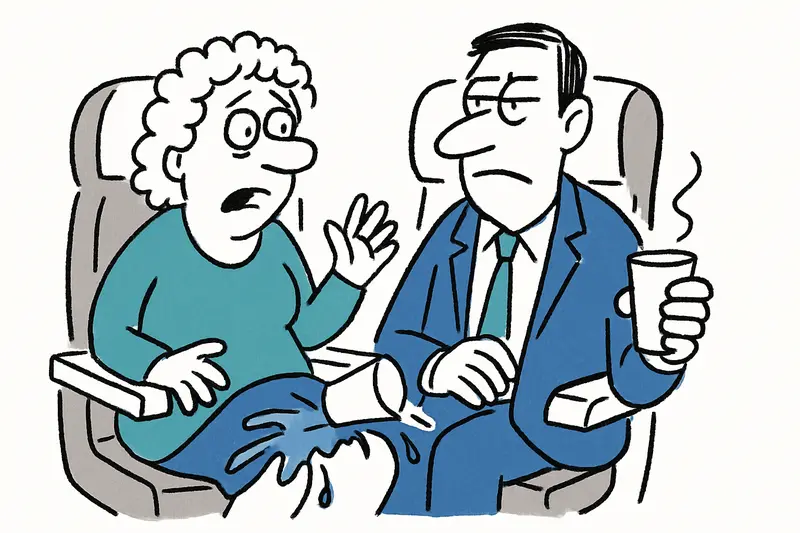
On a flight from Bournemouth to Mallorca, a 63-year-old passenger ordered a coffee. The cup apparently arrived without a lid, slipped off a tray and spilled onto her thigh. The woman, whose burns only healed after about eight months, later received just under £4,350 in an out-of-court settlement.
Key question: Who is responsible on board when an everyday service like pouring coffee becomes an accident?
From a critical perspective, the case reveals several weaknesses. First: materials and design. Tray tables with narrow grooves and lightweight plastic cups are not inherently safe. If cups are served without lids, the risk increases—especially during turbulence or when the tray is not adequately stabilized. Second: process and personnel. That suitable lids were not available on board and that the crew reportedly first offered only dry paper is more than an unfortunate chain of circumstances. Third: first-aid practice. The injured woman, a trained nurse, reports that instead of cool compresses alcohol-based wipes were given—an ill-advised remedy for fresh burns; see NHS guidance on treating burns and scalds. These procedures raise questions about cabin crew training and equipment.
What is missing from the public debate is a systems perspective. The discussion often gets stuck on the dispute between operator and passenger—who pays? This is reflected in Ryanair vs. Aena: When an Airline Dispute Lands on Mallorca, which focuses on the operator–airport disputes rather than prevention.
Less attention is paid to the obligation for standardized burn first-aid supplies, the design of service trays, or mandatory procedures for serving hot drinks. The role of aircraft manufacturers and suppliers of on-board crockery is also rarely discussed.
An everyday Mallorca scene illustrates the problem: someone sipping morning coffee on Passeig Mallorca pays attention to the cup lid because the wind often blows from the harbour. On the plane that small precaution is missing; the cramped space, the jostling during service and the expectation of a quick pass through the cabin change the risk dynamics. At Son Sant Joan airport you often see older travellers barely moving after arrival, yet exposed to the same risks as anywhere: hot coffee, movable trays, and the short interval between serving and setting down, and local operational tensions are highlighted in Ryanair Hand Luggage Checks: Between Efficiency and Frustration at Palma Airport.
Concrete solutions can be implemented on board relatively easily: 1) Mandatory spill-proof cups or at least standardized lids for hot drinks; 2) redesign of tray and table bridge constructions so cups stand more securely; 3) mandatory first-response measures for thermal injuries in crew training (cold, wet compresses, no alcohol on open burns, quick access to sterile dressings); 4) a dedicated burn kit in every service pouch; 5) clear protocols on when to inform medical personnel on the ground or consider a diversion.
In addition, aviation authorities could require minimum technical standards for on-board crockery and safe serving practices. This is not a revolution, but an adaptation of established rules from hospitality and emergency medicine to an environment with particular injury risks.
For travellers the rule is simple: caution costs little. A personal thermal mug with a secure lid, fastening your seatbelt during service or politely asking for a lid can be small but effective protective measures. And if you witness an accident: stay calm, request cool, damp cloths, avoid alcohol-based products and insist on documented first-aid steps.
Conclusion: the case is symptomatic. Not every on-board accident is avoidable, but many result from preventable negligence—in material choices, processes and training. For Mallorca flights this means: when you step off at the gate in Palma, don’t think only of your luggage—remember that the seemingly harmless cup of coffee above the clouds can become painful. The out-of-court payment is a signal, not a substitute for systemic change.
One point is unmistakable: safety begins with small things. A lid, a cool compress and a clear action plan can turn months of suffering back into an anecdote rather than a medical odyssey.
Frequently asked questions
Is it safe to drink hot coffee on a flight to Mallorca?
What should you do if you get burned by hot coffee on a plane?
How long can burns from a coffee spill take to heal?
What kind of first aid should cabin crew provide for a burn?
Are lids required for hot drinks on flights to Mallorca?
What can passengers do to avoid spills on a Mallorca flight?
Why do Mallorca airport passengers talk so much about Ryanair service issues?
What makes a flight from Bournemouth to Mallorca different from an ordinary coffee spill?
Similar News
Magaluf: Watchtower Alarm – Lifeguards Pull Unconscious Beachgoer from the Water
After a drama in the late afternoon, two lifeguards at Magaluf beach rescued an unconscious 44-year-old man. He was stab...
Turquoise in the City: How dangerous is the color play of the Sa Riera?
The Sa Riera in Palma suddenly turned turquoise — a pretty motif, but behind the effect lies a discharge of saline waste...

Jeckliner at Sunnesching: Cologne spirit sets sail from Palma
In September 2027 the Mein Schiff 2 briefly becomes a floating carnival stage: four days with Cologne bands, comedy and ...
Finally Home: Mike and Leyla Heiter Buy Villa with Sea View in Mallorca
The reality TV couple Mike and Leyla Heiter have bought a house in Mallorca with a roof terrace and sea view. An Instagr...
Arrest after series in Palma: Who protects apartments from repeat offenders?
The National Police arrested a man in Palma who investigators say may have broken into several apartments. In one incide...
More to explore
Discover more interesting content

Can Cap de Bou

Townhouse Lleo 72
