
When Berlin Strikes and Mallorca Gets the Bill: What the Airport Outage Really Means
When Berlin Strikes and Mallorca Gets the Bill: What the Airport Outage Really Means
A warning strike at Berlin-Brandenburg Airport shuts down all passenger flights. For Mallorca this means: empty departure halls there, fewer guests here — and the question of who bears the follow-up costs.
When Berlin Strikes and Mallorca Gets the Bill: What the Airport Outage Really Means
About 2,000 employees affected, 445 canceled movements, roughly 57,000 travelers — and we feel the effects at Son Sant Joan
Key question: Why does an industrial dispute in Berlin suddenly cause nervousness at Palmas bus stops, in the cafés on Passeig Mallorca and in the taxi queue in front of Son Sant Joan Airport?
On Wednesday morning, hardly anything in Berlin was as usual: a warning strike called by Verdi at the airport company halted all passenger traffic. According to available figures, around 2,000 employees were affected, including firefighters, traffic control and terminal management; this resulted in about 445 canceled flight movements and some 57,000 travelers who had to rethink their plans. As our earlier coverage showed, disruptions at BER have caused long waits for Mallorca passengers in other instances, see Seven Hours of Waiting at BER: What the Mallorca Weekend Taught Us.
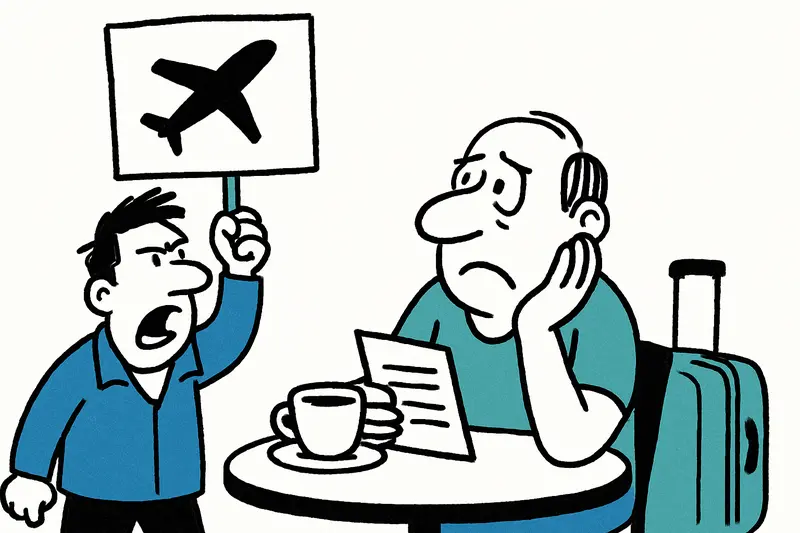
In Mallorca, this is noticeable not only in empty rows of seats on some tour buses. In front of cafés in Palma's old town, tour guides sit with printed revised flight schedules, taxi drivers discuss connection options, and the information desk at Son Sant Joan rings longer than usual. Airlines have offered affected passengers rebookings or alternative connections; many passengers therefore stayed at home.
Critical analysis: The dispute is not only about percentage points on the payroll. Employers had presented an offer with staged increases through the end of 2028: after a zero round until June, small raises would follow in the years 2026 to 2028. Verdi, on the other hand, is demanding six percent more or at least 250 euros per month per pay group as well as an additional day off for union members — the demand aims at more immediate relief.
The escalation is symptomatic of a deeper problem: multi-year staged contracts and tiny incremental income improvements hit employees whose living costs are rising noticeably. At the same time, the damage to operations is significant because many processes in modern airports depend on each other; third-party system failures have shown similarly cascading effects, as reported in When Servers Strike: How a Cyberattack Disrupted Flights to Mallorca. If traffic control or terminal management fail, check-in, boarding and coordination cannot simply be handled by temporary staff.
What is often missing in public debate is the cascade of consequences for tourist destinations. A massive outage at a hub means fewer guests, additional hotel costs for outsiders and higher burdens for the remaining service staff on site. Less obvious but real: lost trust from guests who may book more cautiously for their next stay.
Everyday scene from Palma: On a sunny afternoon an older German family sits in a café at Plaça Major flipping through their documents in confusion. The son has the rebooking on his phone; the grandparents don't know whether they have to pay for their holiday apartment for one more day. A shuttle driver on his way to the airport casually mentions forgotten suitcases that are now in Berlin and that no one here can pick up, a situation reminiscent of when a delayed Mallorca–Berlin flight landed in Hanover and passengers continued by bus Delayed Mallorca–Berlin Flight: Landing in Hanover, Continued by Bus. Small images — but they add up.
Concrete solutions: First, airlines and tour operators should develop binding emergency plans that not only cover replacement flights but also accommodation, transfers and fast communication for tourists on site. Second, airport operators and trade unions need an independent arbitration body that can intervene quickly in such negotiation deadlocks. Third, a regionally coordinated reimbursement or support model could be considered: municipalities and associations can temporarily step in to help affected businesses so that small hotels or taxi companies are not left bearing the costs alone.
In the longer term, it would make sense to anchor mechanisms for short-term inflation compensation in collective agreements instead of spreading pay increases over years in tiny steps. There should also be industry agreements on how urgent core tasks can be secured in an emergency — for example through a list of mission-critical functions for which alternative deployment plans exist.
What remains as a conclusion? A strike in Berlin is not an isolated event: the island feels such disruptions just like kiosks on the beach or landlords in Cala d'Or. It's not just about wage demands or percentages. It's about planning security for travelers and businesses — and about how resilient our tourism is when distant gears grind to a halt.
To put it pointedly: Those who welcome guests in Mallorca should not wait until the phone lines are burning. We need pragmatic, binding emergency rules between airlines, airports, hotels and municipalities — otherwise on the next strike day we'll again be left waiting for printed rebookings and half-full cafés.
Frequently asked questions
How can a strike at Berlin airport affect travel to Mallorca?
What should I do if my Mallorca flight is canceled because of a strike in Germany?
Are Mallorca passengers usually rebooked automatically during airport strikes?
How do airport disruptions in Europe affect hotels and taxis in Mallorca?
What happens at Son Sant Joan Airport in Mallorca when flights are disrupted elsewhere in Europe?
Does a strike at a German airport mean I may need an extra night in Mallorca?
Is it still worth checking flight status before heading to Mallorca Airport?
Why do people in Palma notice airport strikes so quickly?
Similar News
Magaluf: Watchtower Alarm – Lifeguards Pull Unconscious Beachgoer from the Water
After a drama in the late afternoon, two lifeguards at Magaluf beach rescued an unconscious 44-year-old man. He was stab...
Turquoise in the City: How dangerous is the color play of the Sa Riera?
The Sa Riera in Palma suddenly turned turquoise — a pretty motif, but behind the effect lies a discharge of saline waste...

Jeckliner at Sunnesching: Cologne spirit sets sail from Palma
In September 2027 the Mein Schiff 2 briefly becomes a floating carnival stage: four days with Cologne bands, comedy and ...
Finally Home: Mike and Leyla Heiter Buy Villa with Sea View in Mallorca
The reality TV couple Mike and Leyla Heiter have bought a house in Mallorca with a roof terrace and sea view. An Instagr...
Arrest after series in Palma: Who protects apartments from repeat offenders?
The National Police arrested a man in Palma who investigators say may have broken into several apartments. In one incide...
More to explore
Discover more interesting content

Can Cap de Bou

Townhouse Lleo 72
