
Fire under the Ma-20: Why Palma's Shanty Camps Became Fire Traps Again
Fire under the Ma-20: Why Palma's Shanty Camps Became Fire Traps Again
On Wednesday afternoon, makeshift shelters under the bridge at the Son Gotleu exit burned. The images show not only flames but a failure in housing provision.
Fire under the Ma-20: Why Palma's Shanty Camps Became Fire Traps Again
Key question
How can Palma prevent people who, out of necessity, live in makeshift huts under the Ma-20 ring road from repeatedly becoming victims of life-threatening fires?
The incident
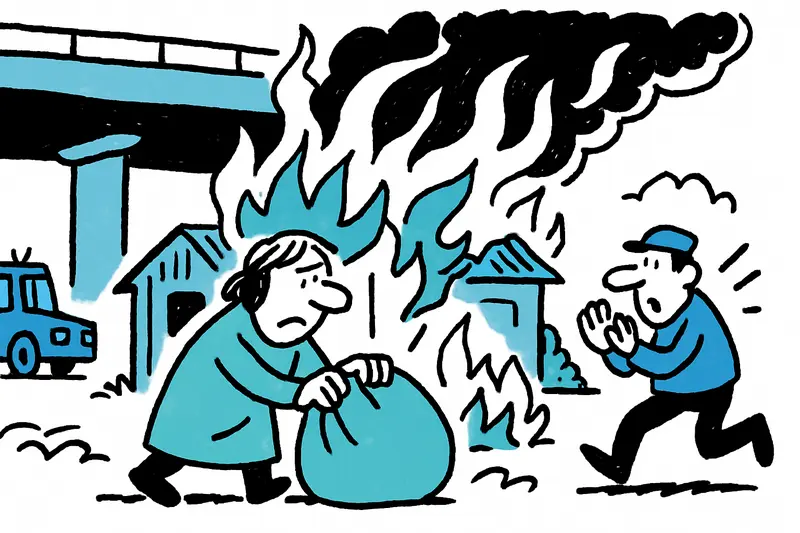
On Wednesday afternoon, a camp of improvised shelters beneath the bridge at the Son Gotleu exit caught fire. Around 3 p.m. flames erupted from several huts, smoke drifted across the carriageways of the Ma-20 and temporarily paralyzed the Son Gotleu exit. Fire engines raced in, sirens mixed with honking and the voices of people hurriedly pulling blankets, a few bags and children from the ruins. The adjacent vegetation also caught fire; sparks flew into the dry bushes beside the motorway.
Critical analysis
This fire is not a singular accident but a symptom: for years rising rents, a scarce supply of social housing and the conversion of properties into holiday rentals have pushed people to the margins, as shown in Fire on the outskirts of Palma: When improvised settlements become a ticking time bomb. Where there are no regular connections, gas cylinders, improvised electrical wiring and open cooking places become the norm. It only takes one spark for a blaze to spread rapidly. Firefighters can extinguish the flames; they cannot eliminate the structural causes that drive people into such living conditions.
What's missing in the public debate
There is a lot of reporting about individual operations, such as Fire in Can Morro near Porto Pi: A Wake-Up Call for Mallorca's Fire Safety, but hardly any reliable inventory: How many makeshift settlements are there around Palma in reality? Who lives there permanently, who temporarily? Too rarely is attention paid to preventive measures: fire-safe gas exchange points, regulated electricity connections, regular vegetation maintenance along the Ma-20. Even rarer is the debate that the problem is directly linked to housing market policy and the availability of affordable homes.
Everyday scene from Palma
Anyone standing at the Son Gotleu exit today does not hear only the motorway. You smell the scorched scent of plastic, see older women with plastic bags searching the ruins for belongings, and young people warming their hands away from the crowds. In the square near the neighborhood people talk about the fire, but the question “Where should they go?” remains unspoken. The scene is familiar: bright streetlights, the rumble of buses and the mix of residents, commuters and those without a fixed address. This echoes other local incidents such as Fire near Porto Pi: What the blaze reveals about safety in Palma.
Concrete solutions
Short term: 1) Immediate setup of safe emergency shelters where residents can be gathered; 2) Mobile exchange stations for gas cylinders and certified safe stoves in affected neighborhoods; 3) Temporary fixed lines and certified electrical cabinets to replace illegal, dangerous connections; 4) Regular clearing of vegetation strips along the Ma-20, especially during dry periods.
Medium to long term: 1) A coordinated program by Palma City Council and the Consell de Mallorca to create modular, affordable housing for rapid implementation; 2) Tax and incentive measures for owners of vacant flats if they make them available to the local social housing program; 3) Expansion of social housing allocations and accelerated procedures for particularly vulnerable households; 4) Community outreach teams offering fire-safety training, small rescue kits and regular checks of living conditions.
Why this matters
Every operation that puts out the flames prevents immediate injuries and worse. But without binding prevention the images will recur. It's not just about technology and equipment; it's about human dignity and whether a city allows its residents to seek shelter under a motorway. Fire safety in this debate is an opportunity: measures that save lives can also pave the way to more stable housing situations.
Conclusion
The fire on the Ma-20 has shown how narrow the safety margins are for people in Palma's shanty camps. Those responsible must act now: ensure short-term safety and simultaneously push housing policy for affordable homes. Otherwise every extinguished fire remains only a makeshift solution built on a foundation of social neglect.
Frequently asked questions
Why do fires keep breaking out in shanty camps under the Ma-20 in Palma?
What should people do if a fire starts near the Ma-20 in Palma?
How can Palma reduce the fire risk in informal settlements?
What is being done about housing insecurity in Palma and Mallorca?
Is it safe to live in improvised shelters in Palma during dry weather?
What happened at the Son Gotleu exit on Palma’s Ma-20?
Why is vegetation along the Ma-20 in Palma a fire concern?
Who is affected when a fire breaks out under the Ma-20 in Palma?
Similar News
Magaluf: Watchtower Alarm – Lifeguards Pull Unconscious Beachgoer from the Water
After a drama in the late afternoon, two lifeguards at Magaluf beach rescued an unconscious 44-year-old man. He was stab...
Turquoise in the City: How dangerous is the color play of the Sa Riera?
The Sa Riera in Palma suddenly turned turquoise — a pretty motif, but behind the effect lies a discharge of saline waste...

Jeckliner at Sunnesching: Cologne spirit sets sail from Palma
In September 2027 the Mein Schiff 2 briefly becomes a floating carnival stage: four days with Cologne bands, comedy and ...
Finally Home: Mike and Leyla Heiter Buy Villa with Sea View in Mallorca
The reality TV couple Mike and Leyla Heiter have bought a house in Mallorca with a roof terrace and sea view. An Instagr...

Arrest after series in Palma: Who protects apartments from repeat offenders?
The National Police arrested a man in Palma who investigators say may have broken into several apartments. In one incide...
More to explore
Discover more interesting content

Can Cap de Bou

Townhouse Lleo 72
