
Old Town without a License: What Will Become of the Former Hotel Perú on Plaça Major
Old Town without a License: What Will Become of the Former Hotel Perú on Plaça Major
In the middle of Palma's old town the former Hotel Perú — built around 1900, 768 m², four floors plus a roof terrace — is for sale (€3.6 million). The hotel license is missing. What now?
Old Town without a License: What Will Become of the Former Hotel Perú on Plaça Major
Key question: Heritage worth protecting or new-build luxury in the middle of Palma?
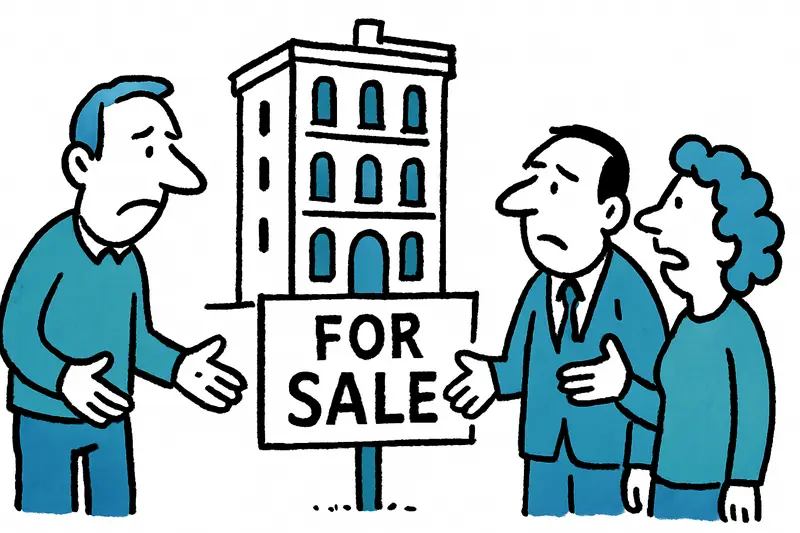
The bare numbers are in the listing: the former Hotel Perú, on Plaça Major in Palma's old town, is offered for €3.6 million. Built around 1900, 768 square metres across four floors plus a roof terrace — a corner property from an era when Palma sounded different. Today, however, the hotel operating licence no longer exists; the listing suggests converting the building into a large residential building or several luxury apartments. The building has been vacant for decades and has changed hands several times.
That may sound dry. In reality, such sales affect the city. Plaça Major is not some distant suburb; it is the heart where market sellers carry cartons of eggs in the morning, espresso steams at the corner, and delivery scooters weave through, a contrast explored in local coverage of the square's condition in reports on Plaça Major's decline. When a historic building without a licence falls into private hands, it has consequences for neighbours, for the streetscape and for the question: who owns the old town?
Critical analysis: the removal of the hotel operating licence makes the building easier to use purely for residential purposes: higher returns, fewer obligations to guests. That is a driver for conversion into high-priced apartments or short-term rentals — models that have been common and visible in Palma's centre in recent years, including documented illegal short-term rentals in Palma's old town. Vacancy, years of ownership changes and finally a sale at a substantial price raise obvious concerns: will the facade be preserved? Will ground-floor spaces remain lively shops or be turned into closed-off private areas? And who ultimately benefits from the conversion — the neighbourhood or an investor portfolio?
What is often missing in public debate is the voice of residents and of the small businesses around Plaça Major, and technical details on why the licence was revoked. Why was the hotel licence withdrawn — structural condition, fire-safety issues, lease disputes? Such questions are rarely disclosed, even though they are relevant for decisions about future use. Also rarely discussed are concrete requirements from the Ajuntament or heritage protection authorities for facades, interior structure and public access.
A simple everyday scene makes the situation tangible: on a cool morning you see the usual suspects on Plaça Major — pensioners with newspapers, delivery drivers, dawdling tourists. A vacant building creates gaps: less life on the ground floor, fewer passers-by, a quieter soundscape. The Perú's roof terrace could offer views and a meeting place. If it becomes private, a public potential disappears.
Concrete solutions Palma should consider now: first, an immediate heritage survey by the competent authority to secure what is worth protecting. Second, the city should examine binding conditions for the sale and subsequent permits: retention of the original facade, a mixed-use requirement with public ground-floor functions (cafés, studios), and limitations on converting units into short-term rentals. Third, grant programmes for heritage-appropriate renovation would be sensible — so that not only profit-driven buyers win the bid, but also community-minded investors or cooperatives get a chance.
Further practical steps: a pop-up usage model during renovation (cultural space, neighbourhood hub), transparent reporting obligations by the seller on the reasons for licence withdrawal, and a public sales register for properties of cultural-historical importance. The city could also consider permanent quotas for social housing in central conversion projects — as a condition for change-of-use permits.
The conclusion is concise: a building like the Perú is more than square metres and a price tag. On Plaça Major it will be decided whether Palma allows its old town to become mere scenery for luxury flats or preserves it as a living urban space. In short: without clear rules, a market-driven sale will probably change parts of the neighbourhood. With smart rules, however, a compromise is possible: preserved substance, usable spaces and a quarter that remains affordable for more than a few.
Those who act now will decide the noise level of Plaça Major in ten years — whether you will still hear breakfast sounds or only the high beams of an SUV. That is the real question behind the €3.6 million.
Frequently asked questions
What is happening with the former Hotel Perú on Plaça Major in Palma?
Why does a missing hotel licence matter for a building in Palma’s old town?
Can a former hotel in Mallorca be turned into apartments?
What should buyers check before purchasing a historic property in Palma?
Why are vacant buildings in Palma’s old town such a concern?
What is special about Plaça Major in Palma?
How can Palma protect historic buildings while allowing new uses?
What does the sale of the former Hotel Perú say about Palma’s old town market?
Similar News
Released with Conditions: The Plus Ultra Suspicion and a Mallorcan Finca as Residence
A Dutch entrepreneur, sought in connection with the Plus Ultra case, was extradited to Spain after his arrest in Germany...

Haute Nuit in Puerto Portals: Fashion, Art and Indulgence by the Water
On October 2 the Lobster Club in Puerto Portals will be transformed into a stage for curated fashion, art and culinary e...

Magaluf: Watchtower Alarm – Lifeguards Pull Unconscious Beachgoer from the Water
After a drama in the late afternoon, two lifeguards at Magaluf beach rescued an unconscious 44-year-old man. He was stab...
Turquoise in the City: How dangerous is the color play of the Sa Riera?
The Sa Riera in Palma suddenly turned turquoise — a pretty motif, but behind the effect lies a discharge of saline waste...

Jeckliner at Sunnesching: Cologne spirit sets sail from Palma
In September 2027 the Mein Schiff 2 briefly becomes a floating carnival stage: four days with Cologne bands, comedy and ...
More to explore
Discover more interesting content

Can Cap de Bou

Townhouse Lleo 72
