
Eleven holiday apartments without a license in Palma's Old Town – why the listings remain online
In the middle of Palma's Old Town, a building operating as "Mallorca Suites" offers eleven apartments for short-term rental — apparently without a valid license. Residents complain about noise, constant turnover and a lack of enforcement of the rules.
Eleven apartments, one street — and apparently no license
In the heart of Palma's historic maze, just a short walk from the Plaça de Cort and the town hall (Ajuntament), stands a building that has been the subject of debate for months. Under the name "Mallorca Suites", eleven units are listed on booking platforms, with high-season rates said to reach up to €600 per night. The listings remain online, as reported in When Neighborhoods Become Postcards: Illegal Vacation Rentals in Palma, even though, according to the city, the operator is renting out without a valid tourism license.
The neighborhood: early delivery vans, ringing doors, suitcases
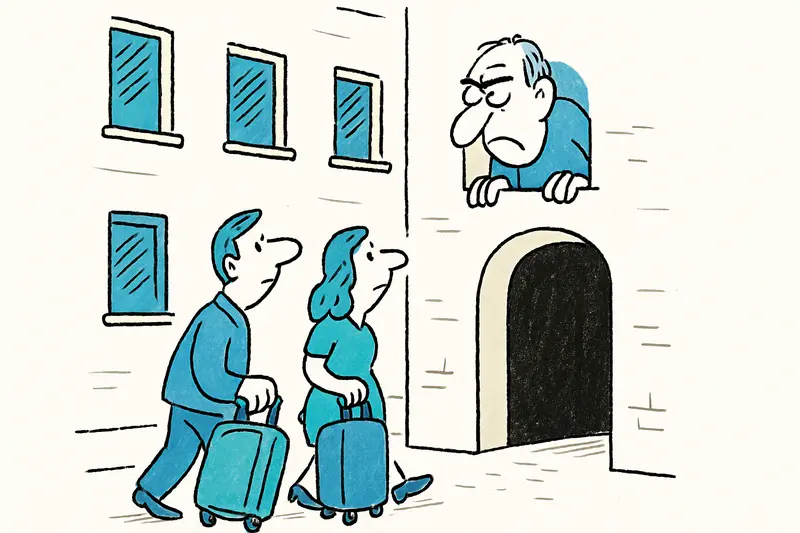
Early in the morning, delivery vans rumble through the narrow alley, the clatter of wheeled suitcases echoes between the old facades. "The doorbells ring around the clock," says María, 62, who has lived on the street for thirty years. "At 9:30 a.m. another group with suitcases arrived. No problem if everything were legal."
Such scenes are typical for many streets in the Old Town: the smell of espresso from the café, voices in different languages, the rustle of a city map in the wind. For residents this adds up to a constant, nervous background noise — and to a question that is becoming more urgent: Why don't the authorities crack down?
Authorities, fines, court — a process that doesn't stop
According to information from the city, fines have already been imposed on the operator, and the case has been discussed alongside official reviews such as Only twelve out of 1,300: Island council downplays accusations of illegal holiday rentals. She herself has acknowledged an ongoing court case and stated that the matter has not yet been finally resolved. Nevertheless, the advertisements still appear, bookings are possible and payments are being made — a scenario that leaves those affected puzzled and frustrated.
The problem affects two levels: the daily life of residents (noise, rubbish, frequent turnover of the building community) and the credibility of regulation. When repeated sanctions do not stop a practice, this undermines trust in state action and creates inequality compared to legally operating landlords and hotels.
Why enforcement fails — a look behind the scenes
Often it's not just a lack of will, but structural hurdles: staff shortages in municipal departments, long legal proceedings, and the difficulty of quickly stopping income flows. Platforms list properties worldwide automatically; they usually only respond to specific reports, and legally available measures can take days to weeks, a dynamic underscored by an analysis pointing to nearly 8,000 unregistered holiday apartments.
Less noticed is another point: the ownership structure. Owners and operators are sometimes obscured through shell companies or managers. This not only complicates legal enforcement but also the effort to quickly block income.
Concrete: What should happen now
There are practical steps that could have a short-term effect and at the same time change structures in the long term:
1. Immediate de-listing clause: The city should reach a binding agreement with platforms: when ongoing, proven proceedings exist against an address, listings are temporarily suspended until the legal situation is clarified.
2. Transparency for neighbors: A publicly accessible register (updated and showing status information), indicating which cases are pending and which sanctions have been imposed, would stop speculation and give residents clarity.
3. Financial recovery instead of mere fines: If penalties are simply treated as a business cost, they are of little use. Additional measures could include seizure of rental income, blocking payment flows through intermediaries, or increased repeat-offender penalties.
4. Administrative acceleration: Faster inspections by a task force in the Old Town that conducts repeated checks and prioritizes cases would increase pressure on operators.
5. Platform liability and API matching: A technical reconciliation in which platforms automatically check against the city's list of licensed vacation rentals (API) could dry up illegal listings.
Why the issue affects more than a single building
This one building is symbolic of a larger problem: if rules are enforced only sporadically in one of the most tourism-sensitive areas of Palma, the balance between everyday life and tourism shifts. Residents lose quality of life, tenants find fewer housing options, and the city loses legitimacy if laws are not applied evenly.
Many wonder: is this an isolated case — or a pattern? The answer depends on whether the administration now takes clear, visible steps. Otherwise the bitter taste remains that fines are part of the operating costs, while the alley keeps rattling and the listings keep blinking online.
Outlook
The central question remains: when will the administration draw the consequences that residents want? A swift, transparent approach would relieve the Old Town and show that Palma takes rules seriously. Until then, the house on the alley remains a tense spot — eleven apartments, many suitcases and a city administration that must be watched closely to see whether its measures are sufficient.
Frequently asked questions
Are holiday apartments in Palma allowed to operate without a tourism licence?
Why can illegal holiday rental listings in Mallorca stay online even after fines?
What does illegal holiday letting mean for residents in Palma's Old Town?
How can I check whether a holiday rental in Mallorca is licensed?
What can Palma authorities do about unlicensed holiday apartments?
Is Palma's Old Town a good place to stay if you want a quiet holiday?
What should I do if I suspect a holiday rental in Palma is illegal?
Why is platform control such a big issue for holiday rentals in Mallorca?
Similar News

Are the Balearic Islands the Southern Border of Europe? A Reality Check on Immigration
The Balearic Islands are again calling for EU aid after a sharp rise in arrivals by sea. Conflicting priorities between ...

"Expensive chaos" and many open questions: What clients can do when a lawyer suddenly stops responding
Several clients complain that a well-known German lawyer in Mallorca has been unreachable for months. Key question: What...

TV tip: 'The Last Problem' — Mallorca as the setting of a classic crime
A classic whodunit on Mallorca: A new miniseries set in spring 1959 brings storm, an isolated hotel and a dense web of s...

Nipping Sea Creatures: Why Bathers in Cala Major and Elsewhere Should Be Cautious
In Cala Major, bathers have reported being nipped by small fish. What is behind it, how can problems be avoided — and wh...
Forced eviction in Santa Catalina: When a 65-year-old slept in her car and showered on the beach — a question of responsibility
The story of Pilar López from Santa Catalina represents a problem affecting many Mallorcans: How can an island with a bo...
More to explore
Discover more interesting content

Can Cap de Bou

Townhouse Lleo 72
