
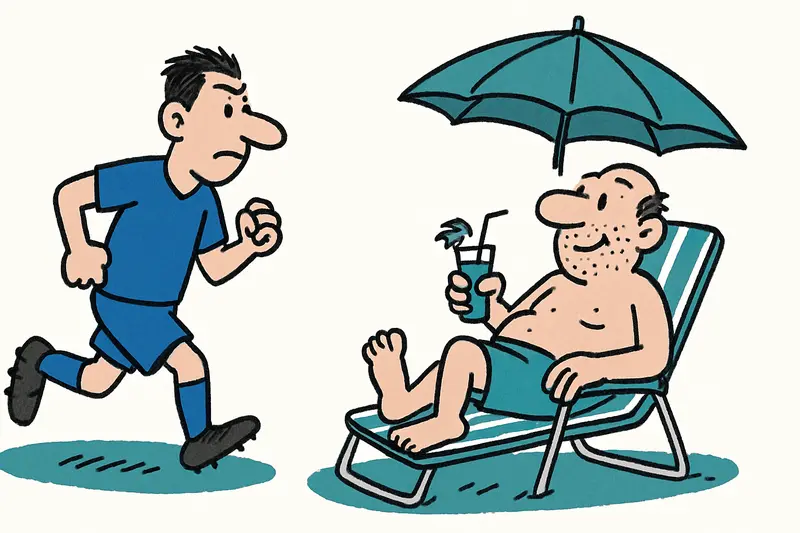
HSV in Mallorca: Isolation in the training camp – practical reasons or missed opportunities?
Hamburger SV is training privately in Mallorca and will play Real Mallorca on Saturday at Son Moix. Why the secluded camp is causing debate and what opportunities the island offers for clubs and fans.
HSV in Mallorca: sun, sweat and a quiet debate
In the early morning, when the cicadas begin to chirp under the Mallorcan sun and the wind from the Bay of Palma carries a salty breeze across the training pitches, the ball rolls on Estadi de Son Moix-like turf – only this time without the familiar shouts of the fans. Hamburger SV has started its training camp on the island HSV en Mallorca: concentración, amistoso en Son Moix y un adelanto de la nueva temporada, focused and surprisingly secluded. The team is working hard, coach Merlin Polzin has clear goals El HSV se prepara en Mallorca para el regreso a la Bundesliga. But the decision to hold the camp behind closed doors El HSV inicia su campamento de entrenamiento en Mallorca raises questions: Is it pure common sense — or is the club giving up an opportunity to build bridges with the local football community?
The friendly against Real Mallorca: a big game with a limited audience
The sporting highlight comes on Saturday: a friendly against Real Mallorca at Son Moix. For many Mallorcans, such a match is a welcome summer event that brings football tourists to Palma and the coastal towns. Formally, there is still the possibility that season ticket holders release seats — so leftover tickets might appear in the coming days. But the atmosphere will be different from a regular league match: fewer chants, more security zones, stricter access – a training match in a corset.
The less noticed consequences of the seclusion
At first glance, a closed training camp seems pragmatic: quiet for the players, less media frenzy, focused preparation. The flip side becomes visible on closer inspection. Local fans, youth teams and the small businesses around training pitches and hotels are left out. Small bars in Portixol or the beach cafés in Cala Major, which benefit from short stays by international teams, see less foot traffic as a result. Young players who could be inspired by professionals also lose the rare chance to get close to their club – a real loss for regional talent development.
Another often overlooked issue is how the team is perceived in the host region. An open training session creates sympathy, media presence and a better image in the long term. If a traditional club like HSV does not use these opportunities, it signals distance – and that at a time when football clubs urgently need local roots.
Pragmatic alternatives: how clubs could act more thoughtfully
The decision to isolate can have good reasons: heat-related strain, protection against injury risks or tactical secrecy. Nevertheless, there are practical middle paths that protect players while involving local stakeholders.
Concrete proposals:
1. Limited access options: A short, controlled open training in the morning with 200–300 tickets for local youth coaches, sponsors and club partners. This creates proximity without disturbing the camp's routine.
2. Live streams and community formats: Official training sequences via livestream, commented on by club representatives or former pros. In addition, Q&A sessions with a youth coach on site would engage local clubs.
3. Youth workshops: A half-hour technical workshop for local youth teams – supervised by an assistant coach or a player – would be a small but valuable integration offering.
4. Cooperation with local businesses: Short-term partnerships with bars, restaurants and hotels in Palma and the surrounding area could mitigate economic losses (e.g. fan lunch offers, discount promotions for season ticket holders).
What the island gains — and what it does not
Mallorca benefits from sports tourism: the island is a stage for runs, cycling races and football events in summer. An open, friendly image of visiting clubs strengthens the offer. But if big teams appear only as secluded training guests, the economic effect is smaller – apart from hotel nights. The real opportunity would lie in mutual closeness: local youth development, small PR actions in Palma, joint sports offers that have an impact beyond the weekend.
Conclusion: between common sense and missed opportunity
The HSV's preparation in Mallorca will certainly make sporting sense. Polzin's goal to get the team fit is legitimate – and the heat that lies over the bay at midday does not make training easier. Still, a traditional club should not underestimate the island's potential as a stage for fan engagement and community work. A few open hours, a workshop, a livestream – small measures with big effect. For the island, that would mean a bit more noise in the cafés and more sympathy in the stadiums. For the club? A bit more closeness and perhaps more fans in the long run who say: 'They were here, talked to us.' And that, one could almost believe, is in the end just as important as the conditioning runs at sunrise.
Frequently asked questions
Why do football teams choose Mallorca for pre-season training camps?
Is Mallorca too hot for football training in summer?
Can fans usually watch training sessions in Mallorca?
What are the benefits of a closed football training camp in Mallorca?
What impact do football training camps have on local businesses in Mallorca?
Why is a friendly match at Son Moix such a big deal in Mallorca?
What can clubs do to involve local people during a Mallorca training camp?
Is Mallorca a good place for football tourism and fan trips?
Similar News

Release after bloody attack in Palma: Why the court's decision raises questions
An 18-year-old who allegedly inflicted a serious neck injury on a man at Plaza Gomila using a wristwatch wrapped around ...
Kidnappings in Inca: Three young men forced into car trunks and abused in the forest – a reality check
In Inca, three 18-year-old men were forced into car trunks by masked assailants at the Plaça des Bestiar, taken to a for...
Spreading Massification: The Brake That Still Has Much Work to Do
Marga Prohens announces limits on volume tourism. The measures sound harsh — but are they enough to save everyday life, ...

Through the Keyhole onto the Party Yacht: How Daniela Katzenberger Is Planning Her 40th on Mallorca
Daniela Katzenberger turns 40 and wants to celebrate it on the island — likely with a boat, cake and her mother. A relax...
By Boat Instead of the Road: Palma's Water Bus — a Reality Check
The 'Bus Nàutic' launches in two stages — but questions remain over interim operations, fares and environmental requirem...
More to explore
Discover more interesting content

Can Cap de Bou

Townhouse Lleo 72
