
'I held his legs' – Reality check after window incident on Ryanair plane
'I held his legs' – Reality check after window incident on Ryanair plane
After the incident with a shattered window in which a passenger was nearly pulled out of the aircraft, questions arise about maintenance, procedures and transparency. A reality check from Mallorca's perspective.
'I held his legs' – reality check after window incident on a Ryanair plane
How could a passenger almost be sucked out of a jet — and what does that mean for Mallorca?
Key question: How safe are we actually on board when an engine part breaches a window and a person is nearly torn out of the aircraft? This question has occupied many on the island since it became known that a flight had to return after takeoff from Thessaloniki because parts were missing from the aircraft and a passenger was hanging from a shattered window, as highlighted in Crack in the window — what an aircraft defect means for Mallorca travelers.
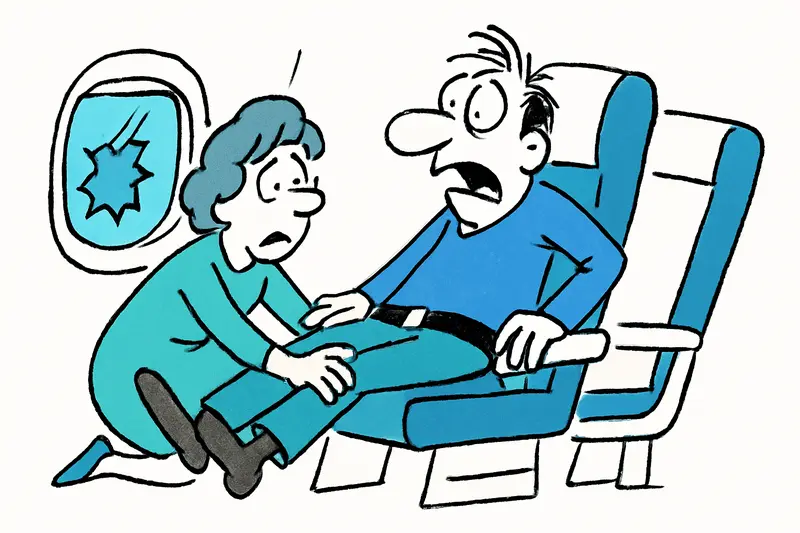
The core of the events is disturbingly clear: A woman describes how, after takeoff, she grabbed her husband's legs because he – partially protruding from his seat – was almost sucked out of the jet. The man remained largely in his seat thanks to his seatbelt but repeatedly lost consciousness and is now in hospital with burns and hand injuries. Eyewitnesses report a heavily damaged right engine cowling and missing blades; footage shows holes in the casing.
Critical analysis: Mechanical failure of engine components is not taboo in aviation, but the question of the chain of causes and responsibilities is. If a blade fails and penetrates the fuselage, it affects not only technology but people. Three levels require close examination: first, maintenance and condition of the engine; second, the structural resilience of cabin windows to penetrating foreign objects; third, procedures in the cockpit and cabin during sudden decompression, a topic also raised after incidents like When a Female Martial Artist Strikes On Board: Security Gaps We Must Not Overlook.
In the public discourse there is currently a lack of transparency. There are statements about missing blades and a damaged engine, but no publicly accessible timeline: When was the last maintenance performed? Which parts were affected? What immediate measures did crew and operator take? Such details would help curb speculation and clarify responsibility.
Another blind spot is the perspective of the affected passengers and crew on Mallorca. People here know the routines: Sunday mornings in the café on Passeig Mallorca taxi drivers and airport workers discuss the risks that intense holiday traffic brings. On the way to the airport you hear radio programs that repeatedly stress the importance of passengers wearing seatbelts — yet only in an emergency does it become clear how vital this recommendation is.
Practical proposals, concrete and implementable: 1) Immediate independent inspection of the affected engine type by an accredited authority; publication of an inspection report for transparency. 2) Review of window and cabin retention systems for the affected aircraft types; if necessary, temporary operational restrictions with clear communication. 3) Increased audits of maintenance records at low-cost carriers that operate many routes to and from Palma. 4) Training initiative for cabin crew on rapid securing of injured persons and evacuation procedures in cases of partial decompression. 5) At the district level: review and adapt emergency plans between Son Sant Joan airport, island clinics and rescue services to realistic scenarios.
Also missing from the debate is a look at passenger behavior: the seatbelt apparently saved a life. In Mallorca, this reminder should not end with the safety card in the seat pocket; airport counters, travel agents and local media could in the coming weeks emphasize more strongly how important briefly fastening a seatbelt during flight is — not as scaremongering but as sober prevention.
A concrete everyday image: On a summer evening in Palma I sit in a bar near the Passeig and hear an older man telling his son how he used to repair aircraft. Outside a bus to the airport honks, rolling suitcases rattle over the cobbles, and the news of the window that broke plays on a mobile phone. This is not an abstract technical issue; it affects people who live, work and fly here.
In conclusion: this incident is a warning sign, not a scapegoating game. Technology failed or was struck in its weak points, people were injured, as in reports such as Frightening Seconds over Palma: Two Flight Attendants Injured. The island needs reliable answers — transparent inspection reports, clear assignments of responsibility and practical precautions for future flights. Those who downplay the incident now risk a repeat; those who react with panic endanger calm at airports and resorts. One thing remains: the belt we often find annoying apparently saved a life. We should all remember that the next time we board an aircraft.
Frequently asked questions
How safe are plane windows and cabin procedures when an engine part fails mid-flight?
Why is wearing a seatbelt during a flight so important?
What practical safety steps could Mallorca airports and airlines take after a window incident?
How do investigators determine the cause of an engine or window breach on a plane?
Should travelers worry about rare aircraft window debris incidents when heading to Mallorca?
What can passengers do to stay safe on flights to Mallorca?
What role do independent authorities play in aviation safety, and who publishes findings?
How can people in Mallorca stay informed about aviation safety changes affecting travel to and from Palma?
Similar News
Axa opens first health center in Palma: €3 million, 650 m² and more local access for La Vileta
In the heart of La Vileta, Axa has opened its first own health center in Mallorca. On around 650 square meters and with ...

30 Years of Nit de l'Art: What Palma's Art Night Really Shows — and Conceals
Nit de l'Art celebrated its thirtieth anniversary: full galleries, young visitors — and the quiet tensions between the a...
Hunt for Older Holidaymakers: Arrests after Suspected Pickpocketing in Port d'Andratx and Bellver
Five suspects were arrested after investigators accuse them of targeted pickpocketing of elderly tourists in Port d'Andr...
Knife stabbing in Magaluf: Why it must not remain an isolated incident
A 21-year-old tourist was stabbed in the chest in Magaluf and is in life-threatening condition. A reality check: what's ...

At Ten, Between Shoots and Schoolwork: Luna's World Tour from Palma
Luna is ten, 1.31 meters tall and already an in-demand child model. Between Ibiza, Paris, Lisbon and Berlin she commutes...
More to explore
Discover more interesting content

Can Cap de Bou

Townhouse Lleo 72
