
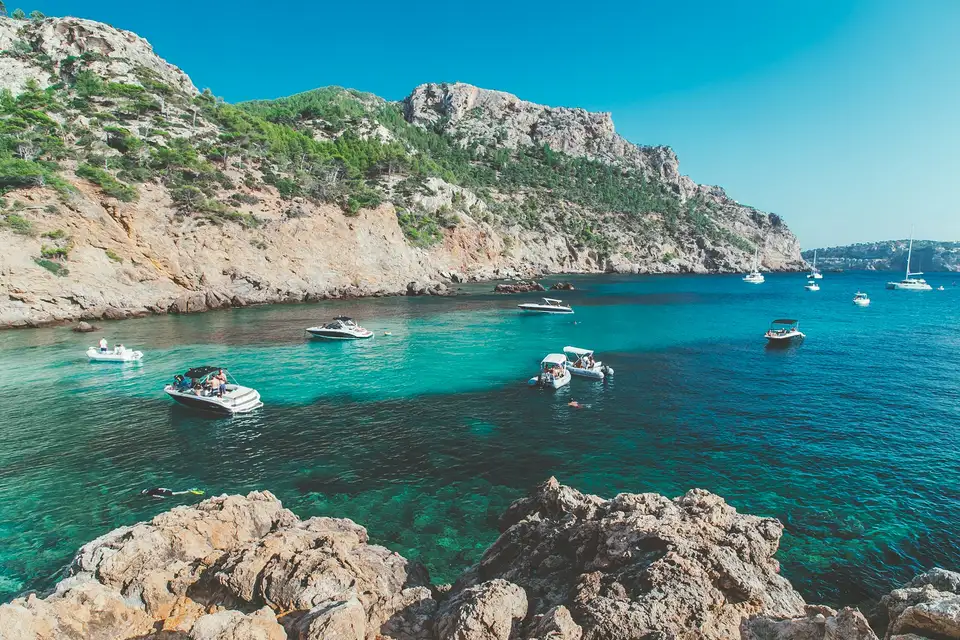
Showering after the sea? A critical guide for beach days in Mallorca
Saltwater feels good — but hours later skin and hair can suffer. A practical checklist for Mallorca's beaches: when to shower, how to save water and which care really helps.
Showering after the sea? A critical guide for beach days in Mallorca
Key question: Does salt need to be rinsed off immediately after swimming—or is a short wait less harmful to the skin than commonly believed?
In short: benefits in the water, drawbacks afterwards
At the beach you notice it right away: salt on the skin, a slight graininess, hair with more texture. While bathing, the Mediterranean can actually feel pleasant because of its minerals and the mild exfoliating effect (see Still going for a swim in Mallorca?). But once you leave the water and let the salt crystals dry on your skin for hours, the picture changes. Salt draws out moisture; combined with sun, wind and sweat, the skin soon shows signs of dryness: tightness, fine flaking, occasional redness—especially on sensitive or already irritated skin.
Critical analysis of common advice
Many people say that the sea is good and showering is unnecessary. That is an oversimplification. The positive effects occur during the swim—such as on mild flaking or as a gentle exfoliation from sand. But when you add sunscreen, sweat and dust, the skin is left with a mixture that can clog pores and promote irritation. The same goes for hair: salt boosts volume but also strips lipids and moisture; with frequent exposure, lengths become brittle.
What is missing in public discussion
The debate usually focuses on "shower yes/no." Practical intermediate steps are rarely discussed: How do you save water on a tourist-overloaded island (see Short showers, great relief: Mallorca breathes easy) and how do you care for skin and hair without waste? Differences for children, people with atopic skin, or after intense sun exposure are often left out as well.
Everyday scene in Mallorca
On a hot afternoon along the Passeig Marítim (see Short Late Summer: Saturday Will Be the Last Big Beach Day in Mallorca): children run from the sea to the public showers, sunbed users shake wet sand out of towels, an ice cream van plays its tune. Some take a quick cold rinse, others sit at a bar with salty hair—both scenes show there is no single approach, only habits.
Concrete and realistic solutions
1) Timing: It is not mandatory to shower immediately after every swim. A targeted rinse within two to four hours after the last beach visit still prevents the biggest drying effects. 2) Saving water: Short, focused showers are enough—prefer lukewarm over hot; a quick full-body rinse removes salt and sunscreen residues. On busy beaches, foot showers are an economical interim solution. 3) Products: Use mild, pH-neutral cleansers, avoid strongly degreasing soaps. Afterwards apply a moisturizer or an after-sun with soothing ingredients (for example aloe, panthenol or hyaluronic acid). 4) Hair care: Rinse briefly with freshwater, leave conditioner in the lengths or use a leave-in spray; balance at least two beach days per week with a deep-conditioning treatment. 5) Specifically for sensitive skin and children: rinse gently, use fragrance-free products, carefully remove sun products and then apply care.
Further practical tips for Mallorca
Use public showers as a short solution, but avoid long hot-water showers at the beach (water consumption). Pack a travel-size of a mild moisturizer in your beach bag. In case of severe sunburn: cooling compresses and medical advice if needed—not just home remedies.
Concise conclusion
Swimming in the sea is good (see Can you still safely swim in the sea around Mallorca?)—the salt acts differently during the bath than afterwards. The simple rule: enjoy the water, but remove the residues on the same day. This keeps skin elastic and hair less brittle without showering for hours or wasting fresh water on the island.
Frequently asked questions
What is the best time to visit Mallorca for warm weather and beach days?
Do you need a car to get around Mallorca?
What should I pack for a trip to Mallorca?
What are Mallorca’s best beaches for families?
Is it safe to swim in Mallorca’s sea?
How can I fit Mallorca’s countryside and coast into a short visit?
When is the sea in Mallorca typically warm enough for swimming?
Are there easy day trips from Mallorca to nearby spots?
Similar News

When Shopping Weighs Heavier: Mallorca Demands a Tax Pause on Food and Fuel
Rising prices are putting pressure on households and agriculture. The Balearic Islands are calling for temporary tax rel...

Almost 70 Euros for Just Under Three Hours of Parking: The Trap at Son Sant Joan
A short work errand at the airport ended with a surprisingly high parking bill. Why the two-hour tariff limit raises so ...
Goodbye Megayachts: Why Palma's Port Is Now Focusing on Small Luxury Liners
Four smaller luxury liners berthed in Palma at the same time recently — around 1,600 passengers on board, plus about 2,0...

Fear in the Sa Teulera Forest: Youth Groups Harass Cruising Zone in Palma
In the wooded area of Sa Teulera, those affected report verbal attacks, property damage and intimidation. How safe is th...

Axa opens first health center in Palma: €3 million, 650 m² and more local access for La Vileta
In the heart of La Vileta, Axa has opened its first own health center in Mallorca. On around 650 square meters and with ...
More to explore
Discover more interesting content

Can Cap de Bou

Townhouse Lleo 72
