
When Words Score Goals: Rajoy's Comments Before the Spain–France Semi-final in a Reality Check
When Words Score Goals: Rajoy's Comments Before the Spain–France Semi-final in a Reality Check
The former Spanish prime minister caused outrage with a remark about the French team. A reality check: what's missing from the debate, and how are we dealing with it in Mallorca?
When Words Score Goals: Rajoy's Comments Before the Spain–France Semi-final in a Reality Check
Key question: Was this just an ill-considered remark by a politician — or is there more behind the attack on a national team's identity?
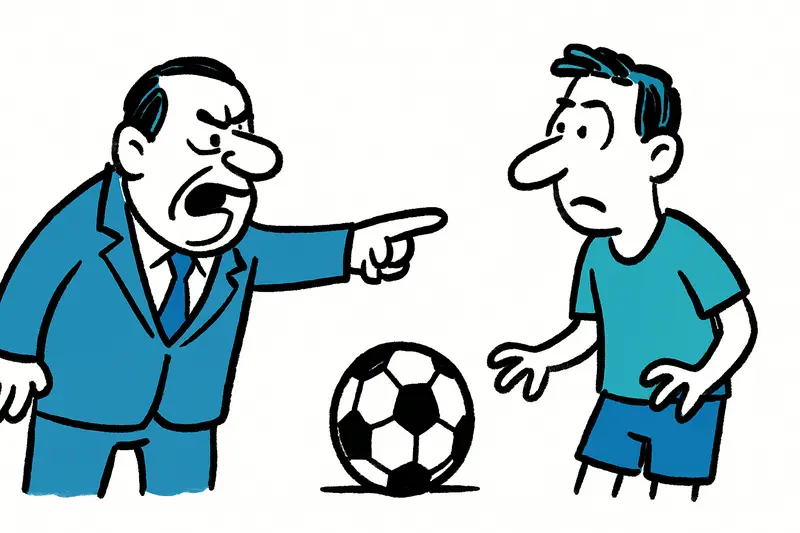
On the morning after the incident, Palma is already heated. On the Passeig de Mallorca glasses clink in the street cafés, motorcycles buzz by, and the heat AEMET forecasts for today — 32ºC for the capital — lies over the city like a heavy coat. In this mood political sentences quickly create waves. The word the former prime minister used has now rippled through Madrid, Paris and beyond: he described the French team as "without Frenchmen", and that set off a chain of reactions.
Put simply: this is not an ordinary football discussion. When a figure with political weight measures people's belonging by outward traits or origin, we are playing with cards that are sharply edged in our society. The central question remains: do such formulations express a concern about national identity — or do they feed prejudice and exclusion?
Critical analysis: on the one hand, public figures use language to mark groups. That is politically effective because it touches national myths. On the other hand, debate often lacks context: why do people with different biographies play for national teams today? What roles do naturalizations, migration, multiple citizenships and the everyday reality in the banlieues or rural areas of France play? Media excitement makes this sober examination harder because it caters to feelings rather than facts, as seen in debates over cultural funding in Mallorca.
What is missing from public discourse: firstly, a clear distinction between legitimate criticism of a team's performance structure and the personal denigration of entire population groups. Secondly, practical guidance: what legal steps are available if statements are deliberately discriminatory? Thirdly, a local perspective: how does such rhetoric affect people here who live and work with French, North African or Latin American backgrounds — in cafés, on construction sites, in hotels?
A daily scene from Mallorca: at the Mercat de l’Olivar stallholders from several countries start early, and the vendors' break is a colourful mix of Spanish, French and North African voices. These are precisely the neighbourhoods meant when identity is disputed. Everyone here knows the reality: belonging is often a practical everyday matter, not just the colour of a passport.
Concrete solutions: 1) Transparent codes of conduct for officeholders: politicians should be bound by clear rhetorical duties that explicitly name and sanction discrimination. 2) Sports federations should take their role seriously: public statements, dialogue with minority organisations and, if necessary, legal steps against hate speech should be considered, as clubs have faced similar moments in their public relations and discipline, for example Dani Rodríguez's apology and club discipline. 3) Local educational work: schools and community centres in Palma and smaller towns should promote projects that show how nationality, origin and belonging interact in practice. 4) Media literacy and fact-checks: platforms must provide rapid clarifications so that emotions do not override facts.
On the legal situation: in both Spain and France anti-discrimination laws apply and can, in some cases, make insulting or inciting statements punishable. Authorities and organisations can examine whether the line to punishable discrimination has been crossed, guided by European Commission guidance on combating discrimination. This is not instrumentalisation but a tool of democratic order to protect minorities.
So what to do when a prominent name strikes a societal nerve? First: differentiate instead of generalise. Second: let institutions do their work — sports federations, ministries, courts. Third: strengthen the local community, because that is where the everyday life takes place that such debates often overlook.
Concluding point: words are not fouls, but they can hurt and polarise. A statement like that provokes — and that is the responsibility of both the outraged and those who apologise. In Mallorca the reaction appears in two ways: in heated bar debates and in quiet work at schools and clubs that have been building bridges for years, as discussed in analysis of Mallorca's crisis beyond the 0-1 loss. Perhaps the most important lesson is this: we should move the debate from the stadium stands to the neighbourhood, where belonging becomes practical every day and not just rhetorical.
Frequently asked questions
When is the best time to visit Mallorca for mild weather and fewer crowds?
Can you swim in Mallorca outside the peak summer season?
What should I pack for a Mallorca trip?
What’s there to do in Palma, Mallorca for a day?
Is the Serra de Tramuntana good for hiking near Sóller?
Is Alcúdia a good base for family-friendly beaches?
What makes Cap de Formentor worth a day trip?
What are the best ways to get around Mallorca without a car?
Similar News
Injured captain, big plans: Germania Mallorca before the away match in Consell
The newly founded FC Germania Mallorca travels to Consell on Saturday. Captain Bastian Müller is out injured, but coach ...
Palma, Palma de Mallorca, Palma‑Mallorca: What is it really about?
The debate over the city's name is more than grammar: it concerns identity, law and branding policy. A sober reality che...
Warning to Bathers: Nipping Fish in Cala Major and Other Coves — a Reality Check
In Cala Major and several beaches around Mallorca, bathers report painful “nips”. Who are the animals, why are they gett...

Rental Car Theft in El Arenal: What This Incident Reveals About Our Gaps
A teenager steals a running rental car in El Arenal, flees on foot, climbs over walls and is caught by the Guardia Civil...

Red Rope in Palma's Library: What Helps Against Selfie Tourism — and What's Missing
Palma's city library cordoned off an area with a red rope to keep selfie tourism away from reading and working activitie...
More to explore
Discover more interesting content

Can Cap de Bou

Townhouse Lleo 72
