
Shorter, cheaper, louder: How Mallorca's summer business is losing quality
Shorter, cheaper, louder: How Mallorca's summer business is losing quality
Visitors still come — but stay shorter and spend less. An initial assessment shows winners and losers: hotels stable, gastronomy under pressure. What municipalities, restaurateurs and landlords must do differently now.
Shorter, cheaper, louder: How Mallorca's summer business is losing quality
Key question: How does the island change when holidaymakers stay for shorter periods and economize locally?
The first days of July on Mallorca smell of sea, sunscreen and bratwurst from the weekly market, but the tones are more muted than in previous years. Despite a busy schedule at the airport and stable hotel occupancy — in Palma occupancy is currently around 83 percent, as discussed in Hotels Full, Streets Empty: Mallorca's Strange Summer Stroll — guests apparently arrive with lighter wallets. They book later, stay for shorter periods and spend less on dining, excursions and retail.
In short: demand is there, but willingness to spend on site is lower. Retailers and restaurateurs report fewer visits to restaurants, car rental companies warn of higher turnover costs due to many short rentals, and providers of holiday apartments describe a start that is "average." At the same time, hotel associations speak of stable demand and slightly rising revenues — a picture with open edges. This trend is also examined in Empty Tables, Tight Wallets: Mallorca's Gastronomy at a Crossroads.
From an analytical perspective, several factors coincide. On the one hand, geopolitical uncertainty around crises in the Middle East creates a cautious mood — travelers want to get away but calculate more carefully. On the other hand, travel costs have risen in many areas: flight prices, fuel, logistics, supply chains. Those who increase their budget for travel often save on food. And third, social-media tourism is changing behavior: many guests come for a quick "highlights" trip (three to five days instead of the former seven to fifteen) to tick off photo spots — high visitor frequency but short dwell times at each place, a dynamic explored in Boom Despite Friction: How Much Tourism Can Mallorca Still Handle?.
What is often missing from public debate is the chain reaction on the island's economy. When regular guests sit in restaurants less often, it is not only the head chef who feels it. It affects suppliers, market stalls, bus drivers, confectioners — all those small incomes that benefit from longer stays. The strain from rapid vehicle turnover is also an issue: more short rental periods mean more check-ins, more transfers, higher wear and tear — and soon a quota on the vehicle fleet will be added, which will further change the cost structure.
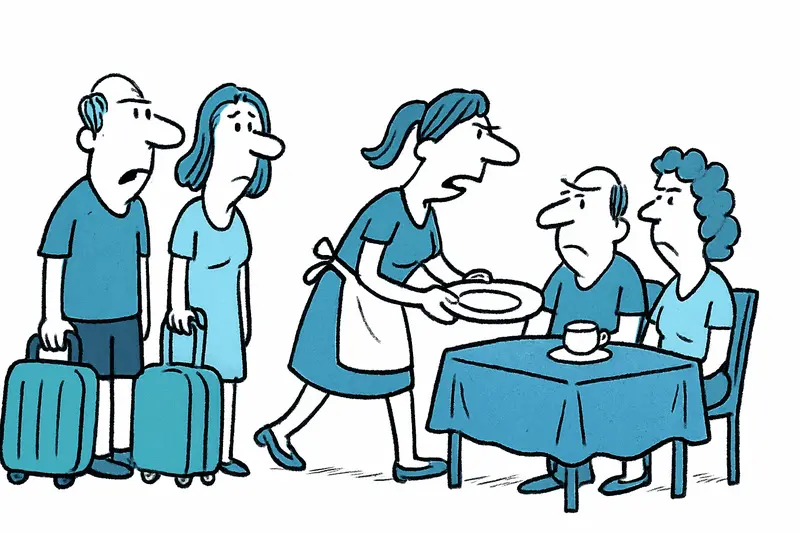
A scene from everyday life: It is hot on Avenida de Jaume III in Palma; the air conditioning in a small café is running at full speed, two families with suitcases are standing outside the venue, they only want to have breakfast and then head to Cala Formentor. The waitress, who yesterday still had eight tables full, pushes the empty plates into the kitchen and counts the reservations — fewer and more short-notice than usual. At the harbor, rental cars turn over by the hour; license plates change faster than the coffees at the bar.
Concrete approaches that could do more than just sound good:
1) Short-term product adjustments for restaurateurs: More fixed lunch menus at moderate prices, smaller portion options, combo offers with local experience providers (short boat trip + tapas) — these can channel spontaneous willingness to buy.
2) Dynamic, fair pricing for car rental companies: Tiered pricing for very short rentals, incentives for longer rental periods and promotion of electric vehicles to distribute future quotas more sustainably.
3) Municipal measures: Towns and municipalities could offer temporary incentives — reduced parking fees for longer stays, boosts for local markets, delivery time windows so restaurant kitchens can work more efficiently.
4) Cooperation instead of competition: Transparent data platforms for occupancy and demand help small businesses with planning and purchasing. Municipalities, hoteliers and associations should cooperate to smooth peaks (promotions outside the high season, bundled experience packages).
5) Attention to employees: Short-termism often means shift changes and uncertain income. Support in the form of training for guest communication, digital ordering systems and tax-advantaged investments in efficiency are worthwhile.
What has been little discussed so far: how to steer social media toward a more sustainable visitation pattern? Influencer routes generate day tourism that overloads places without leaving much money for the local economy. Small interventions are enough: targeted parking rules, information boards, paid viewpoints or simple booking systems for highly demanded attractions could help stagger visitor flows.
Conclusion: Mallorca remains attractive. But the island faces a balancing act between quantity and value. Full hotels alone are not a guarantee for a good season result if the tills in bars and markets are emptier. The decisive factor will be whether politics and business recognize guests' short-term behavioral changes and counteract them with pragmatic measures — otherwise the summer rush could soon feel like overcrowding with shrinking returns; see the contrasting case in Mallorca in August: Fewer Regular Visitors, but the Cash Registers Are Ringing. On a hot July night, when the vaporettos still honk and the streetlights hum over the sea, you will notice who stays on the island: the guests who want to enjoy, or those who just drop by quickly and leave just as quickly.
Frequently asked questions
What is the best time to visit Mallorca for outdoor activities?
Is it safe to swim anywhere in Mallorca?
What should I pack for a Mallorca trip?
What are the must-see spots in Palma de Mallorca for a short visit?
Is a day trip to Sóller worth it from Palma?
What’s special about Alcúdia and its beaches?
How do I get around Mallorca without a car?
Does Mallorca have microclimates I should know about?
Similar News
Rental Car Theft in El Arenal: What This Incident Reveals About Our Gaps
A teenager steals a running rental car in El Arenal, flees on foot, climbs over walls and is caught by the Guardia Civil...

Red Rope in Palma's Library: What Helps Against Selfie Tourism — and What's Missing
Palma's city library cordoned off an area with a red rope to keep selfie tourism away from reading and working activitie...

Fort San Carlos: Museum, Harbor Dispute — and a Conflict That Demands Answers
The military museum at Fort San Carlos sits right on Palma's harbor, with unexpectedly quiet rooms filled with cannons a...
Old Town Under Pressure: When a Doorway Becomes a Sleeping and Shower Place
For months a woman has been living with a parasol, a clothes rack and personal belongings next to the social welfare off...

When Shopping Weighs Heavier: Mallorca Demands a Tax Pause on Food and Fuel
Rising prices are putting pressure on households and agriculture. The Balearic Islands are calling for temporary tax rel...
More to explore
Discover more interesting content

Can Cap de Bou

Townhouse Lleo 72
